

Long-lasting perfumes are fragrances built to project and endure for most of the day through higher oil concentration, substantive base notes, and smart application. Wear time varies by skin chemistry and climate, but good technique extends performance. Auremie Perfumes ships from Ontario, Canada and offers discovery tools to help you test longevity before you commit.
By Auremie Perfumes · Last updated: 2026-05-19
Above the Fold: Your Quick Guide + TOC
If you want a scent that lasts, prioritize concentration (EDP/extrait), resinous and woody bases, and proper application on moisturized skin and fabric-safe areas. Then confirm fit with samples. This guide shows the science of longevity, the best practices that add hours, and how Auremie’s discovery tools remove guesswork.
Here’s how to use this guide fast—scan, test, and decide:
- Understand what “long-lasting” means and how it’s measured in hours and projection.
- See why longevity matters for office, events, and gifting moments.
- Learn the chemistry of evaporation, sillage, and dry-down.
- Compare concentrations and note families that naturally last longer.
- Apply best practices that can add 2–4 hours of wear time.
- Use tools—discovery sets and samples—to test before you buy.
- Follow real-world examples to match scent power to your day.
If you only read two sections, jump straight to Best Practices and Tools & Resources. Sampling first is the quickest path to your signature scent.
What Are Long-Lasting Perfumes?
Long-lasting perfumes are formulas designed to maintain noticeable scent and projection for most of the day. They pair higher fragrance oil concentrations with slower-evaporating base notes—woods, musks, resins—and use fixatives to anchor top and heart notes. Measured in hours, longevity also depends on skin prep, environment, and application.
In fragrance, performance shows up in three dimensions most wearers care about: longevity (how many hours a scent remains detectable), projection (how far the scent radiates), and sillage (the trail left behind as you move). Concentration level and formula structure strongly influence all three. For a deeper primer on these terms and how they play together throughout the opening, heart, and base, see our longevity Q&A.
| Concentration | Typical Oil % | Common Longevity | Notes |
|---|---|---|---|
| Eau de Cologne | 2–5% | 1–3 hours | Very fresh, quick fade; ideal for hot days |
| Eau de Toilette | 5–15% | 3–6 hours | Brighter lift; moderate staying power |
| Eau de Parfum | 15–20% | 6–10 hours | Balanced throw; popular daily choice |
| Parfum/Extrait | 20–40% | 8–12+ hours | Dense, intimate aura with strong dry-down |
These ranges are guidelines—formula design, raw materials, and skin chemistry can shift wear time. Heavier base accords (amber, oud, labdanum, patchouli, sandalwood) tend to slow evaporation and extend the dry-down, while airy citruses and some aromatics move off skin faster. For a women’s perspective on concentration and wear, our eau de parfum guide breaks down day-to-night use cases.
Why Longevity Matters (and When It Doesn’t)
Longevity matters when you need one application to carry you through work, travel, or events. It saves re-sprays, protects confidence, and ensures a gift feels premium. At the same time, lighter scents shine in heat and low-scent spaces. Match intensity to context for the best experience.
We hear three recurring needs from shoppers exploring long-lasting perfumes at Auremie Perfumes: a reliable office scent that’s still present after lunch, an evening option that lasts into late plans, and a confident gift pick with minimal risk. Discovery and sample sets cut guesswork while keeping the experience fun.
- Workdays: Aim for a steady 6–8 hour arc with moderate projection to avoid over-scenting close coworkers. Two to three targeted sprays typically suffice.
- Evenings: Denser bases and extrait strengths help a fragrance carry past hour 8 and into the afterglow, especially in cooler air.
- Gifting: Sampling first raises satisfaction, turning a guess into a thoughtful, personalized choice.
Not every day calls for maximum staying power. On warm weekends or in scent-sensitive spaces, a fresh citrus or airy floral can be the right move. A compact scent wardrobe—two reliable EDPs, one fresh pick, and one richer evening option—can cover nearly every scenario. For season-by-season pairing ideas, explore our simple season guide.
How Fragrance Longevity Works
Longevity is a balance of volatility, concentration, and where molecules settle. Heavy, less-volatile materials linger on skin and fabric; higher oil percentages slow evaporation. Prep (hydration, occlusives), temperature, and airflow change how quickly top, heart, and base notes depart.
Here’s the chemistry in everyday terms:
- Volatility: Lighter molecules (citrus, some aromatics) evaporate fast; heavy resins and woods evaporate slowly. That’s why ambers and ouds often outlast brights by several hours.
- Concentration: More fragrance oil equals more aroma compounds per spray, typically extending detectable hours and smoothing the dry-down.
- Substrate: Moisturized skin holds scent longer than dry skin; some fabrics can retain aroma for days with a light mist.
- Environment: Heat and wind increase evaporation; cool, humid rooms slow it. A 10°F swing can noticeably change projection.
- Fixatives: Musks, ambers, and resins reduce the escape rate of brighter notes, extending their presence beyond the opening.
Want a deeper note-by-note understanding—including orris (iris), a refined, buttery-powdery note that steadies blends? Our perfume notes guide walks through top, heart, and base families and how they influence staying power.
Myth vs. fact: why some scents seem to “vanish”
- Myth: “This perfume disappeared in an hour—bad quality.” Fact: You may have nose fatigue (olfactory adaptation) after 30–60 minutes, while others still smell it clearly.
- Myth: “More sprays always last longer.” Fact: Placement and skin prep beat raw spray count beyond 3–5 sprays.
- Myth: “Rubbing wrists helps it settle.” Fact: Heavy rubbing can dull top notes and distort the opening.
If you’d like the crafting side—macros, accords, and how perfumers build long-wear structures—our behind-the-scenes look at perfume craftsmanship explains why certain resinous and woody backbones age beautifully on skin.
Types and Approaches That Last Longer
To extend wear, favor richer concentrations (EDP, extrait), base-heavy styles (amber, oud, woods), and layering. Build a long-wear foundation and add a brighter accent. Apply to moisturized skin and fabric-safe areas, and refresh with a travel atomizer as needed for late plans.
Fragrance styles with natural stamina
- Amber and resin: Labdanum, benzoin, and amber accords slow evaporation and add warmth. Expect a lingering, cozy trail.
- Woody musks: Sandalwood, cedar, and modern musks create smooth, steady projection—great office mainstays.
- Oud and leather: Deep, tenacious bases that shine at night and in cool weather.
- Iris/orris: Buttery, powdery nuance that adds polish and often steadies a blend’s mid-to-base transition—see the pillar topic of orris scent for context within elegant dry-downs.
Formats and techniques
- EDP vs. Extrait: EDP balances projection and longevity; extrait leans intimate but lasting with 8–12+ hour potential.
- Layering: Pair a base-forward scent with a citrus or aromatic top for seasonality and lift. Our hands-on layering tips show simple two-spray blends.
- Fabric strategy: A light mist over clothing (fabric-safe) can extend the aura by a full day.
- Hair application: One distant spray creates gentle trail—avoid heavy alcohol on scalp.
Choose your backbone first—the long-wear base—then accessorize with a brighter accent for daytime flexibility. If you prefer men’s profiles that still read versatile, explore our men’s fragrances guide for archetypes that transition from desk to dinner without re-spraying.
Best Practices to Make Perfume Last All Day
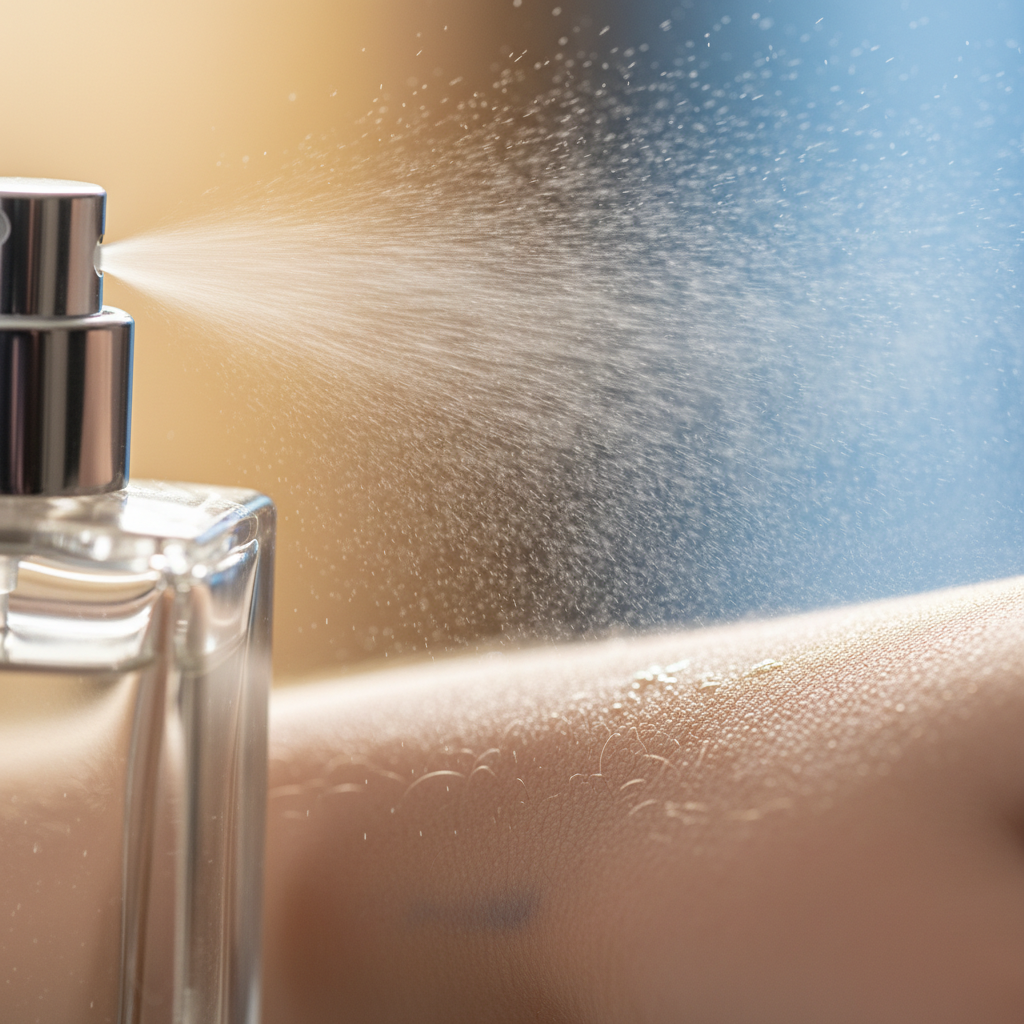
Maximize longevity by moisturizing first, targeting pulse points and fabric-safe areas, and choosing the right concentration. Spray from 4–6 inches, don’t over-rub, and carry a small decant for late refresh. Confirm performance on your skin with samples before you commit.
- Moisturize: Use unscented lotion. For extra hold, add a thin occlusive (like balm) on pulse points.
- Spray pattern: 1–2 to chest, 1 to back of neck, 1 to clothing (check fabric care).
- Distance and timing: 4–6 inches from skin; apply after shower when skin is hydrated.
- Don’t rub: Let droplets settle to preserve top-note brightness.
- Use concentration wisely: EDP for day; extrait or base-heavy blends for evenings.
- Mind the weather: Heat boosts diffusion but speeds fade; cool air slows both.
- Refresh smart: A 2 mL travel atomizer covers late meetings or post-gym plans.
Prefer a quick visual on key ingredients that help a scent last? Our overview of premium perfume ingredients explains why musks, woods, and resins anchor long wear without reading heavy or dated.
Local considerations for your area
- Cold months favor base-forward scents; dry indoor heat can shorten citrus openings. Reach for woods and ambers for steadier wear.
- Summer humidity amplifies projection—choose fresher top notes anchored by a woody base to avoid overwhelm.
- If you commute or travel often, keep samples or a travel spray in your bag to refresh after long gaps between meetings.
Tools and Resources (Test Without Blind Buying)
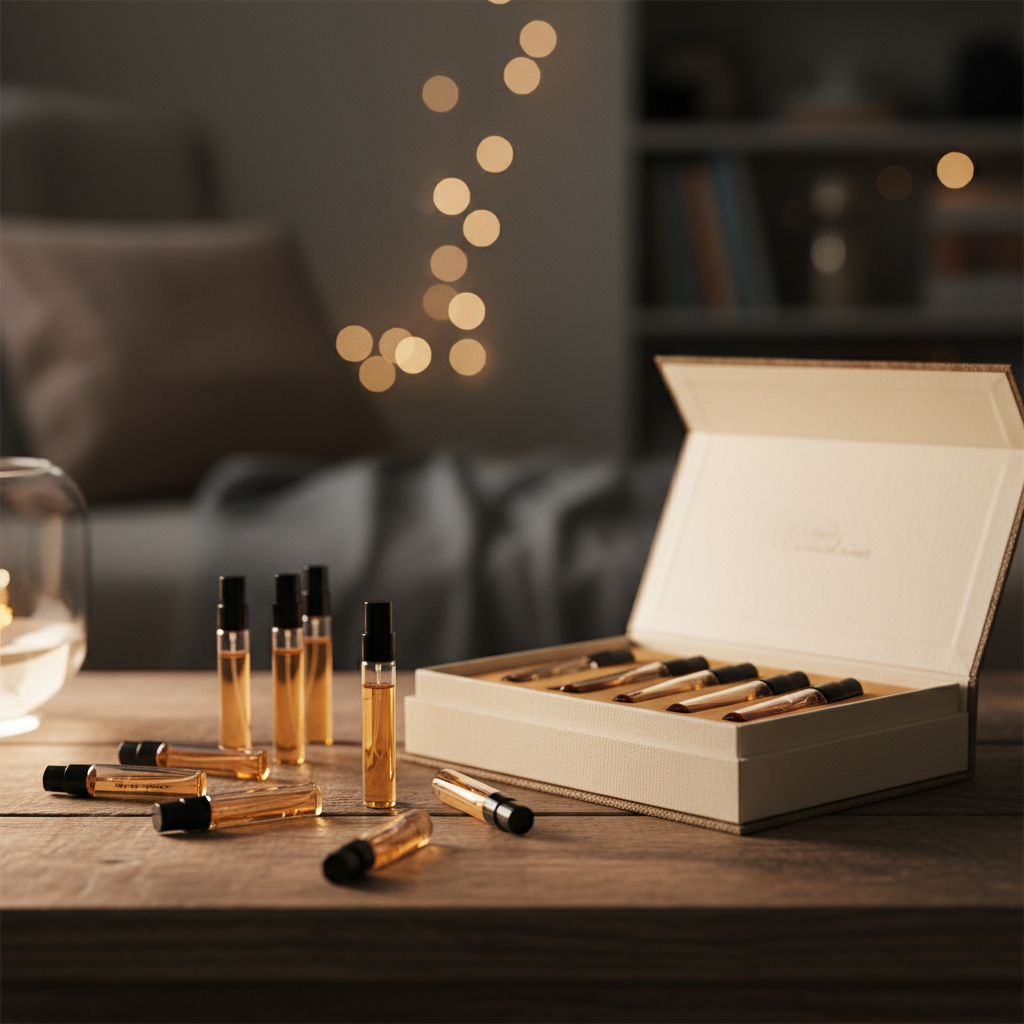
Use a guided quiz, discovery sets, and sample vials to test real-world longevity on your skin. Compare two to three scents side by side over a full day, note projection at 1, 4, and 8 hours, and then upgrade to a full bottle with confidence.
Discovery and sample sets reduce risk and speed learning. A quiz-driven “find your scent” experience helps you shortlist styles—woody, amber, floral, fresh—that fit your taste and occasions. Travel-size samples make on-the-go refresh simple, and they’re ideal for layering experiments.
- Start with a discovery set focused on your preferred families.
- Test across warm and cool days to see how wear time shifts.
- Log 1/4/8-hour checkpoints for projection and sillage.
- Finalize your signature, then keep samples for travel or layering.
Want a structured path to a concise wardrobe? Our perspective on building a fragrance wardrobe shows how 3–5 bottles can cover gym, office, date night, and black-tie without overlap.
Troubleshooting: If Your Scent Doesn’t Last
If a fragrance fades fast, adjust prep, placement, and environment before replacing it. Moisturize, target pulse points and fabric-safe areas, reduce rubbing, and retest on a cooler day. If it still underwhelms, sample base-heavier styles or higher concentrations.
Quick fixes that work
- Hydration first: Drink water and moisturize—dry skin sheds scent fast.
- Placement swap: Try back of neck and torso over wrists to reduce handwashing loss.
- Fabric assist: One light clothing mist often extends aura for a day or more.
- Environment check: Retest on a cooler day; heat can halve the feel of longevity.
- Layer smarter: Add a woody base-forward layer under bright citrus to slow fade.
If you want side-by-side comparisons of EDP and extrait behavior, our EDP longevity guide maps typical arcs and shows where extrait excels for evening wear.
Real-World Examples and Mini Case Studies
Match longevity to your calendar. Choose steady EDP woods for office days, richer extrait ambers for evenings, and versatile unisex blends for travel. Prove the fit with samples, then lock your signature with a full bottle and a small decant for refresh.
Office day, scent-sensitive team
- Goal: Present but polite aura for 6–8 hours.
- Pick: Woody-musk EDP with a soft amber base.
- Pattern: Two chest sprays, one back-of-neck. Optional single fabric mist.
- Why it works: Smooth projection that stays close; minimal top-up needed.
Winter wedding or gala
- Goal: Elegant trail for 8–12+ hours in cool air.
- Pick: Amber, leather, or oud leaning toward extrait strength.
- Pattern: Moisturize; apply to torso and back-of-neck; light coat-friendly fabric mist.
- Why it works: Dense base slows evaporation; cool temps preserve the arc.
Weekend festival or outdoor event
- Goal: Bright presence that survives heat and wind.
- Pick: Citrus-aromatic opening over a resinous base.
- Pattern: Chest, back-of-neck, and a clothing mist; carry a 2 mL decant for midday top-up.
- Why it works: Airy lift with a base that doesn’t wash out in open-air settings.
Gifting with confidence
- Goal: A winner they’ll love and wear often.
- Pick: Discovery set with two woody/amber options and one fresh wildcard.
- Pattern: Encourage 1/4/8-hour journaling before choosing.
- Why it works: The recipient selects what truly lasts for them.
For men who want a richer aura without heaviness, our high-end men’s perfume guide outlines profiles that wear long and feel modern.
Frequently Asked Questions
The answers below address concentration, application, fabric safety, and testing. They’re short, direct, and designed to help you get better all-day performance starting with your next wear.
What makes a perfume last longer?
Higher oil concentration, base-heavy materials (woods, resins, musks), and good skin prep extend wear. Apply to moisturized skin, avoid heavy rubbing, and add a light fabric spray if the material is clothing-safe. Sampling first confirms performance on your skin.
Is eau de parfum stronger than eau de toilette?
Typically yes. Eau de parfum often contains around 15–20% fragrance oil, while eau de toilette sits lower. That added concentration usually delivers more projection and a longer dry-down, though exact wear time still depends on formula and skin chemistry.
Should I spray perfume on clothes?
A light mist on clothing can extend the aura for a day or more, but always check fabric care and avoid delicate materials. Test on an inconspicuous area first. Many people combine 2–3 skin sprays with one gentle fabric spray for balance.
How do I test longevity before buying a full bottle?
Use discovery and sample sets. Wear each scent across a full day and note performance at 1, 4, and 8 hours. A guided scent finder can narrow choices to the styles most likely to last for your skin and environment.
Conclusion and Next Steps
Long-lasting performance comes from formula, concentration, and technique. Choose an EDP or extrait with sturdy base notes, prep your skin, use smart spray patterns, and confirm fit with samples. Build a small wardrobe for season and occasion, then lock your signature with confidence.
- Prioritize concentration and base-forward styles when you need 8–12 hours.
- Prep skin, spray from 4–6 inches, and don’t over-rub.
- Use discovery tools to test real wear on your skin.
- Keep a travel atomizer for late-day refresh.
Want more structured guidance? Our team’s perspective in the longevity Q&A and craftsmanship overview pairs well with our 3–5 bottle wardrobe approach.
Key takeaways
- “Long-lasting” is a mix of concentration, ingredients, and application technique.
- EDP balances day-to-day wear; extrait anchors evenings and cooler weather.
- Prep, placement, and fabric-safe misting often add 2–4 practical hours.
- Discovery and sample sets make finding a signature scent low risk and fun.