

Perfume craftsmanship process refers to the end-to-end creation of a fine fragrance—from brief and raw material selection to blending, maceration, and bottling. The goal is balance, longevity, and a memorable scent trail. At Auremie Perfumes, we apply this craft for online shoppers across Canada from our Ontario fulfillment hub.
By Auremie Perfumes • Last updated: April 28, 2026
Overview
The perfume craftsmanship process blends art and science to shape a stable formula that smells balanced on skin over time. It spans a defined sequence: creative brief, sourcing, evaluation, accord building, compounding, maturation, stability checks, filtering, and precise bottling—each step influencing projection, longevity, and character.
This complete guide explains how quality fragrances come to life and what it means for you as a wearer. You’ll learn how artisan decisions affect performance, why sampling matters, and how Auremie’s discovery-first approach helps you find a signature scent with confidence.
- What “craftsmanship” means in modern perfumery
- How ingredients, ratios, and time influence projection and longevity
- Practical sampling moves using discovery and sample sets
- How to match scents to occasion, season, and style
Local considerations for your area
- Seasonal shifts in Canada can alter projection; lighter citruses shine in summer, while woods and ambers feel cozier in colder months. Rotate accordingly.
- Holiday periods and festival seasons increase gift demand; order discovery sets early to avoid rush windows from Ontario fulfillment partners.
- Dry winter air can mute top notes; moisturize skin before spraying to improve diffusion and longevity in northern climates.
What Is the Perfume Craftsmanship Process?
The perfume craftsmanship process is the structured, creative method perfumers use to design a stable, memorable fragrance. It covers brief creation, raw material selection, accord building, formula balancing, maceration, and bottling—ensuring the scent smells consistent from first spray to drydown on real skin.
In practice, craftsmanship means more than “mixing nice smells.” It’s a disciplined system that turns inspiration into a repeatable formula wearable by many people. Perfumers translate a mood or story into technical ratios while testing stability, intensity, and comfort.
- Brief to blueprint: A fragrance begins with intent—feeling, mood, or use-case—and constraints like ingredients or season.
- Materials as vocabulary: Naturals and aroma molecules become the words; accords are the sentences that express a theme.
- Iterative balancing: Multiple rounds (“mods”) dial projection, sweetness, freshness, or warmth for wearable harmony.
At Auremie Perfumes, this craft underpins our men’s, women’s, and unisex collections, letting us shape modern compositions that wear beautifully across daily life. For a helpful primer on material quality, see our internal deep dive into premium perfume ingredients.
Why Perfume Craftsmanship Matters
Craftsmanship determines how a perfume smells in real life—on skin, over hours, and across seasons. When materials, ratios, and time are expertly managed, you get clarity, balance, lasting power, and a refined scent trail. Poor craft leads to muddiness, harshness, or perfume that fades fast.
We’ve found that a well-built composition feels coherent from top to drydown and remains comfortable in close quarters. In our experience, high-quality formulas often require a dozen or more iterations before an accord “clicks,” and additional tweaks as it meets real-skin tests.
- Longevity you notice: Maceration and fixative choices influence how long a scent persists on moisturized skin.
- Projection you can control: Dilution, atomizer hardware, and concentration shape how far the scent radiates.
- Consistency bottle-to-bottle: Tight batching and filtration prevent sediments and keep the profile clear.
If you’re learning the landscape, our luxury perfumes guide outlines how quality reveals itself in wear, while niche fragrances explained maps why artisans pursue bolder, character-rich ideas.
How the Perfume Craftsmanship Process Works
A complete perfumery workflow runs from creative brief and material sourcing through blending, maceration, stability checks, and bottling. Each stage has a quality gate: test the formula, evaluate on skin, adjust, and document—so the final fragrance wears consistently and smells refined.
Below is the high-level path our team follows to build reliable, modern compositions for men, women, and unisex wearers.
1) Creative Brief
- Define emotion, setting, and wearer story. Clarify whether the target is daytime freshness, evening depth, or season-driven versatility.
- Map constraints: palette, material preferences, concentration target, and diffusion goals (intimate vs. room-filling).
2) Raw Materials and Palette Design
- Select naturals (citruses, woods, resins) and aroma molecules to express the theme with clarity and stability.
- Plan functional roles: boosters, diffusers, fixatives, and blenders that tie the idea together without heaviness.
3) Early Accords
- Compose key accords (e.g., a musky-amber base or a luminous citrus top) to test the spine of the idea.
- In our studio practice, it often takes 12–20 micro-adjustments before an accord holds together on skin.
4) Full Formula and Pyramid
- Arrange notes by volatility: top for first impression, heart for character, base for depth and lasting power.
- Balance sweetness, freshness, and warmth so the transition between stages feels smooth and intentional.
5) Compounding and Dilution
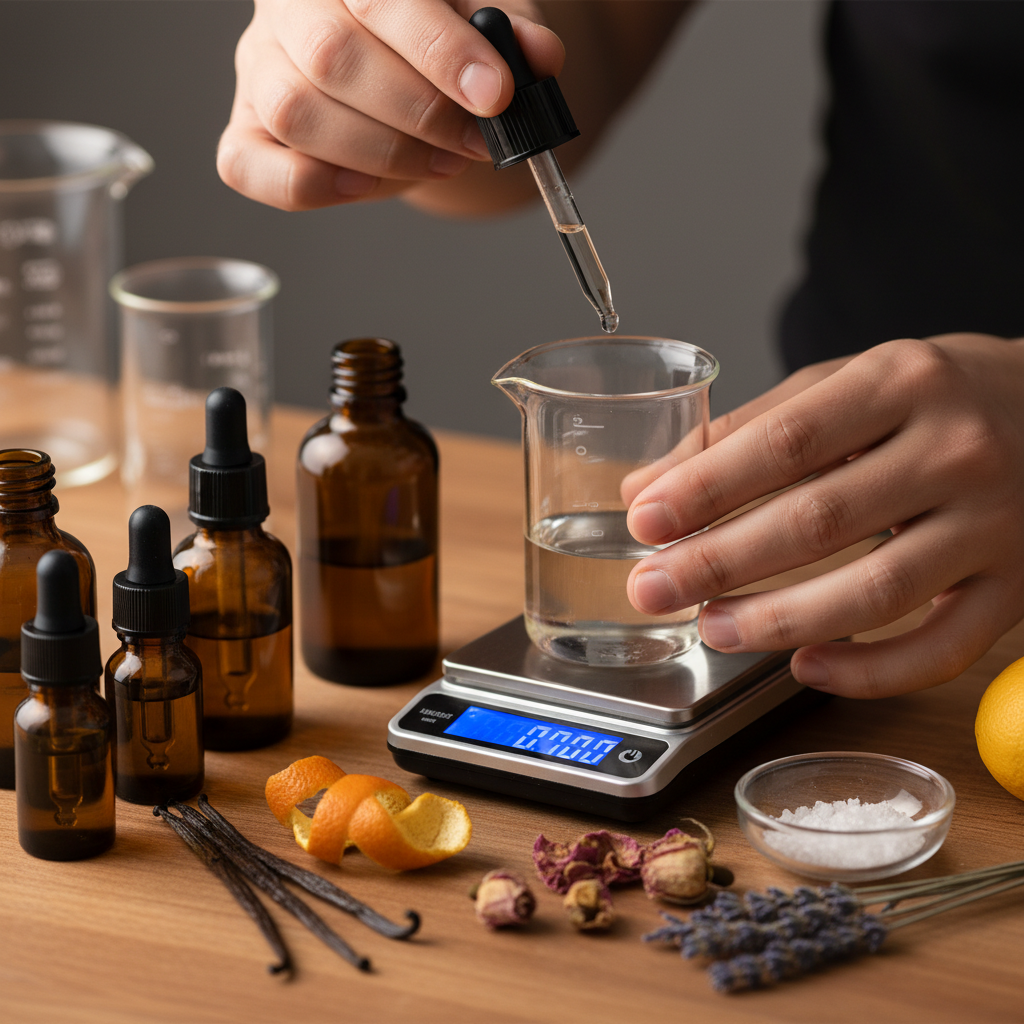
- Weigh with precision on calibrated scales. Small errors compound and can skew the entire profile.
- Blend in a suitable solvent system and rest the liquid so edges round off before formal evaluation.
6) Maturation (Maceration)
- Allow time for molecules to integrate and calm. This step stabilizes the scent and refines harsh angles.
- We evaluate both on blotters and on moisturized skin to observe projection and evolution in real life.
7) Stability, Filtering, and Color
- Check clarity and sediment. Filter to achieve a polished appearance without stripping character.
- Confirm the color aligns with expectations for the concept and packaging.
8) Bottling and Atomizer Tuning
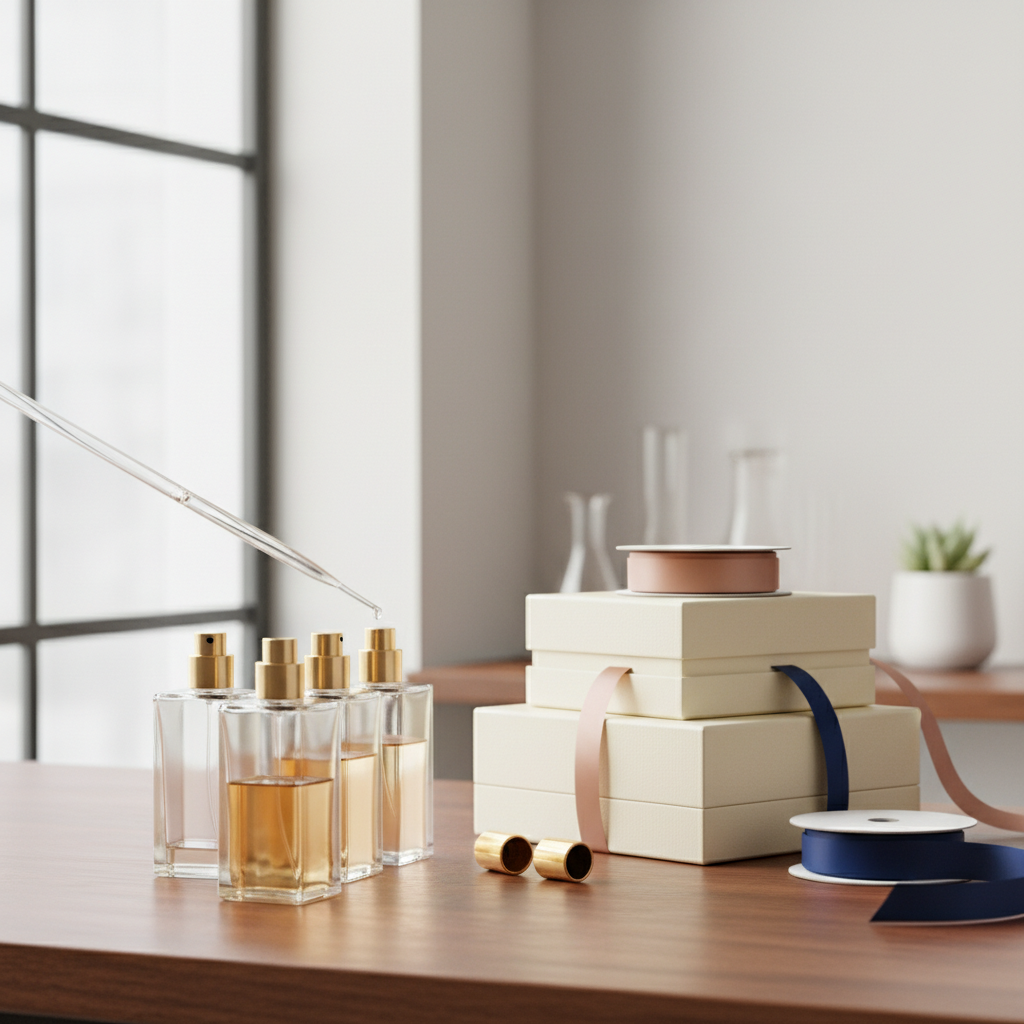
- Select glass, atomizer hardware, and spray geometry that complement the formula’s concentration and diffusion goals.
- Test spray pattern and dose per pump to ensure a smooth, even application and reliable wear-track.
When you’re ready to experience how this process translates to wear, start with a skin-first approach. Our internal review of the brand’s range, Auremie Perfumes review, highlights signature facets to sample at home.
Types, Methods, and Approaches
Perfumery blends naturals and aroma molecules using varied extraction methods and layering strategies. The right approach balances stability and character: citrus top notes for sparkle, complex hearts for identity, and sturdy bases for longevity—chosen to match climate, occasion, and wearer preference.
Extraction Methods (At a Glance)
| Method | Best For | Notable Traits |
|---|---|---|
| Steam Distillation | Many botanicals | Classic technique yielding crisp essential oils with bright facets |
| Solvent Extraction | Delicate flowers/resins | Produces concretes/absolutes with rich, nuanced depth |
| CO₂ Extraction | Heat-sensitive naturals | Low-temperature selectivity preserving vivid, true-to-plant notes |
| Expression | Citrus peels | Mechanical pressing gives sparkling, zesty top notes |
Natural vs. Aroma Molecules
- Naturals offer textured realism and complex evolution but vary by harvest.
- Aroma molecules provide clarity, consistency, and performance tuning (diffusion, lift, or fix). Most modern perfumery uses an intelligent blend.
Layering and Wearer Approaches
- Single-signature wear: Choose one refined fragrance for a consistent personal brand.
- Wardrobe approach: Build a small rotation—fresh daytime, warm evening, and versatile unisex staples.
- Layering: Combine complementary profiles (e.g., citrus over soft woods) for custom nuance.
If you’re exploring categories, our unisex fragrances guide outlines flexible profiles that adapt well to layering and seasonal shifts.
Best Practices for Wearers (From Auremie’s Studio)
To get the best from a well-crafted perfume, test on moisturized skin, sample in different weather, and give the drydown time. Keep sprays moderate, store bottles away from heat and light, and revisit samples across a week to see how they fit your routine.
Sampling and Decision-Making
- Start with discovery or sample sets to experience multiple directions without commitment.
- Wear each sample on clean, moisturized skin; note first 10 minutes, 1 hour, and end of day.
- Try in at least two settings: indoors (office/classroom) and outdoors (errands/evening).
Application and Storage
- Apply 1–3 sprays to pulse points; avoid fabric tests when evaluating nuance.
- Store in a cool, dark place; minimize heat and light to preserve freshness.
- Refresh lightly rather than overspraying; let the composition breathe.
For a step-by-step on dialing preferences, our external signature scent guide breaks down how to connect mood and occasion with the right profile.
Tools and Resources (Creators and Consumers)
Creators rely on calibrated scales, glassware, and controlled environments. Wearers get more from fragrance by using sample sets, blotter cards, and a simple scent journal—plus a guided tool to translate notes into real-life preferences.
Studio Tools (Behind the Scenes)
- Calibrated scales and precision pipettes for accurate compounding.
- Glass beakers and inert containers to avoid contaminating delicate notes.
- Stable temperature storage for maceration and consistency.
Wearer Tools (At Home)
- Discovery and sample sets to learn quickly without blind-buy risk.
- Blotter cards to compare openings before choosing for skin wear.
- A notes app or journal to capture what works across days and settings.
Prefer guided help? Use Auremie’s external Find Your Scent tool to match mood, occasion, and style—then sample your shortlist.
Soft CTA: Not sure where to start? Explore our discovery-first approach in the in-depth luxury perfumes guide, then shortlist options to try at home.
Case Studies and Examples
Real-world wear tests prove whether a crafted formula works. By sampling across settings and seasons, you’ll see how top, heart, and base behave—revealing which compositions suit your routine and why certain notes feel like “you.”
Case 1: Discovery Set to Daily Wear
A Canadian customer began with a discovery set to sample fresh, warm, and woody profiles. Over one week, they logged wear across office days and weekend errands. The balanced wood-amber option won for its smooth drydown and steady projection—ideal as a daily signature.
Case 2: Building a Small Wardrobe
A wearer combined a luminous citrus for morning clarity with a cozy evening scent for dinners. The duo covered most scenarios without overlap. Testing in colder weather confirmed the evening profile’s base remained plush under coats and scarves.
Case 3: Unisex Layering for Versatility
Two partners shared a unisex heart built on woods and soft florals. One layered a zesty citrus on top for daytime lift; the other paired a musky base for depth. The common core kept both feeling aligned while allowing personal twist.
To compare styles and modern categories, read our internal primer on men’s fragrances and the live guide to unisex fragrances for more examples.
Frequently Asked Questions
Common questions focus on what craftsmanship changes in real wear, how long to test a sample, and whether layering helps. Here are concise answers you can act on today.
How long should I test a perfume before deciding?
Wear each sample at least twice on moisturized skin, tracking opening, heart, and drydown across your day. Test in different weather if possible. Many wearers make confident decisions after a week of rotating 3–5 samples.
Does skin type change how a fragrance smells?
Yes. Skin moisture, temperature, and pH can influence diffusion and sweetness. Moisturizing before application often improves projection and smooths transitions from top to base. Always make final judgments on your own skin.
What’s the benefit of discovery or sample sets?
They reduce blind-buy risk and speed learning. Sampling side by side sharpens your sense of which notes, projection levels, and drydowns you enjoy—so your final choice fits daily life, not just a quick first impression.
Can I layer fragrances to customize a scent?
Layering can add a personal twist. Start with compatible families—citrus over woods, or florals over musk. Keep sprays light and test combinations on a casual day first to confirm comfort and balance.
Conclusion and Next Steps
A well-executed perfume craftsmanship process turns creative intent into a balanced, long-wearing fragrance. Sample deliberately, test across contexts, and note how the drydown feels in your real routine—the surest way to find a signature you’ll love.
- Key Takeaways: Craftsmanship shapes longevity, projection, and comfort. Sampling on skin is non-negotiable. Seasonal rotation keeps wear fresh.
- Action Steps: Use the external Find Your Scent tool, order a discovery set, and log wear over a week to shortlist a favorite.
Want a deeper orientation to quality signals? See our internal niche fragrance overview and the live luxury guide for more examples and tips.
Related Articles and Learning Path
Explore foundational guides on luxury, niche, and unisex categories to round out your understanding. Then use a discovery set to translate theory into skin-backed choices that fit your style and schedule.
For broader context, tour these internal topics across our site—what defines luxury craftsmanship, how niche houses approach bolder themes, and how unisex profiles deliver flexible wear. You’ll connect the dots from concept to confident, real-world wear.