

Your signature scent guide is a practical, step-by-step way to identify one fragrance that feels like you in every setting. It explains fragrance structure, testing methods, and how skin chemistry, season, and style shape what you smell. For Canadian shoppers, Auremie Perfumes streamlines discovery with samples, discovery sets, and quick Ontario fulfillment.
By Auremie Perfumes · Last updated: April 24, 2026
Overview
This guide shows you exactly how to find a signature scent using clear steps, simple tools, and smart testing habits. You’ll learn how notes evolve, how skin chemistry and weather affect wear, and how to use discovery and sample sets to narrow choices fast—without blind-buy regret.
Here’s what you’ll get from this complete, expert-built playbook:
- Plain-language definitions of notes, accords, sillage, projection, and longevity
- How to shortlist by mood, occasion, and wardrobe (in minutes, not hours)
- A 7-step testing plan that reduces nose fatigue and guesswork
- Actionable best practices for office, weekend, date night, and travel
- Tools and resources you can use today, including discovery and sample sets
Local considerations for your area
- Account for seasons: cold, dry winters often mute projection, while warm summers amplify fresh or citrus notes. Test across at least two weather patterns for a reliable read.
- Plan ahead for holidays and peak shipping weeks. Auremie fulfills from Ontario, so order samples early if you’re gifting or traveling.
- Consider daily routines: commuter layers, indoor heating, and gym bags can affect scent carry. Choose formats and concentrations that suit your day.
What Is a Signature Scent?
A signature scent is the fragrance you reach for most because it aligns with your identity and lifestyle. It suits work and weekends, feels effortless in every season, and becomes recognizable to others—your olfactory calling card that leaves a consistent, memorable impression.
Think of a signature scent as your personal style in aromatic form. It’s not the trendiest launch; it’s the one that fits 80–90% of your life. Most wearers settle on a versatile profile—often a balanced fresh-woody, amber-woody, or soft floral-musk—that adapts from morning to night.
- Why it matters: Consistency builds recognition. People connect scent with memory, so a reliable profile becomes part of your presence.
- What it’s not: It’s not a strict monogamy rule. You can enjoy a wardrobe for specific occasions and still have one go-to.
- When it clicks: You stop overthinking, and compliments become consistent across settings.
Why Your Signature Scent Matters
A strong signature scent simplifies daily choices, boosts confidence, and creates lasting associations. It saves time, prevents blind-buy waste, and communicates your taste before you say a word—at work, on dates, and during travel.
Fragrance is a fast, silent communicator. Within seconds, it signals mood (bright, calm, sensual) and context (professional, playful, refined). A trusted go-to reduces decision fatigue—especially on busy mornings—and supports a cohesive personal brand.
- Clarity: One reliable choice trims your morning routine by a few minutes daily.
- Compliment factor: Consistent, positive feedback is a strong indicator you’re close to “signature” territory.
- Value: Using discovery and sample sets first drastically reduces regret versus jumping straight to a full bottle.
In our experience helping shoppers build scent wardrobes, those who test 5–7 samples across two different days make confident choices faster than those who test dozens at once. Fewer, better trials prevent fatigue and keep your nose accurate.
How Scent Works: Notes, Skin, and Environment
Fragrances develop in stages: top (first 15–30 minutes), heart (the next 2–4 hours), and base (the final, longest phase). Skin chemistry, humidity, and temperature shift how loudly each stage speaks—so test on skin, not just on paper.
Perfume structure is often described as a pyramid: bright top notes open, heart notes define character, and base notes deliver depth and longevity. Paper strips are useful for first impressions, but skin contact is critical because natural oils, hydration, and pH shift performance and projection.
- Top notes: Citrus, aromatics, and aldehydes that vanish quickly but set the tone.
- Heart notes: Florals, spices, and greens that carry the story for hours.
- Base notes: Woods, musks, resins, and ambers that linger longest.
Environment matters. Warm weather can boost diffusion, while cold air can compress it. Indoor heating and air conditioning also influence how your scent travels. Test across at least two temperatures to understand true longevity and sillage on you.
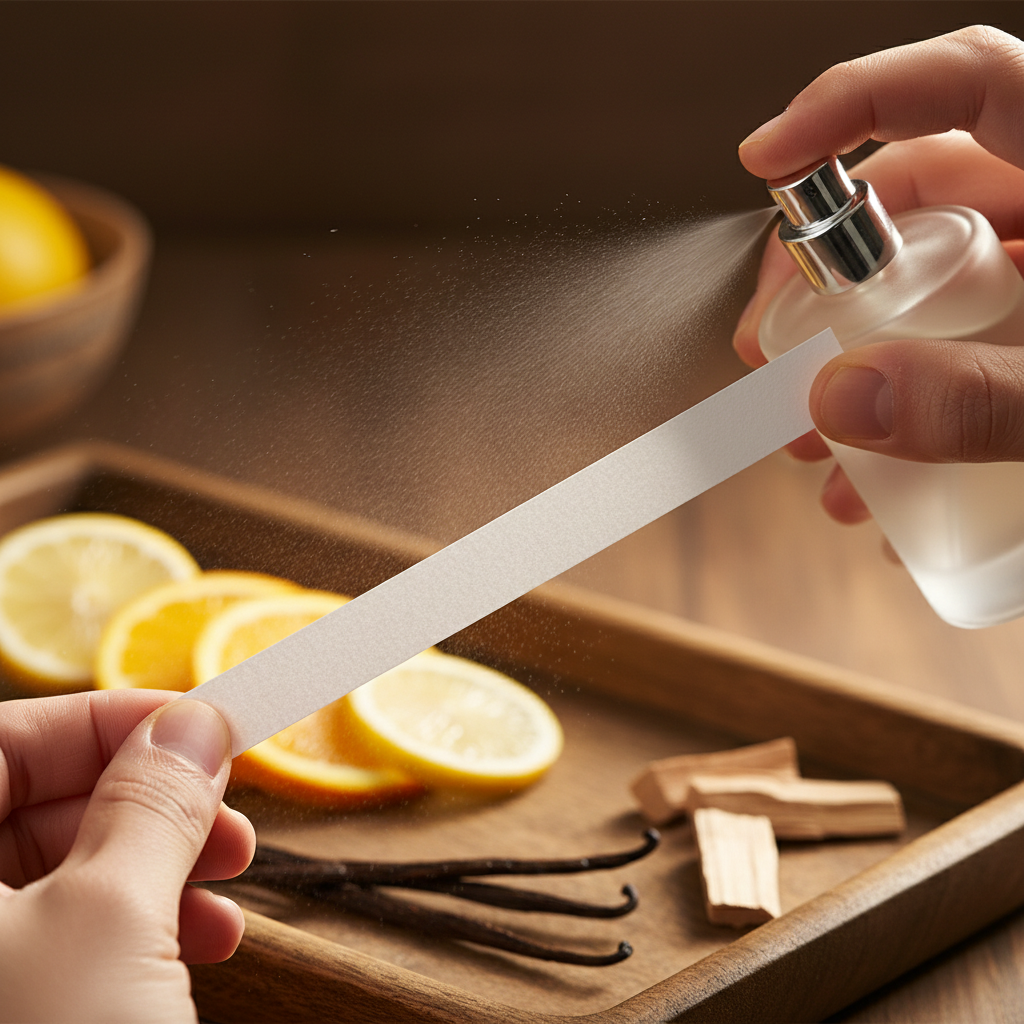
Signature Scent Guide: 7 Practical Steps
Use a focused, 7-step plan: define your brief, shortlist quickly, test on paper then skin, rest your nose, live-test in real settings, log reactions, and repeat with a smaller set. This method cuts confusion and reveals a clear favorite fast.
- Write a simple brief (1 minute): Two lines: your typical day and the vibe you want (e.g., “professional, clean, modern”).
- Shortlist by family: Pick 2–3 families you already like (fresh, woody, amber, floral).
- Paper first: Blot 5–7 candidates on strips, note first impressions after 2 minutes.
- Skin next: Apply 2–3 on separate wrists/inner elbows; wait 30 minutes, then recheck at 2 hours.
- Rest your nose: Take 2–3 minute breaks. Hydrate. Fresh air works better than coffee beans for many testers.
- Live-test: Wear a favorite through a full day: commute → office → gym → evening. Note compliments and how you feel.
- Refine and repeat: Keep 1–2 finalists. Swap one new option if needed. Decide after a second wear.
Most people can accurately compare 3–4 scents on skin in one sitting without fatigue. Resist the urge to test ten at once; your results will be clearer and your choice, faster.
Types, Methods, and Approaches That Work
Successful seekers mix structure with flexibility: test by family, compare concentrations, try seasonal swaps, and experiment with gentle layering. Use discovery/sample sets to cover more ground with less risk, then narrow to one “everyday hero.”
Fragrance families to consider
- Fresh: Citrus, aquatic, or green; ideal for warm weather and office wear.
- Woody: Cedar, sandalwood, vetiver; versatile for year-round use.
- Amber (oriental): Resins, vanilla, spice; richer vibe for evenings and cool weather.
- Floral: Rose, jasmine, iris; soft to opulent depending on blends.
Concentration comparison (process table)
| Type | Typical Longevity | Projection | Best For |
|---|---|---|---|
| Eau de Toilette | 3–5 hours | Light–Moderate | Warm days, close-quarters offices |
| Eau de Parfum | 6–8+ hours | Moderate | Daily wear, all seasons |
| Parfum/Extrait | 8–12+ hours | Soft aura | Evenings, cold weather, low-spray settings |
When to layer (lightly)
- Boost freshness: add a citrus cologne over a woody base for summer lift.
- Soften edges: a skin-musk can round out spicy or resinous blends.
- Keep it simple: two-layer max; too many notes can clash and fatigue your senses.
If you love the versatility of unisex profiles, explore balanced woods, soft musks, or airy ambers; they often wear comfortably across genders and seasons. Our readers who prioritize flexibility tend to land here quickly.
Best Practices for Testing, Wearing, and Deciding
Test fewer scents per session, space out wearings, and log reactions. Apply to pulse points, moisturize beforehand, and avoid strong lotions. Track how you feel and what others notice across 30, 120, and 480 minutes.
- Moisturize first: Hydrated skin holds scent longer; unscented lotion is best.
- Pulse-point placement: Wrists, inner elbows, collarbone; 2–4 sprays total is plenty for testing.
- Time checks: Smell at 30 minutes (top-to-heart), 2 hours (heart), and 6–8 hours (base).
- Limit variables: Skip scented body wash on test days; it can mask or distort notes.
- Journaling: A 1–10 scale for mood, projection, compliments, and comfort speeds decisions.
- Seasonal sanity check: Re-test finalists on a warmer and cooler day before you commit.
Quick safety note: patch test on a small area if you have sensitive skin. While reactions are uncommon, a simple check prevents surprises. Pay attention to comfort first—your signature should feel effortless, never itchy or overwhelming.
Tools and Resources to Make It Easy
Leverage curated discovery and sample sets, a guided scent quiz, and a simple testing log. These tools compress months of guesswork into a few focused sessions and help you choose with confidence—no blind-buy risk required.
If you prefer a guided path, start with a short, tailored quiz to narrow families and moods, then try a focused set of vials at home. Most people identify a favorite within two live wears when they keep variables small and notes organized.
- Use a brand-led quiz to jumpstart your shortlist with targeted picks. Try the Find Your Scent experience for a quick, structured match.
- Cover range without overwhelm using a curated sampler. See our Discovery Sets Explained breakdown for choosing the right spread.
- Travel-friendly vials make weekday testing painless. Our guide to travel-size sample sets shows how to rotate efficiently.
- Gift buyers: lean on perfume gift sets to please different tastes with one box.
- Prefer shared profiles? Learn why balanced blends work in our unisex fragrances guide.
- Seasonal wearers: preview bold, event-ready ideas in festival scents.
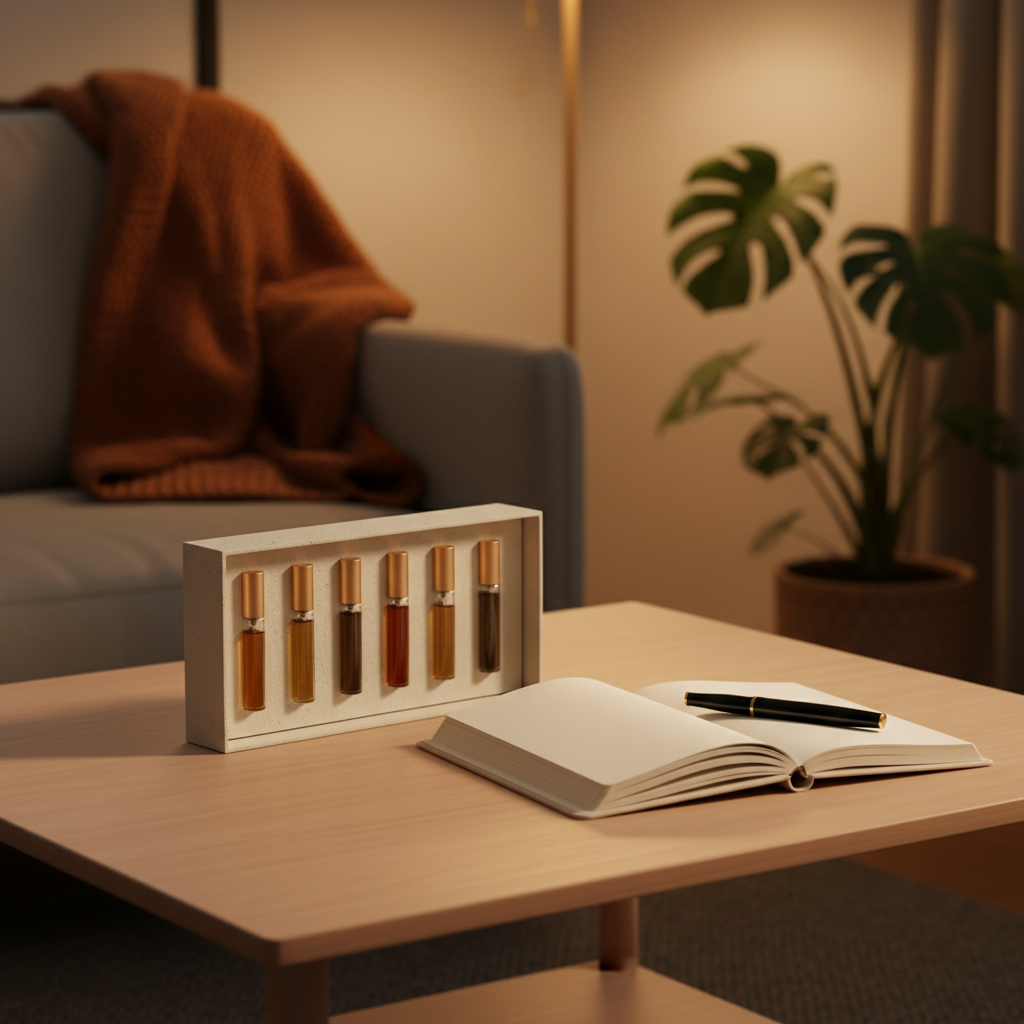
Ready to test smarter? Start with a guided shortlist, then wear your top two in real life this week. Use the brand quiz and a compact sampler to cut the field fast.
- Jump to the Find Your Scent experience for an instant roadmap.
- Compare small vials first—see why in sample sets vs full bottles.
Case Studies and Real-World Examples
Three quick scenarios show how different shoppers find a match: the busy professional who needs polish, the minimalist who wants one bottle for everything, and the gift buyer who’s picking for someone else.
The Busy Professional
- Brief: “Clean, modern, not loud; must work in meetings and after-work dinners.”
- Approach: Focus on fresh-woody eau de parfum for steady 6–8 hour wear.
- Result: Balanced woods with light citrus top notes earn consistent compliments without overpowering a conference room.
The Minimalist
- Brief: “I want one scent for gym bag, office, and weekends.”
- Approach: Test unisex woods/musks; verify comfort in heat and cold across two days.
- Result: A soft woody-musk with moderate projection feels right 90% of the week and layers well for evenings.
The Gift Buyer
- Brief: “Elegant, ready-to-gift pick without guessing the exact taste.”
- Approach: Choose a curated set covering fresh, floral, and amber; include a note asking the recipient to share their favorite.
- Result: Recipient enjoys exploring and selects a favorite confidently, reducing returns and re-gifts.
If you want ideas with a moody, after-dark vibe, browse a curated capsule like the Seduction & Mystery collection to audition rich evening profiles alongside daytime options.
Frequently Asked Questions
Common questions include how long to test, whether to spray clothing, and what to do if you like two finalists. Keep variables small, collect real-world feedback, and choose the scent that feels great in the broadest range of your life.
How long should I test a fragrance before deciding?
Give promising scents two full-day wears across different conditions—one warmer, one cooler. Log how you feel at 30 minutes, 2 hours, and 6–8 hours. If compliments and comfort remain steady, you’ve likely found a strong signature candidate.
Should I spray fragrance on clothes or just skin?
Skin shows the full evolution of notes. Clothing can extend the aura, but test on an inconspicuous spot first. For accuracy during trials, prioritize skin, then add a light fabric spray once you’ve chosen your signature.
What if I love two scents equally?
Use roles. Keep one as your signature (work, day-to-day) and the other as a “specialist” (evenings, events, or seasonal wear). You’ll enjoy both while preserving the consistency a signature scent provides.
How many sprays are ideal when testing?
For trials, 2–4 total sprays on pulse points are enough to assess projection and evolution. Over-spraying can blur differences and cause fatigue. Keep placement consistent when comparing options.
Can a unisex fragrance be a signature scent?
Absolutely. Many balanced woods, musks, and airy ambers feel universal and versatile. If it fits your lifestyle and earns steady compliments, it qualifies—regardless of the marketing label.
Conclusion
Your signature scent emerges when you test smart, track reactions, and choose what feels great across most of your life. Keep your shortlist tight, wear finalists in real settings, and let consistency—not hype—decide.
- Key takeaways:
- Define your brief, then sample intentionally (5–7 to start).
- Test on skin, check at 30, 120, and 480 minutes, and across two temperatures.
- Use guided tools and discovery/sample sets to narrow choices quickly.
- Pick the scent that earns repeat compliments and feels effortless 80–90% of the time.
Next steps: take the guided quiz, line up a focused sampler, and wear your top two this week. You’ll know your signature sooner than you think.
Soft CTA: Start here → Find Your Scent