

A perfume tester set is a curated selection of fragrance samples that lets you compare scents on your skin before committing to a full bottle. It typically includes several vials across styles so you can assess notes, longevity, and projection at home. For Canadian shoppers, Auremie Perfumes pairs sets with guidance designed to match mood and occasion.
By Auremie Perfumes • Last updated: 2026-06-01
Overview and table of contents
A perfume tester set helps you test multiple fragrances under real-life conditions. You’ll learn how these kits work, the best way to test on skin, how to compare notes (including orris), and how to choose discovery or sample sets that fit your style. Use this guide to reduce blind-buys and find a signature scent.
This complete guide shows you how to use a tester set like a pro and align your picks with your lifestyle. Expect plain-language steps, expert checklists, and real examples from Auremie Perfumes’ discovery and sample program.
- What a perfume tester set includes and how it works
- Why tester and discovery sets save time and reduce blind-buys
- How to test on paper and skin, with timing that actually works
- Types of kits: discovery sets, travel samples, decants, and samplers
- Best practices for longevity, sillage, and layering tests
- Tools and resources (including Auremie’s Find Your Scent)
- Mini case studies you can model
To go even deeper on discovery formats, see our internal breakdown of options in Discovery Sets Explained. It’s a practical primer you can skim in minutes.
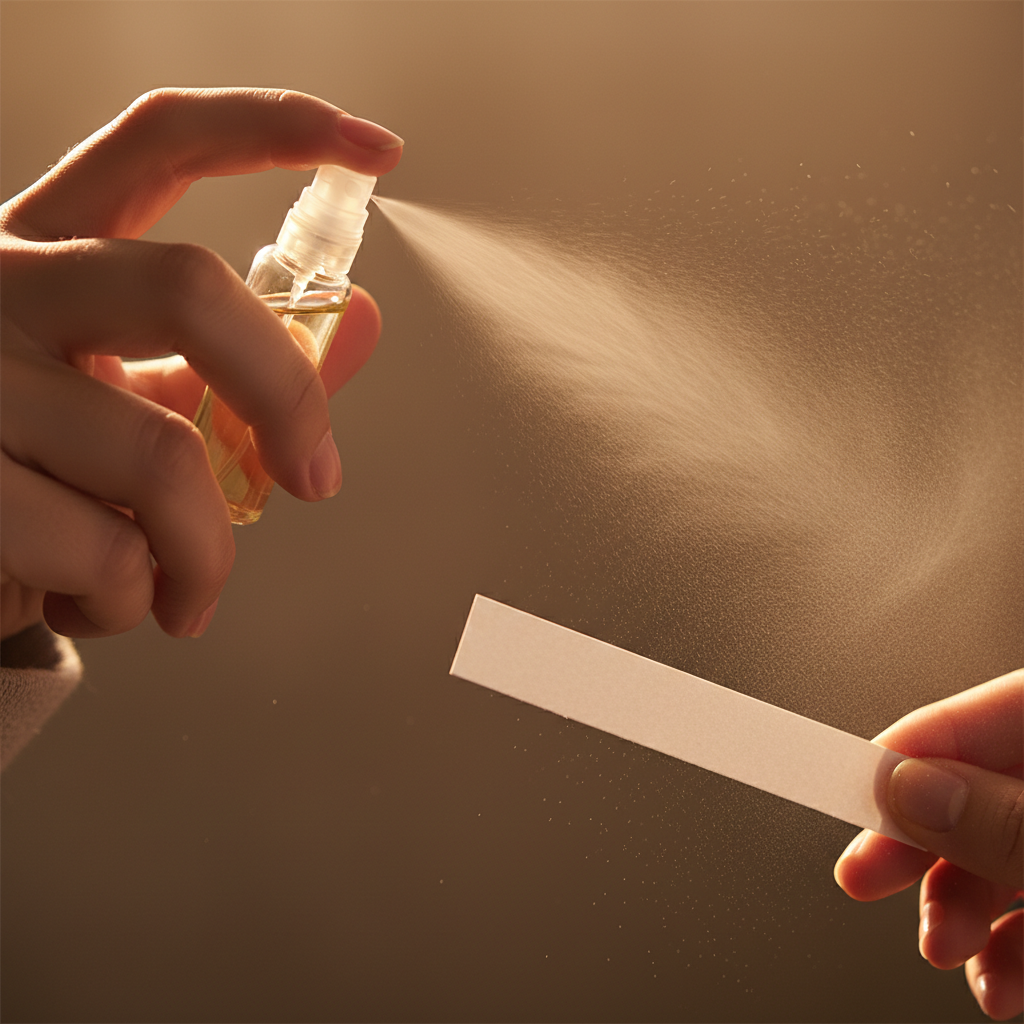
What is a perfume tester set?
A perfume tester set is a curated bundle of sample-size fragrances designed for at‑home testing. It usually spans several scent families, letting you compare top, heart, and base notes over hours on skin. The format minimizes risk, speeds up learning, and supports confident, full-bottle decisions.
In our experience helping online shoppers navigate choices, a tester set works best when it’s thoughtfully mixed: a fresh or citrus pick, an aromatic or woody option, something warm and ambery, plus a wild card (like iris/orris or a gourmand twist). That range makes differences obvious.
- Typical contents: 5–10 sample vials or mini atomizers designed for 2–4 wearings each.
- Coverage: A spread of styles (fresh, floral, woody, amber, musk), sometimes by theme or season.
- Testing focus: Compare opening sparkle (first 5 minutes), heart (30–90 minutes), and drydown (4–8 hours).
- Outcome: A short list of 1–2 keepers that suit your daily life, with notes documented in a journal or phone.
Take this example: a unisex set that includes a bright citrus, a leather-woody, a powdery orris, and a cozy amber. Most wearers quickly separate “fun to smell” from “I’ll wear this for work or weekends” after one or two full-day tests.
Want guided prompts while you sample? Try our Find Your Scent guide to map mood and occasion to note families.
Why tester sets matter for finding your signature scent
Tester sets reduce blind-buys, reveal how a fragrance behaves on your skin, and speed up learning across styles. You can evaluate projection, longevity, and versatility over normal days instead of store lighting. The result is a confident, signature-worthy pick you’ll actually wear.
Here’s the thing: skin chemistry, climate, and routine all shape a scent’s performance. Paper strips highlight openings; skin reveals the story. Most people can judge 3–5 scents clearly before nose fatigue creeps in, so scheduling tests across days produces better calls.
- Lower risk, higher clarity: Multiple wearings per vial let you retest before deciding.
- Real-life context: Commute, office AC, gym bag—see how the scent behaves in your week.
- Longevity reality check: Track scent life from first spray to drydown; log hours on wrist and collar.
- Versatility scoring: Rate “weekday-ready” vs. “special-event only” to avoid shelf-sitters.
- Education built-in: By day three, most testers can identify citrus vs. aromatic vs. orris/iris with ease.
We’ve found that customers who sample across styles make faster, happier decisions—and often discover an unexpected love (powdery orris is a classic surprise) once they wear it through a full drydown.
If you’re choosing with gifting in mind, pair a tester run with the tips in our dedicated sampler overview, then see options in our perfume sample gift set guide to wrap it up beautifully.
How a tester set works from unboxing to shortlisting
Open your tester set, label blotters, and smell openings. Then test 1–2 scents per arm, 2–3 sprays each. Log notes at 5, 30, 90 minutes, and 6–8 hours. Repeat across days, rest your nose, and shortlist the 1–2 fragrances that fit your life best.
The process is simple but structured. You’re aiming to compare like a pro while staying human and practical. Use the rhythm below to avoid overwhelm and olfactory fatigue.
- Unbox and sort: Group by style (fresh, floral, woody, amber, musk). Keep one “wild card.”
- Paper pass: Spray each on labeled blotters; wait 1–2 minutes. Rank immediate interest.
- Skin test: Pick your top 2–4; apply to separate spots (wrists, inner arms). Use 2–3 sprays each.
- Time checks: Note impressions at ~5 minutes (top), 30–90 minutes (heart), and 6–8 hours (base).
- Context pass: Wear your favorite through a normal day (commute, meetings, errands).
- Rest day: Give your nose a break or smell unscented coffee beans briefly between tests.
- Shortlist: Select 1–2 keepers. Re-wear each on a clean day to confirm.
Pro tip: Eau de parfum concentrations typically sit around the mid-teens to ~20% aromatic compounds, which is why heart and base development reward patience. Let the story unfold before you decide.
If you prefer a guided cadence, our Find Your Scent guide gives you prompts for mood, season, and setting so your notes translate directly to daily wear.
Types, methods, and approaches to sampling
You can sample via discovery sets, travel-size sample sets, individual decants, or in‑store blotters. Discovery kits cover a full brand style; travel samples emphasize portability; decants offer larger trial volumes. Choose based on how many wearings you need and how fast you want to decide.
Tester formats aren’t one-size-fits-all. The right choice depends on how you like to learn, how sensitive your nose is, and whether you’re sampling for yourself or gifting.
Popular sampling formats
- Discovery set: A brand-curated selection spanning key styles, ideal for understanding house character in one go.
- Sample set: Focused vials or minis for portable, quick trials at home and on the move.
- Decants: Larger trial sizes (often several milliliters) for extended wear testing.
- In-store blotters: Great for screening openings; less reliable for drydowns compared to skin.
Want a clear walk-through of discovery formats and when to use them? Explore Discovery Sets Explained for strengths and trade-offs.
| Format | Best For | Pros | Watchouts |
|---|---|---|---|
| Discovery set | Learning a brand’s range fast | Balanced mix; consistent quality; easy to compare | Might include styles you don’t wear often—still valuable for contrast |
| Sample set | Portable testing and retesting | Lightweight; 2–4 wearings; easy gifting | Smaller volume than decants; take notes so wearings count |
| Decant | Extended, real-life trials | Many wearings; excellent for office or gym tests | Fewer scents per budget; prioritize your top candidates |
| Blotter pass | Fast screening of openings | Quickly narrows choices; low commitment | Can’t predict skin chemistry; always confirm on skin |
Sampling for travel or a festival weekend? Our quick guide to travel-size sample sets shows how to cover daytime freshness and nighttime depth with two or three minis.
Best practices: how to test, compare, and decide
Test two scents per arm, two or three sprays each, and log checkpoints at 5, 30, 90 minutes, then 6–8 hours. Limit to 3–5 scents per day to avoid fatigue. Wear finalists on normal days, then choose the 1–2 that feel effortless for your life.
Great testing is part science, part self-awareness. Use these field‑tested habits to separate “nice” from “right for me.”
Set up for success
- Clean canvas: Unscented soap and lotion. No lingering fabric softener competing with the trial.
- Placement: Inner forearms, wrists, and upper arm are reliable for reading development.
- Sprays and distance: 2–3 sprays at ~4–6 inches give consistent diffusion for comparison.
- Checkpoints: Jot notes at 5, 30, 90 minutes, and late drydown (6–8 hours).
- Fatigue control: Cap testing at 3–5 scents in one session; sip water and take fresh air breaks.
What to evaluate
- Top notes: First impression and sparkle. Does it feel bright, spicy, green, or sweet?
- Heart: The core after 30–90 minutes. Florals, woods, or orris often bloom here.
- Base: Comfort layer. Ambers, musks, and woods drive longevity and the “lived-in” feel.
- Projection: How far the scent carries in your bubble during the first 2 hours.
- Longevity: Total wear time in hours until it fades to a soft skin scent.
- Versatility: Rate work, weekend, date night, and gym suitability.
Layering and control tests
- Single-scent baseline: Wear finalists alone first; then test simple layers (e.g., citrus over soft woods).
- Fabric vs. skin: One spray on a tee collar and one on skin to see diffusion differences.
- Season check: Test a fresh pick on a warm afternoon and a woody/amber on a cool evening.
If you want structured prompts and a decision framework, pair this section with our Find Your Scent guide; it turns notes into daily-wear picks.
Tools and resources to make sampling easier
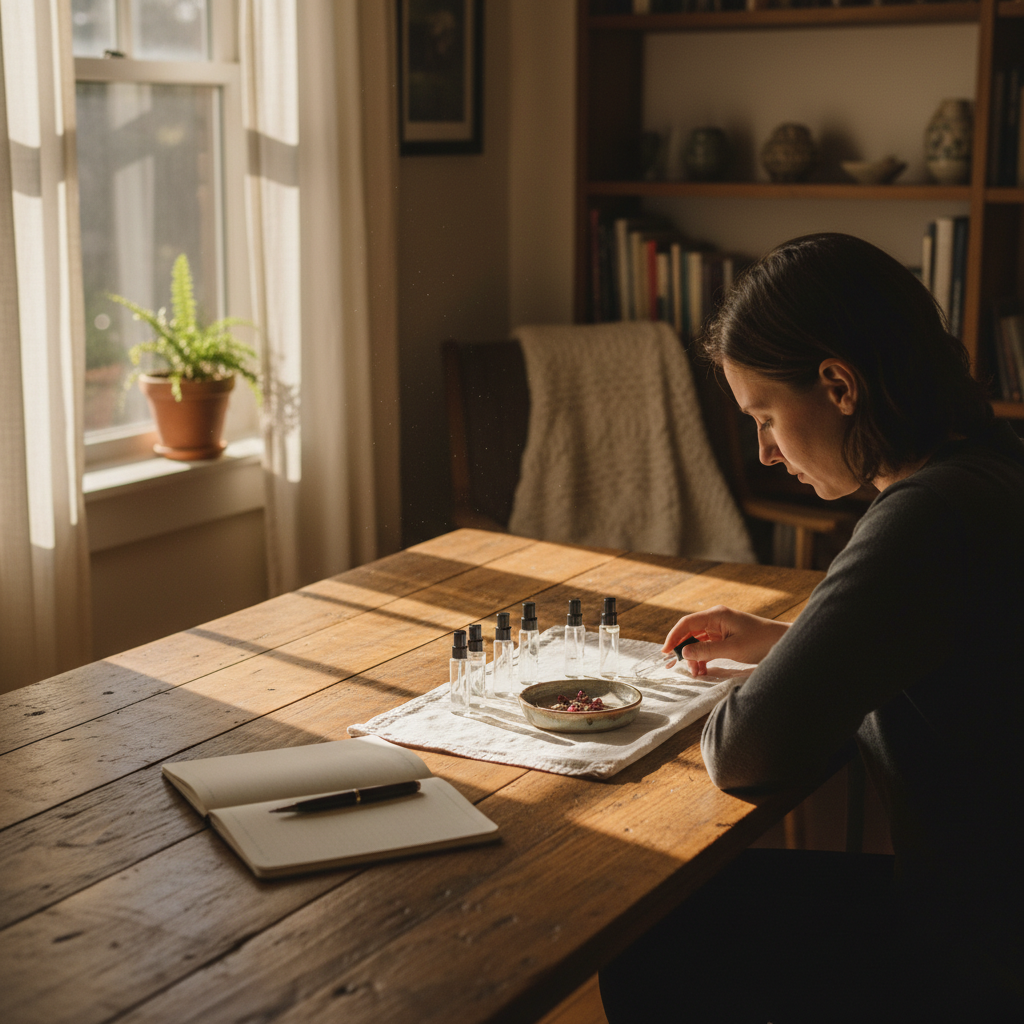
Use labeled blotters, a simple notes template, and a discovery kit that spans styles. For guidance, Auremie’s Find Your Scent prompts map mood, season, and setting to note families, turning your tester set into confident keep-or-pass decisions.
Sampling goes faster when your tools work for you. A little structure cuts through indecision and helps you remember winners after a long week.
- Blotter strips + pen: Label scent name, time, and 3 adjectives at each checkpoint.
- Notes template: Keep the same fields for every scent to compare apples to apples.
- Calendar nudge: Set phone reminders for drydown checks at 90 minutes and 6 hours.
- Discovery breadth: Make sure your kit covers fresh, floral, woody, and amber at minimum.
- Guided prompts: Try Find Your Scent so your notes tie directly to lifestyle and wardrobe.
Local considerations for your area
- Test a fresh or aromatic pick on warmer days and a woody/amber pick on cooler evenings to mirror seasonal swings common across Canadian cities.
- Plan sampling around holidays or busy periods; noses tire faster when you’re rushing between events or commuting in cold-to-warm transitions.
- If you wear fragrance at work, try a weekday test under office AC and a weekend test outdoors to mirror real diffusion in your region.
When you’re ready to gift a winner, these packaging tips in our perfume sample gift set guide help you present samples and full bottles with a polished, ready-to-give look.
Case studies and real-world examples
Real shoppers use tester sets to learn fast and choose smarter. By sampling across styles and logging check-ins, they uncover surprising favorites, confirm longevity, and avoid shelf-sitters. These quick scenarios show how to turn a handful of vials into a confident signature pick.
Example 1: The weekday minimalist
Goal: one effortless daily scent plus one elevated pick for dinners. Approach: a discovery set with citrus, aromatic woods, soft orris, and amber. After three days, the wearer picks the aromatic woods for weekdays (polished, versatile) and keeps the amber for cooler nights. Decision time: about a week with retests.
Example 2: The thoughtful gift buyer
Goal: an elegant, ready-to-gift choice. Approach: run a mini test with two daytime-appropriate florals and a cozy vanilla-amber. The recipient prefers the floral with a powdery heart (often an orris nuance). The buyer wraps the choice using the ideas from our sample gift set guide and includes a note with wear tips.
Example 3: The enthusiast updating a rotation
Goal: add a unisex eau de parfum that lasts through long workdays. Approach: decant trials for extended wear. Outcome: a modern woody-musk with 8-hour comfort on skin and pleasant projection in the first two. The tester logs fabric vs. skin differences and commits after three full-day wears.
For more context on turning preferences into a reliable “always-reach” signature, skim the external signature scent guide, which outlines a simple decision tree you can adapt while you sample.
Frequently asked questions
The most common tester-set questions focus on how many scents to try at once, how long to wear each, and how to read notes accurately. Here are direct answers you can use today, plus resources for deeper dives as you refine your shortlist.
How many fragrances should I test in one day?
Limit yourself to three to five scents per day. Space them on separate skin areas and take breaks between smells. This avoids nose fatigue and helps you compare fairly. Prioritize the styles you’re most curious about and save others for the next day.
Should I trust paper blotters or test on skin?
Use blotters to screen openings, then test your top picks on skin. Paper shows the first impression; skin reveals heart and base notes, projection, and longevity. Always confirm finalists with full-day skin wear before deciding on a bottle.
How long should I wear a sample before deciding?
Wear each finalist for a full day twice, logging checkpoints around 5, 30, and 90 minutes and again at 6–8 hours. Re-wear your top one on a clean day. If it feels effortless in your routine, that’s a strong sign it’s signature-worthy.
What’s the difference between a discovery set and a sample set?
Discovery sets typically showcase a brand’s range across styles, while sample sets focus on portable minis or themed picks. Discovery kits are great for learning a house’s character; sample sets are ideal for quick, on-the-go testing and gifting.
How do I learn perfume notes and families faster?
Compare side by side and write three adjectives at each checkpoint. Read an overview like the external perfume notes guide, then practice with your tester set. You’ll quickly tell citrus from aromatic woods, powdery orris from creamy vanilla, and more.
Conclusion and next steps
A well-built perfume tester set turns guesswork into clarity. Test two to four scents at a time, track their development, and re-wear your finalists on normal days. In a week or two, you’ll land on a confident signature choice that fits your style and routine.
Here are quick reminders as you wrap up your sampling journey and move toward a confident full-bottle pick.
Key takeaways
- Structure wins: 5, 30, 90 minutes, then 6–8 hours tell the full story.
- Limit sessions to 3–5 scents to keep comparisons accurate.
- Balance your kit with fresh, floral, woody, amber—and a wild card like orris.
- Use notes and a simple rating system tied to work, weekend, and evening.
- Confirm finalists across different settings before you decide.
Action steps
- Skim the brand overview in Discovery Sets Explained.
- Map mood and occasions with the Find Your Scent guide.
- If you prefer to study note families while you test, the external unisex perfume guide offers helpful context for shared-wear picks.
- Ready to package a favorite? See our internal tips in the perfume sample gift set guide.
Want tailored help? We created these resources for online shoppers who value longevity, modern composition, and Canadian convenience—start with a discovery set, then let your skin decide.