

Winter fragrances for women are richer, longer-wearing perfumes designed to bloom in cold, dry air. They lean on warm notes like vanilla, amber, woods, orris, and spice to project and last. For Canadian shoppers, Auremie Perfumes curates seasonal women’s and unisex picks and offers discovery sets so you can test at home before committing.
By Auremie Perfumes • Last updated: June 8, 2026
Overview: Winter fragrance essentials
Choose winter scents with warm, dense notes (vanilla, amber, woods, resin, spice) and higher concentrations (eau de parfum or extrait) for better performance in cold weather. Apply to moisturized skin, layer with matching body products, and spray on scarves or coats from distance for softer, longer projection.
This quick overview shows how to get confident, consistent results with winter perfumes. Use it as a checklist while you browse and sample.
- Notes that thrive: amber, vanilla, tonka, sandalwood, cedar, oud, orris, incense, cacao, leather.
- Concentrations: prefer eau de parfum (EDP) or parfum/extrait for longevity and warmth.
- Layering: unscented lotion first; consider matching oil or body cream.
- Where to spray: pulse points plus scarf/cuff (lightly) for a cozy trail.
- Sampling strategy: start with discovery or sample sets; test on skin outdoors.
- Selection help: use a scent finder tool and seasonal guides to narrow choices.
Local considerations for your area
- Canada’s cold, dry winters can mute projection. Moisturize first and favor richer eau de parfum styles when sampling or wearing outside.
- Holiday gifting ramps up demand. Order early and use discovery/sample sets to confirm fit before choosing a full bottle.
- Shipping from Ontario is quick across Canada; plan testing windows around colder snaps to see how a scent behaves in real winter air.
What are winter fragrances for women?
Winter fragrances for women are perfume compositions built around warm, dense materials—vanilla, amber, woods, spice, orris—that resist being “flattened” by cold, dry air. They favor higher oil concentrations and plush base notes, creating a cozy aura, lasting sillage, and a reassuring, elegant presence on coats and knitwear.
Think of winter perfume as cashmere in scent form: weight, texture, and warmth. The formula’s structure matters as much as the notes.
- Warm base architecture: amber, balsams, tonka, and woods provide a long, steady dry-down.
- Cool-weather florals: rose, jasmine sambac, and orris add plush facets without going airy.
- Spice for lift: cardamom, clove, pink pepper, and cinnamon add contrast and sparkle.
- Sweetness in moderation: vanilla, praline, cacao—balanced by woods to avoid cloying indoors.
- Concentration choice: EDP and parfum styles generally outlast EDT in winter conditions.
For a fast primer on seasonal choices, see our internal guide on scents for each season, which outlines how warmer notes shine when temperatures drop.
Why winter perfumes matter (and how they change compliments)
Cold, dry air reduces the volatility of light, citrusy top notes. Winter-optimized blends rely on heavier molecules and richer bases so more of the scent reaches those around you. The result is clearer projection, better longevity, and more compliments during coat-on, indoor-to-outdoor routines.
Here’s the thing: thinner blends often disappear under wool coats. Richer styles linger on textiles and skin, surviving commutes, office HVAC, and frosty air.
- Projection physics: heavier base notes (amber, woods) evaporate more slowly, staying perceivable in cold.
- Textile cling: resins and musks adhere to scarves and cuffs, extending the trail between spaces.
- Compliment factor: cozy accords read as comforting and sophisticated in winter social settings.
- Office-safe options: orris, soft woods, and musks keep it plush without overpowering meeting rooms.
If you’re mapping this to a signature, our round-up of high-end women’s fragrance tips explains how to balance richness with wearability.
How winter fragrance chemistry works
Fragrances diffuse as aromatic molecules evaporate from skin into air. Cold, dry conditions slow that evaporation, so winter perfumes emphasize lower-volatility materials and higher oil concentrations. Moisturized skin, fabric spritzing, and strategic pulse-point application restore diffusion and longevity.
In simple terms, temperature and humidity shift how fast scent molecules move. You can counter that with composition, concentration, and technique.
- Volatility basics: lighter citrus/aromatics lift fast in warmth; in cold they fade quickly, so rely less on them.
- Oil concentration: EDP/parfum percentages help anchor top notes and amplify the base in winter air.
- Hydration effect: well-moisturized skin forms a film that slows evaporation and evens projection.
- Textile strategy: a light mist on outerwear captures resin/wood notes for a soft, lasting halo.
For an expanded primer on staying power and structure, our external long-lasting fragrance guide breaks down how concentration and materials influence wear time.
Types of winter perfume notes and styles
Winter-friendly styles include amber-vanilla gourmands, spicy woods, resinous florals, powdery orris-iris, and leather-musks. Each offers a different mood—comforting, sultry, polished, or quietly luxe—while sharing the same cold-weather advantage: a weighty base that holds projection and extends the dry-down.
Use this menu to match mood to composition. Two quick tips: anchor sweetness with woods, and let spice add dimension rather than heat alone.
- Amber-vanilla gourmands: vanilla, tonka, benzoin, cacao; cozy and inviting.
- Spicy woods: cardamom, pink pepper, cedar, sandalwood; elegant and modern.
- Resinous florals: rose or jasmine over amber/oud; rich, evening-ready.
- Orris/iris powder: buttery orris with soft musks; knitwear-luxe, office-safe.
- Leather and suede: a plush, textural finish that pairs with wool and cashmere.
Exploring styles via samples is low risk. Our internal overview of sample sets for niche perfume outlines a simple try-at-home approach.

How to choose winter fragrances for women (step-by-step)
Define the mood, choose a winter-ready style (amber, woods, orris), shortlist 3–5 options, and sample them on skin across indoor-outdoor transitions. Keep notes, revisit winners after 24 hours, and confirm performance on coats or scarves before selecting your signature.
- Clarify your vibe: cozy and intimate, polished and professional, or festive and bold?
- Pick two styles: e.g., spicy woods for day, amber-vanilla for night.
- Shortlist wisely: 3–5 scents with EDP/parfum strengths and warm bases.
- Sample on skin: wrists/elbows, not just paper; wear through a commute.
- Textile test: one light mist on scarf hem; evaluate the trail after 2–4 hours.
- Sleep-on-it: reassess next day’s dry-down to confirm comfort and fit.
If you’re indecisive, build a testing plan using our internal best scent selection guide for a structured, no-stress process.
Concentrations and longevity in winter
Eau de parfum and parfum/extrait generally outperform eau de toilette in winter thanks to higher aromatic oil content and denser bases. Choose concentrations that resist cold air, then apply to moisturized skin and lightly to textiles to extend projection and trail.
Use this quick comparison to align expectations before sampling.
| Concentration | Typical profile in winter | When to choose |
|---|---|---|
| Eau de Toilette (EDT) | Brighter, lighter; may feel fleeting outdoors | Layered under sweaters or for short indoor events |
| Eau de Parfum (EDP) | Balanced lift with strong base presence | Everyday winter wear, office to evening |
| Parfum/Extrait | Rich, plush, intimate aura; excellent cling | Formal nights, special occasions, deep cold |
For women comparing formats, our internal breakdown of eau de parfum for women explains why EDP is a winter workhorse.
Best practices for cold-weather wear
Moisturize first, spray from 6–8 inches, and focus on pulse points plus a light textile mist. Limit sprays in tight indoor spaces, refresh once midday if needed, and store bottles away from bathroom humidity and extreme temperature swings to preserve formula integrity.
- Prep the canvas: unscented lotion or oil equals better hold and smoother projection.
- Spray technique: wrists, inner elbows, and one pass through your scarf air-space.
- Layer with tact: match family (vanilla/amber) rather than mixing clashing accords.
- Refresh smartly: one spray on a coat lapel can revive your trail without overwhelming.
- Bottle care: store cool, dark, and upright to maintain stability through winter.
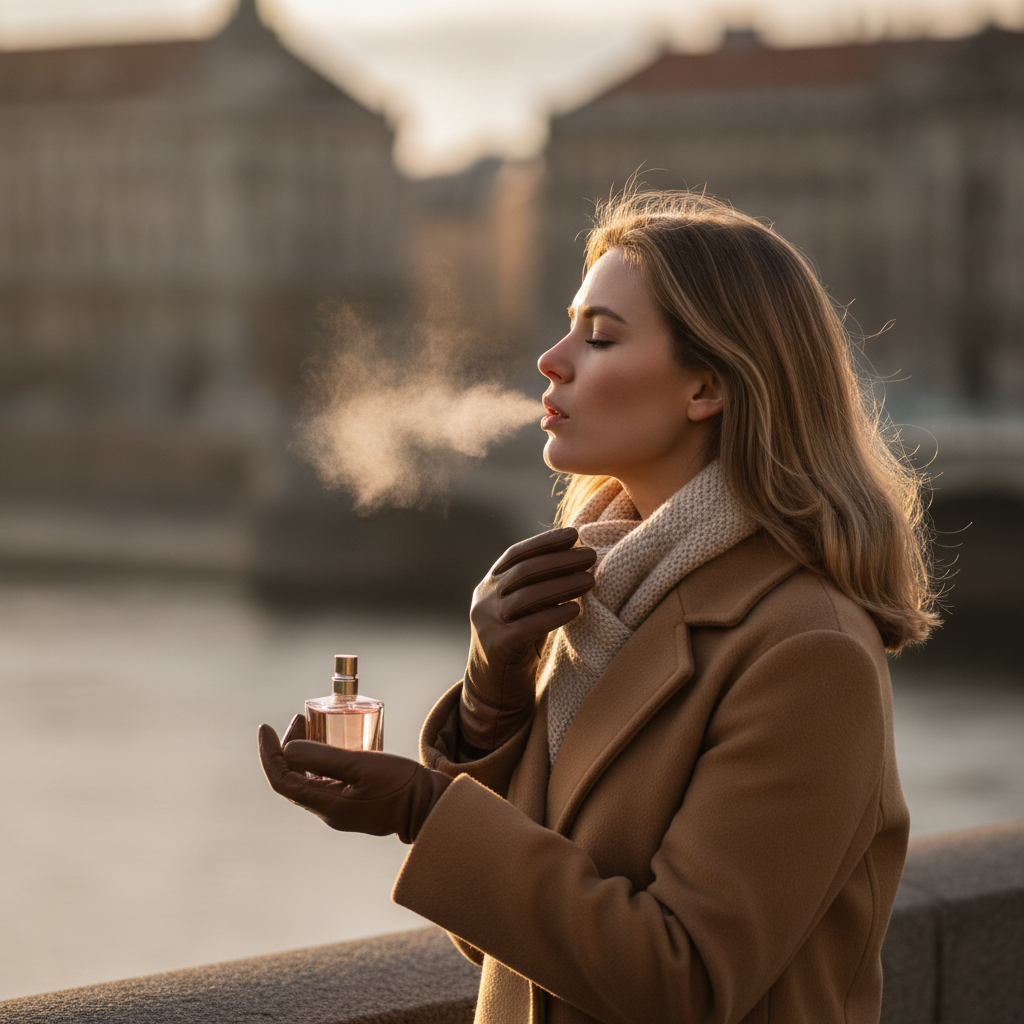
Want a shortcut? Auremie Perfumes specializes in refined, modern women’s and unisex fragrances with discovery and sample sets that let you try multiple winter-ready styles at home. Use our Find Your Scent guidance, then confirm your favorite in real cold-weather conditions.
Tools and resources to pick your winter signature
Use a scent finder framework, discovery sets, and structured note-taking to narrow winter options fast. Test indoors and outdoors, compare day-one vs. next-morning impressions, and keep a simple scorecard for projection, longevity, comfort, and compliments before choosing a full bottle.
- Scent finder prompts: list your three favorite notes, ideal occasions, and desired vibe (cozy, polished, sultry).
- Discovery/sample sets: evaluate 3–5 scents over a week; rotate each day for apples-to-apples comparisons.
- Scorecard idea: 1–5 for projection, longevity, comfort, and uniqueness; tally leaders.
- Day vs. night: choose a versatile daytime EDP and a deeper evening parfum for contrast.
For broader context on finding a personal match, our external overview on choosing your best scent walks through a beginner-friendly decision tree.
Real-world examples and mini case studies
Applying these steps, we routinely see shoppers land on two winter keepers: a plush daytime EDP and a deeper evening wear scent. Sampling across actual commutes reveals which formulas cling to knitwear, which sit close-to-skin, and which generate the most unsolicited compliments.
Example 1: The cozy professional
- Goal: soft, office-safe signature that still reads luxurious on knitwear.
- Approach: test orris/iris-musk and sandalwood-vanilla EDPs; log projection and comfort.
- Result: orris-forward EDP selected for cashmere-like smoothness and consistent 8-hour presence on scarf and blouse.
Example 2: The evening gourmand
- Goal: date-night glow without cloying sweetness indoors.
- Approach: sample amber-vanilla with cacao vs. spicy-amber with pink pepper.
- Result: spicy-amber won—balanced warmth, better diffusion from coat to restaurant, and multiple compliments.
Example 3: The minimalist traveler
- Goal: one carry-on-friendly scent that works from daytime errands to dinner.
- Approach: test refined musky-wood EDP against a leather-suede parfum.
- Result: musky-wood EDP chosen for cleaner trail in shared spaces and reliable wear on wool.
When you’re narrowing down styles, our internal piece on niche fragrance brands can help you spot craftsmanship cues—materials, structure, and finishing.
Style match guide: mood-to-note shortcuts
Match mood to note families: choose amber-vanilla for cozy, orris and soft woods for polished, spicy woods for modern edge, and resinous florals for drama. Keep sweetness grounded with woods and musks to avoid heaviness indoors while preserving a winter-appropriate aura.
- Cozy: vanilla, tonka, benzoin + sandalwood.
- Polished: orris/iris, sheer musk, cashmere woods.
- Modern edge: cardamom, pink pepper, cedar, incense.
- Evening drama: rose-amber, jasmine-oud, leather accents.
For a simple seasonal roadmap, revisit our internal seasonal scent guide to see where winter styles shine.
A sampling strategy that actually works
Test three candidates for four days: day one on skin, day two with a scarf spritz, day three in a crowded indoor space, and day four outdoors in colder air. Keep simple notes after each wear. The winner is the one you reach for without thinking.
- Limit variables: don’t test fresh laundry detergent or new body lotion on trial days.
- Rotate methodically: A/B your top two on opposite arms for direct comparison.
- Listen for feedback: track compliments by scene (office, transit, dinner).
- Confirm the dry-down: many keepers win on hour four, not minute one.
Want a second opinion? Our external unisex perfume guide shows how shared-note structures (woods, amber, spice) excel in winter without leaning overly sweet.
Care and storage through winter
Store bottles upright in a cool, dark place away from heat, humidity, and light. Keep caps tight, avoid bathroom storage, and minimize agitation during travel. Good storage preserves color, top-note clarity, and base cohesion through the season and beyond.
- Light is the enemy: UV can dull bright facets and darken liquid over time.
- Stable temps: large swings can stress fixatives and alter balance.
- Travel tip: decant to travel atomizers and keep them cushioned in cold snaps.
Build your winter fragrance knowledge
Sharpen your eye for composition, concentration, and seasonal fit by reading targeted guides. Focus on how notes, strengths, and application interact with real-world winter routines—then translate those insights into a smarter sampling plan.
Two helpful deep dives from our library: a primer on eau de parfum for women and a practical walk-through of using sample sets to compare winter-ready styles.
Frequently Asked Questions
These quick answers resolve the most common winter perfume questions for women—performance in cold air, layering, and selection—so you can sample with confidence and wear your favorite scents well through the season.
What notes are best for winter fragrances for women?
Amber, vanilla, tonka, sandalwood, cedar, orris, incense, and soft leather excel in cold air. They anchor the composition so it projects and lasts on skin and knitwear. Add a touch of spice—cardamom or pink pepper—for lift without sacrificing warmth.
Is eau de parfum better than eau de toilette in winter?
Usually yes. Eau de parfum and parfum/extrait contain more aromatic oils and denser bases, so they resist cold, dry air and maintain projection longer. EDT can work if you layer well, but EDP is the more reliable winter performer for daily wear.
How should I apply perfume to last through a commute?
Moisturize first, spray wrists and inner elbows from 6–8 inches, and add one light mist to your scarf or coat lapel. This balances skin diffusion with a gentle textile trail that survives outdoor air and still smells refined indoors.
Should winter perfumes be sweet?
A little sweetness works beautifully when balanced by woods, musks, or resins. Gourmand notes like vanilla or cacao feel cozy in winter, but grounding them with sandalwood or amber keeps the scent elegant and comfortable in closed spaces.
Key takeaways
Pick warm base notes, favor EDP/parfum strengths, and test across real winter routines. Moisturize before spraying, add a light textile mist, and store bottles away from light and heat. A simple sampling plan quickly reveals your most complimented cold-weather signature.
- Warm, dense accords project and last in cold air.
- EDP/parfum concentrations are winter workhorses.
- Moisturize, spray smart, and add a scarf spritz.
- Sample systematically; choose the one you reach for.
Conclusion: Find your cold-weather signature
The best winter fragrances for women combine warm bases, thoughtful concentration, and smart application. With a structured sampling plan—and discovery sets to compare styles—you can confidently select a plush, long-lasting signature that earns compliments from first frost through last snow.
Ready to explore? Build a shortlist, grab discovery or sample sets, and test across your daily winter routine. When a scent feels like your favorite sweater, you’ve found the one.