

Perfume & cologne refer to scented compositions with different fragrance oil concentrations and styles. Understanding these categories helps you predict longevity, projection, and the vibe a scent delivers. For Canadian online shoppers exploring Auremie Perfumes, this guide explains how to choose confidently, sample smartly, and build a wardrobe you’ll actually wear.
By Auremie Perfumes • Last updated: 2026-06-03
Quick Summary
Perfume and cologne differ mostly by concentration and style. Higher concentrations (parfum, eau de parfum) last longer and project more; lighter ones (eau de toilette, cologne) feel fresher and fade faster. Use discovery or sample sets to test 3–5 scents on skin, then choose a signature that fits season, setting, and your chemistry.
This complete guide is designed for online fragrance shoppers who want clear, practical answers. You’ll learn:
- What “perfume” and “cologne” actually mean in everyday use
- How concentrations, notes, and skin chemistry affect wear time
- How to test, layer, and apply for better longevity
- Which fragrance families match seasons, moods, and occasions
- How to use Auremie’s discovery and sample sets to avoid blind-buy regret
Local considerations for your area
- Seasonal shifts can change projection: cooler months suit richer woods and ambers; warmer months favor citrus, green, and airy musks.
- Holiday and event calendars increase gifting needs—use discovery sets and sample kits to reduce guesswork for friends and family.
- Online shoppers across Canada benefit from fast Ontario fulfillment; plan sampling a week ahead of occasions so you can test on-skin.
What Is Perfume & Cologne?
Perfume and cologne are both fragrances; the difference is concentration and style. Parfum and eau de parfum carry higher oil levels for longer wear, while eau de toilette and cologne feel lighter and fresher. In practice, “cologne” often refers to men’s scents and “perfume” to women’s, though many are unisex.
In perfumery, the words point to two things: cultural shorthand and technical strength. Technically, higher concentrations slow evaporation and extend longevity. Culturally, people say “perfume” for women’s and “cologne” for men’s, but composition is what truly matters for performance.
Definitions that matter
- Parfum (Extrait): Typically the richest, longest-wearing format with dense, skin-hugging character.
- Eau de Parfum (EDP): Common sweet spot for projection and longevity; versatile for day and night.
- Eau de Toilette (EDT): Brighter, airier, and often better for heat; usually evaporates faster.
- Eau de Cologne (EDC): Light, sparkling freshness; great for quick refreshes and layering.
Fragrances are built in a pyramid of top, heart, and base notes. Citrus top notes can pop for 10–30 minutes; florals and aromatics often bloom for 1–3 hours; woods, musks, and resins can anchor for 4–10 hours or more depending on your skin.
Concentration ranges in plain language
- Parfum: Often the heaviest feel; fewer sprays, longer presence.
- EDP: Balanced power; many daily-wear signatures live here.
- EDT: Crisp and casual; expect quicker fade and easier reapplication.
- Cologne: Ultra-light and refreshing; perfect post-shower top-up.
These ranges aren’t rigid rules; perfumers design for effect. We’ve found that formulation choices—like fixatives, naturals versus synthetics, and note pairing—often influence real-world longevity more than the label alone.
Why “Perfume vs. Cologne” Actually Matters
Choosing between perfume and cologne affects longevity, projection, and how you’re perceived. Stronger concentrations deliver longer wear and richer trails; lighter formats are fresher and lower-key. Understanding the difference helps online shoppers sample smarter, select seasonally, and avoid blind-buy disappointment.
Online fragrance shopping can feel risky. Without a counter to test on skin, you need a plan. Auremie Perfumes supports this with discovery and sample sets plus a Find Your Scent guide that maps choices to mood, occasion, and style—ideal for Canadian shoppers building confidence at home.
- Longevity expectations: Brighter EDTs and EDCs may last 2–4 hours; many EDPs reach 6–10 hours depending on skin and climate.
- Projection goals: Richer formats often radiate farther for the first 1–3 hours before settling closer to skin.
- Setting fit: Offices and classrooms call for softer sillage; dates and evening events benefit from warmer, denser bases.
- Wardrobe building: Most people feel well-covered with a 3–5-scent lineup: fresh daily driver, cozy comfort scent, evening statement, seasonal wildcard, and a skin-musk.
Small details add up. A single extra spray behind the neck can shift perception in a crowded space. Meanwhile, two forearm sprays can double as your personal scent bubble without overwhelming anyone nearby.
How Fragrance Works on Skin (and Why It Smells Different on You)
Fragrance evolves as top notes evaporate, heart notes bloom, and base notes anchor. Skin pH, hydration, and temperature change evaporation speed and sillage. Proper application—2–4 targeted sprays on pulse points—maximizes performance while keeping the scent enjoyable for you and those nearby.
Every perfume is a moving picture. Alcohol lifts top notes, diffusion carries aromatics, and base materials slow the fade. Your skin’s hydration and body heat control that timeline. Slightly drier skin often shortens lifespan; moisturized skin tends to hold the base longer.
Practical science, zero jargon
- Evaporation curve: Top notes can be brightest for 15–30 minutes, the heart unfolds over 1–3 hours, and bases linger 4–10+ hours.
- Skin chemistry: Warmer body temps and active days increase diffusion; cool days tighten the scent bubble.
- Projection (sillage): Atomizer quality and spray distance matter; 4–6 inches from skin gives a fine, even mist.
- Layering effect: A lightly scented lotion under an EDP can stretch wear by 1–2 hours without changing the character much.
Application that actually works
- Start with 2 sprays (neck front and one wrist). Add a third behind the ear only if you’ll be outdoors.
- For evening, try 4 sprays: chest, back of neck, and each wrist. Skip clothes to avoid staining.
- Don’t rub wrists; friction warms and flashes top notes too quickly.
- Reapply EDT/EDC at the 3–4 hour mark; EDPs may not need a refresh until hour 6–8.
We’ve seen clients transform a “fades too fast” scent into an all-day companion by moisturizing first, spraying from a consistent distance, and choosing pulse points that match their setting.
Types, Families, and Approaches (Including Layering)
Fragrance families guide your taste: citrus and green feel bright; florals read classic; woods and ambers are warmer and longer-wearing. Build range with 3–5 scents across families and layer sparingly—think airy musk plus a citrus EDT for day or an amber EDP over soft iris (orris) for night.
Families give you a shared language to describe vibe and season. They also help you scan a collection and spot gaps. If you love woods and ambers but lack a breezy daily driver, a citrus-aromatic EDT can rebalance your lineup without feeling redundant.
Core families you’ll actually use
- Citrus & Green: Lemon, bergamot, neroli, green tea. Brisk, clean, ideal for heat and quick meetings.
- Floral & Soft Floral: Rose, jasmine, peony, iris/orris. Polished, versatile, and office-friendly.
- Woody: Cedar, sandalwood, vetiver. Grounded and elegant; wears beautifully in cooler temps.
- Amber (Oriental): Vanilla, resins, ambergris accords. Cozy, enveloping, date-ready.
- Aromatic & Fougere: Lavender, herbs, moss. Classic barbershop freshness with depth.
- Musk & Skin Scents: Clean musks and ambrette. Close-wearing, intimate, great for minimalists.
Smart layering (less is more)
- Use a clean musk base as a “canvas,” then add 1–2 sprays of a citrus or green EDT for day.
- At night, pair a soft iris (orris) note with an amber EDP to deepen elegance without shouting.
- Keep total sprays to 3–5 when layering to protect balance and avoid overload.
Layering should feel intentional, not like mixing every note you own. If a combo masks the character you love, dial back to a single spray of the overlaying scent or skip the base entirely.
Perfume vs. Cologne vs. EDT/EDP: A Practical Comparison
Use parfum and EDP when you want richer presence and longer wear; reach for EDT and cologne when you need light, quick freshness. The right choice depends on climate, occasion, and how strong you want your scent bubble to be for the first 1–3 hours.
| Format | Typical feel | Wear window | Best use |
|---|---|---|---|
| Parfum (Extrait) | Dense, intimate, fewer sprays | 6–12+ hours | Evenings, cold weather, dressed-up settings |
| Eau de Parfum (EDP) | Balanced projection | 6–10 hours | Daily wear, office-to-evening versatility |
| Eau de Toilette (EDT) | Bright, airy | 3–5 hours | Warm days, reapplication-friendly |
| Eau de Cologne (EDC) | Ultra-light, sparkling | 2–4 hours | Post-shower refresh, gym bag staple |
Remember: labels guide, but formula rules. A well-constructed EDT can outlast a simple EDP if its base is engineered for slow diffusion and you apply to moisturized skin.
Best Practices for Choosing and Wearing Scent
Test on skin, not just paper. Try 3–5 scents over two days, wear each for 4–6 hours, and note dry-down impressions. Build a 3–5 piece wardrobe across fresh, cozy, and evening profiles. Apply 2–4 sprays to pulse points, avoid rubbing, and store bottles away from heat and light.
Choosing fast—and right
- Shortlist by family (fresh, floral, woody, amber) to match season and mood.
- Use a discovery or sample set to compare side-by-side on the same day.
- Limit to two wrists + inner elbows to keep comparisons clean.
- Give each option a full 4–6 hour wear before deciding.
Wearing like a pro
- 2 sprays for close quarters (office, class); 3–4 sprays for evenings or outdoors.
- Target neck, wrists, back of neck. Skip clothing to avoid residue.
- Moisturize first; hydrated skin can extend longevity by 1–2 hours.
- Rotate scents to prevent nose fatigue—alternating keeps your perception fresh.
Storage and care that protects performance
- Keep bottles cool, dry, and shaded—heat accelerates oxidation.
- Minimize air exposure; cap promptly after each use.
- Avoid bathroom storage; steam swings temperature and humidity.
These basics turn sampling into selection. You’ll spend less time second-guessing and more time enjoying a scent that earns compliments.
Tools and Resources to Make Online Selection Easy
Use guided tools and kits to reduce guesswork. Start with a scent-matching guide, order a discovery or sample set, then narrow to a daily driver and an evening scent. This approach cuts blind-buy risk and helps you find a signature faster.
Auremie Perfumes was built for confident online discovery. If you’re not near a counter, these resources replicate the experience at home and help you choose without pressure.
- Use Auremie’s Find Your Scent guide to match notes with moods and occasions.
- Explore a curated luxury lineup organized by family and style.
- Compare picks with a mini fragrance wardrobe strategy so you’re covered year-round.
- Learn how longevity works in this men’s fragrance guide with practical spray maps.
- Deepen your selection skills with a signature scent checklist.
Want outside perspectives? These resources expand your nose vocabulary and help you read pyramids and performance notes more clearly:
- Understand note structures with this primer on perfume notes and accords.
- See practical longevity tips in our take on long-lasting fragrances.
- Explore style without gender boxes in this unisex fragrances overview.
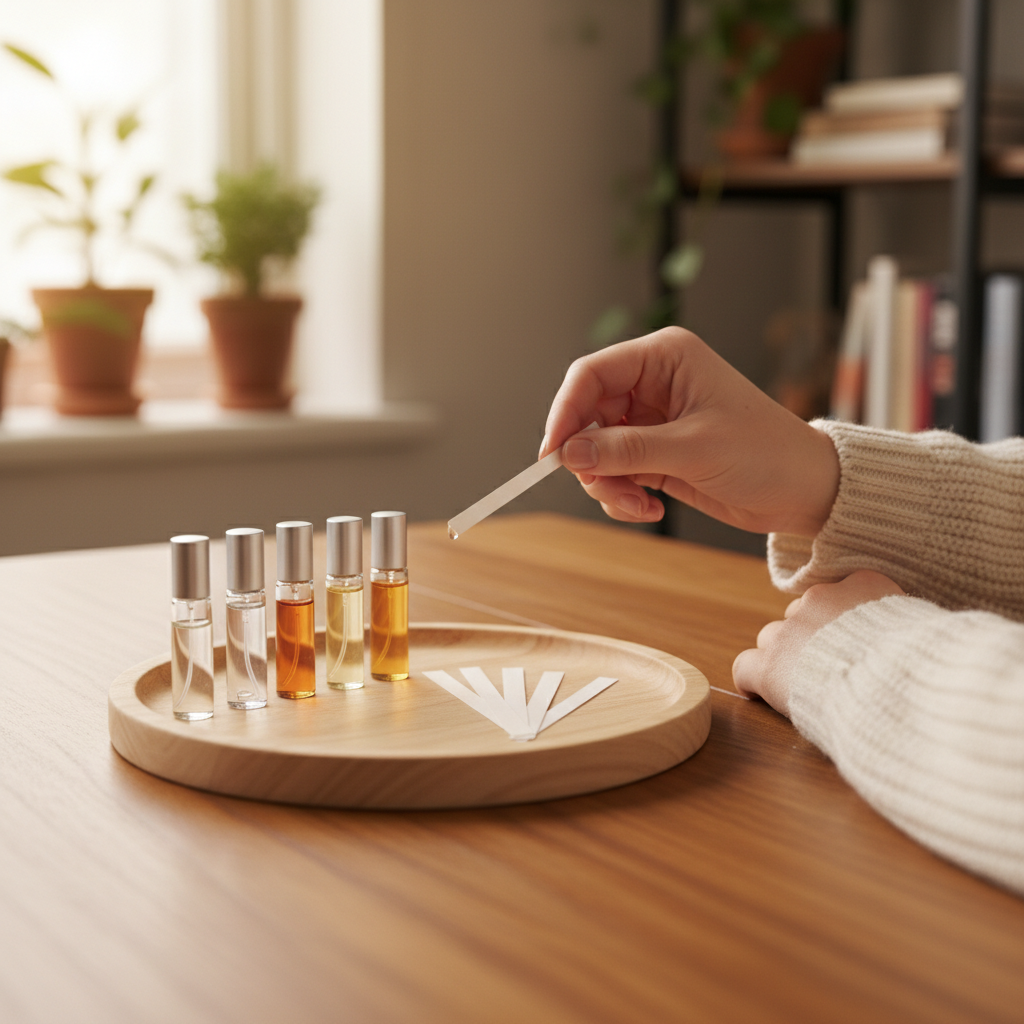
Free mini consult: Not sure where to start? Try Auremie’s Find Your Scent questions, then shortlist two fresh daytime options and one evening pick. Wear each for 4–6 hours and jot quick notes on opening, heart, and dry-down.
Case Studies and Real-World Examples
Online shoppers succeed when they sample with intent. Test 3–5 scents, limit to two per arm, and evaluate top, heart, and base over 4–6 hours. Matching family to setting—fresh for day, amber/woody for night—cuts regret and speeds you to a signature.
Case 1: The hybrid worker
- Goal: One daily driver, one evening upgrade.
- Approach: Pick a citrus-aromatic EDT for commutes and a wood-amber EDP for client dinners.
- Result: Two-scent kit covers 80% of weekly moments; 3–4 sprays total per wear.
Case 2: The fitness-first minimalist
- Goal: Clean, low-key presence post-workout.
- Approach: Skin-musk EDP at 2 sprays, reapply once at hour 6 on busy days.
- Result: Subtle personal aura; compliments increase without “fragrance guy” vibes.
Case 3: The gift buyer
- Goal: Confident gift without guesswork.
- Approach: Use the Find Your Scent prompts, choose a discovery set that spans fresh floral, soft woody, and a cozy amber.
- Result: Recipient picks a favorite in 48 hours; zero returns.
We routinely see better outcomes when testers wear scents during their real routine—coffee runs, keyboard time, commute, gym. A fragrance that survives all that with grace is a keeper.
How to Think About Value (Without Getting Stuck on Labels)
Value in perfume and cologne comes from fit, performance, and versatility—not just the name on the bottle. Discovery and sample sets reduce risk, and a small, well-chosen wardrobe outperforms a shelf of so-so blind buys you rarely wear.
Skip price-chasing. Focus on the experience per wear: does it project appropriately for 1–3 hours, linger pleasantly to hour 6, and feel right for your setting? If yes, you’ve found value—especially if it fills a missing role in your wardrobe.
- Performance fit: Aim for 2–4 hours of lively projection, then an elegant skin scent.
- Role coverage: Your 3–5 lineup should cover fresh day, cozy comfort, and evening statement.
- Sampling first: Try before you commit; one discovery kit can prevent years of “almost right.”
- Seasonal smart: Swap in woods/ambers as temps dip; rotate to citrus/green when they rise.
Value compounds when each bottle earns regular use. A balanced wardrobe makes choosing easy at 7 a.m. and again at 7 p.m.
Frequently Asked Questions
Perfume and cologne questions usually center on longevity, application, and selection. Focus on concentration, family, and your daily setting. Sample 3–5 options, wear each 4–6 hours, and choose the one that earns compliments and feels effortless.
Is perfume stronger than cologne?
Usually, yes. Formats like parfum and eau de parfum carry higher fragrance oil levels and often last 6–10 hours or more. Eau de toilette and cologne feel lighter and typically fade in 2–5 hours, which some people prefer for warm weather or office settings.
How many sprays should I use?
Start with 2 sprays for close quarters and 3–4 for evenings or outdoors. Aim for pulse points—neck, wrists, and back of neck. Don’t rub wrists together; friction can rush the top notes and shorten the opening phase.
What’s the best way to test fragrances online?
Use discovery or sample sets and try 3–5 scents on skin. Wear each for 4–6 hours across real activities—work, commute, errands—and take quick notes on opening, heart, and dry-down. Pick the one that still smells great at hour 4.
Can I layer different fragrances?
Yes—keep it simple. Use a clean musk or lotion base, then add 1–2 sprays of a brighter EDT or a cozy EDP. Total sprays should usually stay under five so the blend stays balanced and wearable.
Why does a scent smell different on me and my friend?
Skin chemistry, hydration, temperature, and even your environment change how fast notes evaporate and how far they project. That’s why on-skin testing beats paper strips and why moisturized skin often increases longevity by an hour or two.
Wrap-Up: Your Signature Scent, Simplified
The fastest path to a signature is simple: learn the formats, pick a family that fits your life, and test with a discovery or sample set. Build a 3–5 scent wardrobe for season and setting, then spray with intention. Your best scent should feel effortless, not complicated.
- Key takeaways:
- Perfume vs. cologne is about concentration and style, not gender.
- EDP balances projection and longevity for most daily needs.
- Test 3–5 scents on skin and wear each 4–6 hours before deciding.
- Layer lightly and store away from heat and light.
- Next steps:
- Use the Find Your Scent guide to shortlist notes you love.
- Order a discovery or sample set and test across two days.
- Lock in a daily driver plus an evening favorite for instant wardrobe coverage.
If you’re building a fresh, modern lineup, remember to sample across families—add a woody or amber pick for depth and consider an iris/orris touch when you want quiet sophistication.
Explore More on Fragrance
Keep learning with practical, bite-size guides. Focus on note families, longevity techniques, and wardrobe building so you shop with confidence and wear what you love—every single day.
For deeper dives, explore balanced wardrobes, longevity strategies, and advanced selection tips woven throughout our education hub. You’ll find clear frameworks and real-world examples that make online fragrance discovery feel as natural as an in-person consult.