

Scent notes are the individual aroma building blocks—top, heart, and base—that form a perfume’s full character and evolution on skin. They guide how a fragrance opens, blooms, and lingers. For Canadian shoppers exploring Auremie Perfumes online, understanding notes makes it easier to test samples, find a signature scent, and shop with confidence.
By Auremie Perfumes • Last updated: 2026-06-10
Above-Fold: Hook + Quick TOC
Use scent notes to decode how a perfume smells from first spray to dry-down. This guide shows you what notes mean, why they matter, and how to test, layer, and journal your picks—so you can choose with clarity instead of guessing.
- What scent notes are and how they’re structured
- Why notes matter for projection, longevity, and seasonality
- How to test, compare, and layer fragrances at home
- Note families (citrus, floral, woody, amber, musk, and more)
- Practical tools: blotters, timing, journaling, and nose resets
- Mini case studies using discovery and sample sets
At a Glance
Scent notes describe the three-part arc of a perfume: top (first 5–15 minutes), heart (30–90 minutes), and base (4–8 hours+). Knowing these windows helps you test smarter, select season-appropriate scents, and build a personal wardrobe that suits workdays, weekends, and special events.
- Top notes are most volatile and fade fastest; citrus and light aromatics often sit here.
- Heart notes shape the theme (florals, spices, fruits) as the fragrance settles.
- Base notes anchor longevity (woods, musks, resins) and define the dry-down.
- Eau de Parfum typically carries ~15–20% aromatic compounds; Eau de Toilette ~5–15%.
- Skin pH (often ~4.7–5.7) and climate (humidity, temperature) shift how notes perform.
Local considerations for your area
- Winter air is dry across much of Canada; moisturize first to reduce rapid top-note evaporation.
- Holiday shipping windows get busy; order discovery or sample sets early to test before gifting.
- Office-friendly wear: choose moderate sillage (about an arm’s length) and fresher day notes.
What Are Scent Notes?
Scent notes are the listed aroma ingredients—organized as top, heart, and base—that explain how a perfume develops over time. Notes don’t always equal raw materials; they can be natural, synthetic, or accords crafted to evoke a recognizable smell.
Think of notes as a musical score. The opening (top) creates the first impression, the melody (heart) carries the theme, and the bassline (base) sustains the mood. In practice, perfumers compose accords so multiple materials read as a single “note,” like “amber” or “leather.”
- Top: 5–15 minutes; bright, volatile, attention-grabbing (e.g., bergamot, lemon, aldehydes).
- Heart: 30–90 minutes; the identity layer (e.g., rose, jasmine, lavender, spices).
- Base: 4–8 hours+; fixatives and depth (e.g., cedarwood, sandalwood, musk, vanilla, amber).
In our experience, shoppers who learn this arc test more patiently, revisit after an hour, and record impressions at each stage—leading to more confident full-bottle choices.
Why Scent Notes Matter
Notes predict performance and personality—how far a scent projects, how long it lasts, and what mood it creates. Reading note lists helps you pre-filter samples, match scents to season and setting, and avoid blind buys that miss your taste.
- Longevity signal: Heavier bases (woods, resins, musks) often persist 6–10 hours.
- Projection cue: Sharp citrus/aldehydes pop early; denser ambers stick closer after dry-down.
- Season fit: Crisp citrus/green suit heat; spices/vanilla/oud shine in cool weather.
- Wardrobe logic: Build “day,” “evening,” and “special-occasion” lanes to reduce decision fatigue.
We’ve found that organizing samples by note family speeds comparison, surfaces patterns in what you love, and narrows your picks to 2–3 clear front-runners. For seasonal planning, see how our note-first approach aligns with this simple scents-by-season guide.
How Scent Notes Work (The Chemistry)
Notes shift as lighter molecules evaporate first and heavier ones linger. Skin temperature, pH, and humidity change this curve, so a perfume can smell different person to person. That’s why testing on skin beats smelling caps or the air.
- Volatility tiers: Top notes have lower molecular weight and higher vapor pressure—faster lift.
- Fixation: Bases like benzoin, labdanum, and musk slow evaporation, extending wear.
- Concentration: Higher oil content (e.g., EDP vs EDT) often increases longevity and softness.
- Environment: Heat and motion boost diffusion; cold compresses projection.
Curious how concentration changes wear? This overview of Eau de Parfum longevity breaks down practical testing windows so you can plan day-to-night coverage. And if you want to understand why some notes feel “smoother,” our premium ingredients explainer shows how raw materials influence diffusion.
Types of Notes & Families
Note families group recurring aromas so you can scan a list and predict vibe: citrus and green are fresh, florals romantic, woods grounding, ambers cozy, musks skin-like, gourmands edible, aquatics airy, leathers smoky. Use families to shortcut sampling.
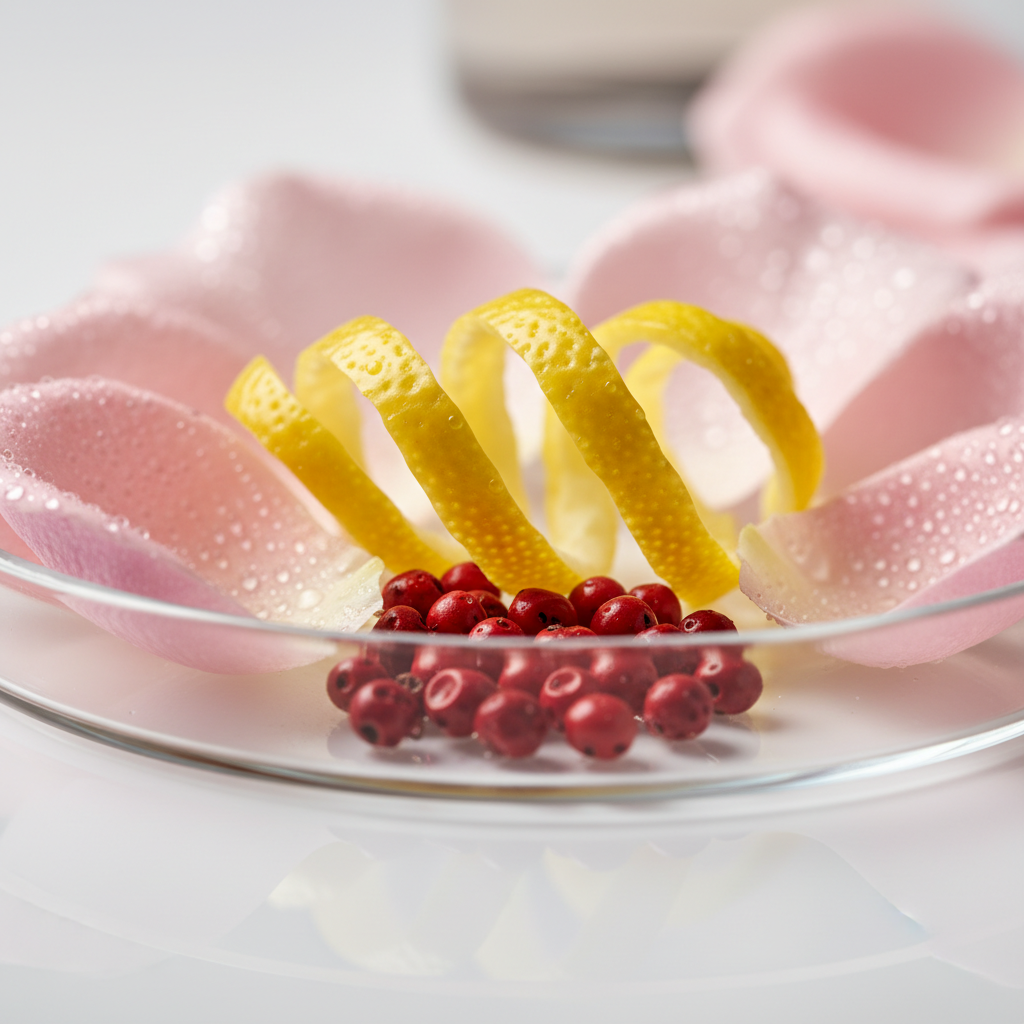
- Citrus: bergamot, lemon, grapefruit, mandarin—sparkling, energizing, summer-friendly.
- Green: galbanum, vetiver top facets, tea, fig leaf—crisp, leafy, modern.
- Aromatic: lavender, clary sage, rosemary—clean, barbershop to herbal.
- Floral: rose, jasmine, iris—soft to opulent; powders to nectar.
- Fruity: apple, pear, blackcurrant, peach—playful, juicy, often in hearts.
- Spice: cardamom, cinnamon, nutmeg, pink pepper—warmth and lift.
- Woody: cedar, sandalwood, patchouli—structure, depth, dry-down power.
- Amber/Vanilla: benzoin, labdanum, vanilla—cozy, resinous, sweet.
- Musk: clean skin to animalic tones—subtle aura or plush base.
- Gourmand: tonka, cacao, coffee—edible accents, comfort vibes.
- Aquatic/Ozone: calone facets, sea breeze—airy, cool, transparent.
- Leather/Smoke: birch tar facets, suede accords—polished to rugged.
- Chypre/Fougère: structural styles using mossy/woody or aromatic/woody signatures.
Top vs Heart vs Base: quick comparison
| Layer | Typical Duration | Common Materials | Best For |
|---|---|---|---|
| Top | 5–15 min | Citrus, light herbs, aldehydes | Fresh starts, heat |
| Heart | 30–90 min | Florals, fruits, spices | Signature theme |
| Base | 4–8 hrs+ | Woods, musks, resins | Longevity, depth |
Browsing Auremie’s men’s, women’s, and unisex collections through this lens helps you recognize patterns—maybe you always love cedar-vanilla bases or gravitate toward citrus-aromatic openings.
Best Practices: Testing, Layering, and Choosing
Test on skin in two passes: quick first impression, then a 2–8 hour wear. Journal top/heart/base shifts, note compliments, and re-test favorites on a different day. When layering, combine one focus note with a complementary base to avoid clashes.
- Prep: Shower, unscented lotion, two sprays per wrist; avoid fabric on test zones.
- Time stamps: Record 0–10 min, 45–60 min, and 4–8 hrs impressions.
- Reset: Smell your sleeve skin or coffee beans lightly; don’t overdo resets.
- Layering: Pair citrus/green with woods, or florals with light musk/vanilla. Deeper how-to in this fragrance layering guide.
- Wardrobe: Keep 3–5 core scents: office, casual day, date night, cold-weather, special.
- Storage: Cool, dark place; limit heat/UV to preserve top notes over months.
Process table: one-week sampling plan
| Day | Action | Notes Window | Goal |
|---|---|---|---|
| Mon | Blotter screen (6–8) | 0, 10, 45, 240 min | Shortlist 3 |
| Tue | Skin test A/B | 0–10, 60, 240 min | Keep 1–2 |
| Thu | Skin test C (solo) | Full 8 hrs | Assess workday wear |
| Sat | Evening wear | 2–6 hrs | Compliment check |
| Sun | Retest winner | AM–PM | Confirm signature |
Want more context on wear time? This explainer on how long perfume lasts outlines factors like concentration, climate, and application zones—use it to refine your routine.
Soft CTA: Not sure where to start? Try a discovery or sample set, then use a guided scent finder to align notes with your mood, occasion, and style. For a structured intro, see our practical find-your-scent framework.
Tools & Resources for Smarter Sampling
Equip your testing ritual: blotters for side-by-side trials, a timer for note windows, a simple journal template, and a scent finder quiz to translate preferences into shortlists. These tools turn guesswork into a repeatable process.
- Blotter method: Label strips, log 0, 10, 45, and 240 minutes; shortlist top two.
- Two-skin rule: Test different wrists/forearms to compare diffusion.
- Journal template: Note pyramid, descriptors (fresh/sweet/woody), and sillage (inches to arm’s length).
- Finder quiz: Convert “I like fresh but warm” into citrus/green + vanilla/cedar picks.
- Rotation cadence: Wear finalists twice in different weather for confidence.

To go deeper on note pyramids and families, skim our concise perfume notes primer. If you’re optimizing for longevity, compare our long-wear guidance with the family profiles you prefer.
Mini Case Studies: Turning Notes into Decisions
Real scenarios show how note literacy speeds up choices. By grouping samples by family, logging time stamps, and comparing dry-downs, shoppers move from curiosity to a confident signature scent in a week or two.
- The Fresh Professional: Prefers citrus/green in summer and light woods in winter; narrowed to two finalists after 6 blotter tests. A discovery set plus journaling revealed a consistent love for bergamot-cedar arcs.
- The Date-Night Minimalist: Logged compliments at the 60-minute mark; chose an amber-vanilla with soft projection after two back-to-back evening wears.
- The Gift Giver: Matched recipient’s “cozy bakery” brief with gourmand + sandalwood; confirmed on skin over two evenings to ensure the vanilla stayed balanced.
- The Festival Weekender: Picked an energetic citrus-aromatic for daytime and a warm resinous base for late nights; alternated on separate wrists to avoid mixing signals.
- The Office Commuter: Tested in both air-conditioned and outdoor settings; a fresh aromatic won for AM meetings while a woody base layered lightly for late afternoons.
Patterns like these repeat. Once you see your “always yes” notes (e.g., cardamom, iris, or sandalwood), your sampling narrows from dozens to a focused five—saving time and elevating daily wear.
Frequently Asked Questions
Here are fast, clear answers to the most common questions about scent notes, testing, and everyday wear. Use them as quick references while you sample at home.
What are scent notes in perfume?
They’re the listed aromas organized as top, heart, and base. Top notes appear first, heart notes form the theme, and base notes last the longest—usually hours—shaping the dry-down.
How long do notes last on skin?
Top notes typically last 5–15 minutes, heart notes about 30–90 minutes, and base notes 4–8 hours or more. Climate, skin prep, and concentration (EDT vs EDP) shift these windows. For testing windows, see this overview of how long perfume lasts.
Can I layer fragrances with different notes?
Yes. Keep one focus accord and add a complementary base. For example, a citrus-green day scent can gain depth from a light vanilla or cedar base without clashing. More pairing tips in our layering guide.
What’s the difference between EDT and EDP?
Eau de Toilette usually has lower oil concentration (~5–15%) and feels brighter; Eau de Parfum is higher (~15–20%) with longer wear and a softer diffusion. Explore practical timing in this EDP longevity explainer.
Conclusion
Read note lists like a map: top for spark, heart for character, base for staying power. Test with time stamps, compare families, and track compliments. In a week or two, you’ll move from curious to confident with a shortlist you love.
- Use a repeatable routine: skin test + journal + second-day confirm.
- Favor season fit and setting (office vs evening) over hype.
- Build a small wardrobe you’ll actually wear, then add accents.
Related Reading & Next Steps
Explore guides that translate note preferences into confident picks—sampling strategies, signature-scent frameworks, and curated collections for men, women, and unisex wearers. Move from theory to practice with structured discovery.
Continue your journey with discovery and sample sets, consult a scent finder to translate taste into note families, and browse men’s, women’s, and unisex collections to see how note pyramids come to life across occasions. Start with a crisp overview in our notes primer and compare seasonal picks using the seasonal guide. For men building endurance-first wardrobes, this men’s longevity guide is a helpful companion.