

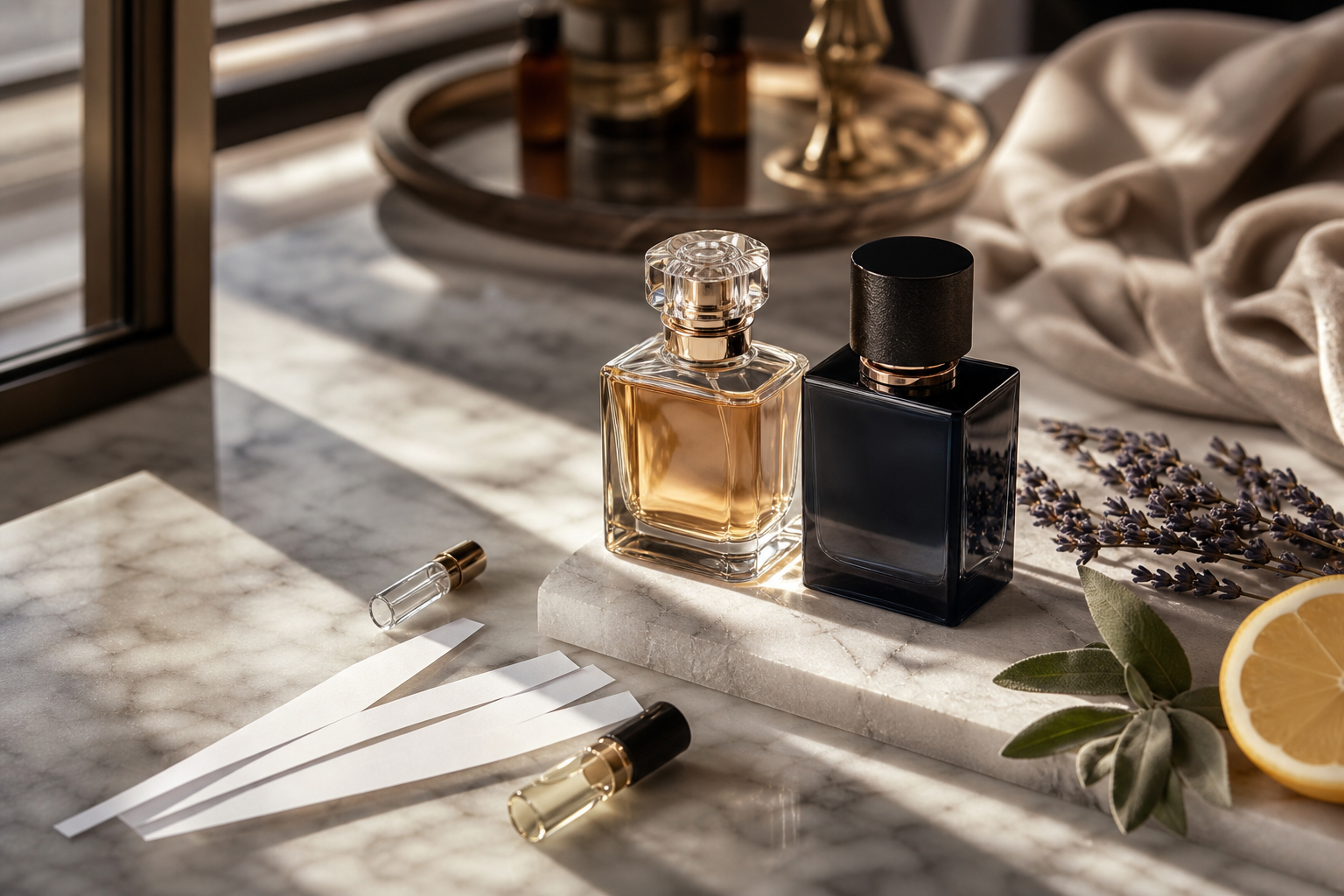
What is the perfume and cologne decision checklist and why does it matter?
The "perfume and cologne decision checklist" is a short, repeatable list of checks you run before committing to a full bottle. It reduces risk when shopping online by focusing your testing on the factors that matter most: concentration, how the scent behaves on your skin, projection, longevity, and whether the fragrance suits the intended occasion. Using a checklist turns a vague sniff into a reliable buying decision and makes discovery sets and sample testing genuinely useful.
The difference between perfume and cologne is not just a label. Concentration affects wear time and perceived strength, so knowing the tier you prefer is the first decision to make. For a quick primer on concentration tiers and how labels translate to performance, see the explanation of parfum, eau de parfum, and cologne at Fragrance Fragrance.
If you prefer a shorter exploration of scent types and practical buying advice, Auremie links to curated suggestions in the perfume and cologne best scent article and provides a Find Your Scent experience to help match a fragrance to mood and occasion at checkout.
Why the perfume versus cologne distinction matters for wear and purchase decisions
When you decide between a perfume and a cologne you are primarily deciding on concentration and intended use. Higher concentration formulas, often labeled parfum or extrait de parfum, generally contain more perfume oil and can last longer on skin. Lower concentration products labeled eau de parfum, eau de toilette, or cologne are lighter and often better suited to daytime or warm-weather use. This classification helps you match a fragrance to how long you want it to last and how noticeable it should be. For a clear rundown of concentration and what the labels mean, see Fragrance Fragrance.
Beyond concentration, occasion, season, and personal preference drive the choice. A lighter cologne may be preferred for office hours or summer afternoons, while a richer parfum may be preferable for evening events and cold weather. The practical implication is simple: treat the perfume versus cologne question as the first line of filtering rather than the final decision. The next steps are empirical tests you can do with samples so your purchase matches real life instead of a single sniff.
The 7-point perfume and cologne decision checklist
Use this seven-item checklist each time you consider a new fragrance. It is compact enough to use when ordering samples and robust enough to cut down on blind buys.
1. Concentration and label
Check the concentration tier on the product page before you sample. Decide whether you want parfum, eau de parfum, eau de toilette, or a lighter cologne. Concentration influences strength and typical wear time, so make an initial choice that matches how you plan to use the fragrance. For background on concentration tiers and their typical effects, consult Fragrance Fragrance.
2. Skin testing and two separate wearings
Never buy from a single sniff. Apply samples to skin and test each fragrance on two different days. That practice reveals how the scent evolves through top, heart, and base notes and shows your real-world longevity. Fragrance Review recommends trying small samples and wearing them on separate days before committing to a full bottle to avoid an unreliable first impression.
3. Occasion, season, and timing
Decide the primary occasion for the fragrance. Will you wear it to work, for weekend casual, or for evening events? Also consider seasonality. Lighter, citrus or aquatic colognes perform well in warm weather. Warmer, resinous, or gourmand concentrates suit colder months. Matching use case to concentration avoids buying a heavy perfume you never wear, or a light cologne that disappears when you want presence.
4. Projection and sillage
Projection is how far a fragrance travels from your skin and sillage is the trail it leaves. Decide whether you want something intimate and close to the skin or something that projects into a room. Test projection by applying a sample and observing whether coworkers or friends notice it at normal interaction distance. Take notes about both skin and fabric tests if possible.
5. Longevity and reapplication needs
Watch how long the fragrance lasts during the two wearings and whether you mind reapplying. Parfums may last many hours and require less topping up. Lower concentration colognes may need reapplication for long days. Expect variability by skin chemistry and environment. The concentration guidelines at Fragrance Fragrance explain the typical relationship between oil percentage and expected wear.
6. Sample count and comparison method
Decide on a minimum number of samples to test in one comparison session. Fragrance Review suggests testing multiple samples in a structured way, and a practical range is three to six scents per comparison. Space tests across days to prevent olfactory fatigue. Label your samples and record simple notes for each wearing so you can compare objectively.
7. Risk reduction and purchase path
Choose low-risk buying paths when you find a scent you like. Discovery sets, sample kits, and travel sizes let you validate a scent at low cost before a full bottle. Many brands and shops, including Auremie, offer sample sets and discovery options so you can try several scents and avoid blind buys. For guidance on discovery options and sample kits, see Auremie’s sample pages and curated blog advice.
How to sample perfume and cologne online step by step
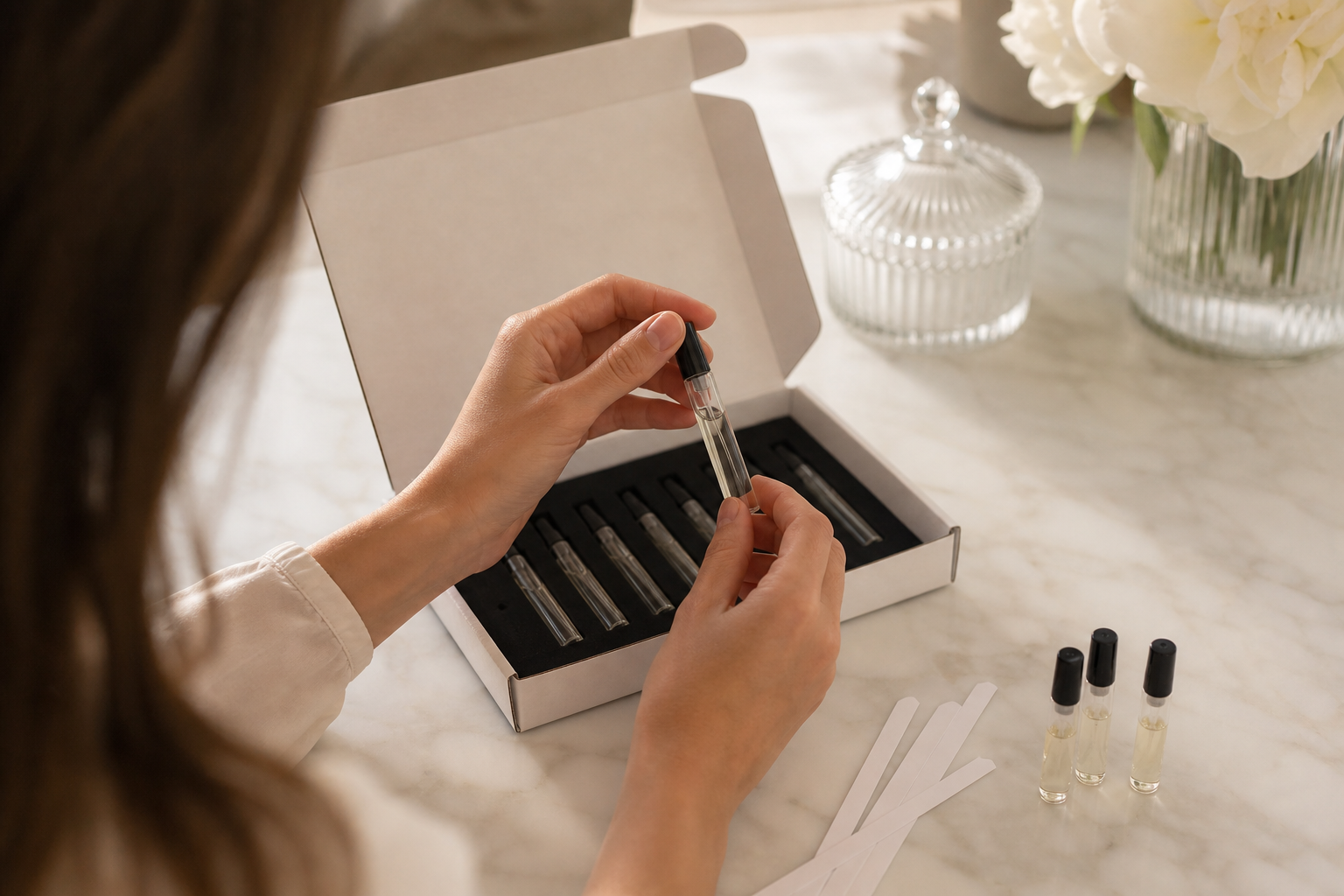
Follow this practical workflow the next time you order samples.
- Order a small discovery set or select three to six 1 ml samples to compare. Auremie sells discovery and sample sets designed to reduce blind buys and help you find a signature scent.
- Label each sample with a number and a one-line descriptor so you do not rely on memory alone.
- Wear one sample per day, or wear up to three in a strict rotation, and test at the same times to compare longevity. Record start time and when you notice major changes.
- Do at least two separate wearings for each favourite. Look for repeats in feedback and personal comfort.
- If a scent meets your checklist items, upgrade via a travel size or a full bottle. If it fails on several checks, return to your sample set and try alternatives or consult a Find Your Scent guide.
For details on how to structure test notes and reduce decision noise, Fragrance Review recommends comparing samples over two wearings and considering bottle size options before you buy.
Canadian buying logistics and local considerations
If you are shopping from Canada, factor in local shipping and return logistics. Auremie ships quickly from Ontario and offers free Canada-wide shipping on orders over $49.99, which makes ordering a small discovery set and a travel size practical without high delivery costs. Using domestic shipping reduces wait times and simplifies returns or exchanges compared with international sellers.
Real objections and decision criteria when you still can’t choose
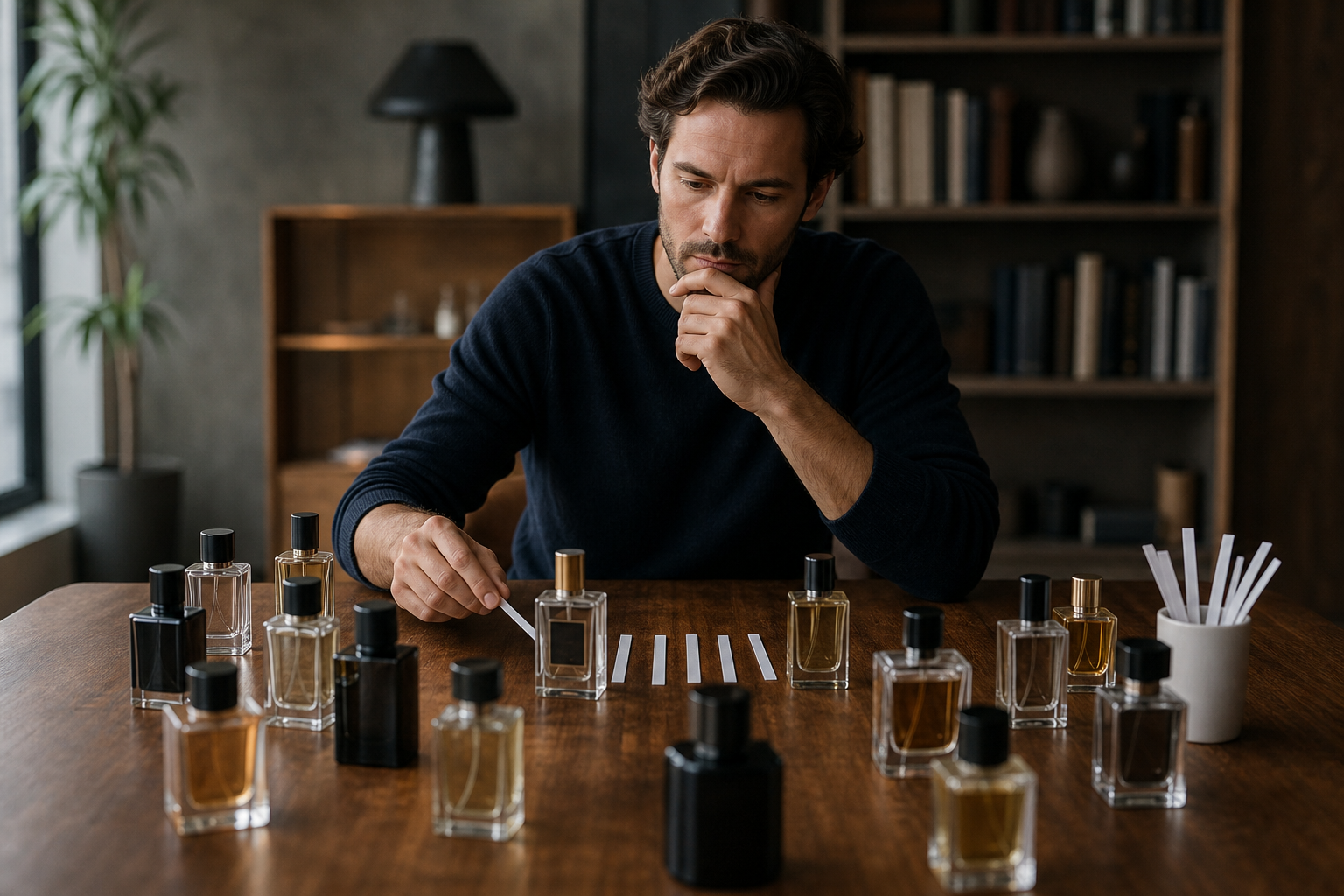
Here are concise responses to common objections and how to resolve them with the checklist.
- Concern about longevity. Test the sample for a full day and on a second day. If longevity is poor and you need long wear, prefer higher concentration tiers.
- Skin sensitivity. Apply the sample to a small patch and wait several hours. If irritation occurs stop use. If you need extra caution, consult product ingredient listings on the product page before ordering.
- Gifting uncertainty. Choose a lighter, safer option such as a fresh citrus or soft floral, and consider a discovery set or gift set so the recipient can try multiple scents.
- Budget limits. Use sample sets to confirm likelihood of love before buying a full bottle so you avoid wasted spend.
A printable checklist and next steps
Use this one-page checklist to guide sample purchases and testing.
- Decide concentration tier before sampling.
- Order three to six samples or a discovery set.
- Label samples and test each on skin for two wearings.
- Note occasion, season, projection, and longevity.
- Choose travel size or full bottle only after checklist items are satisfied.
To try low-risk sampling and follow this checklist, start with Auremie’s discovery and sample options and use the brand’s Find Your Scent guidance to narrow choices before ordering. For more ideas on matching scents to occasions and strength, see Auremie’s Choosing a Fragrance Online resource and the curated perfume and cologne best scent article.
Frequently asked questions
How many samples should I test before buying a full bottle?
A practical minimum is three samples to compare, with an upper range of six to avoid olfactory overload. Test favourites on at least two separate days to confirm how they evolve, as recommended by Fragrance Review.
Do concentration labels guarantee how long a fragrance will last?
Concentration labels are a useful indicator because higher oil percentages usually last longer, but they do not guarantee exact wear times. Skin chemistry and environment influence longevity. For a technical overview of how concentration relates to wear, see Fragrance Fragrance.
How can I test a perfume if I have sensitive skin?
Perform a patch test on a small area and wait several hours. If irritation appears discontinue use. Review the product ingredient list when available and consider ordering samples rather than full bottles until you confirm skin compatibility.
What is the fastest way to choose a scent for gifting or corporate orders?
Use curated discovery sets or gift-ready sample kits and choose widely accepted scent families such as soft citrus, clean aquatic, or warm woody. For corporate gifting, order a few sample packs and ask recipients to choose, or select a popular set and include a tasting note card.
If you are ready to try sample kits and discovery sets that follow this checklist, visit Auremie Perfumes to begin.