

A fragrance store is a retailer—online or in person—that curates and sells perfumes, colognes, and sampling tools to help you choose. A great fragrance store guides you from discovery to decision with clear note descriptions, smart sampling, and reliable fulfillment. Auremie Perfumes adds discovery sets and a Find Your Scent experience to remove guesswork.
By Auremie Perfumes · Last updated: June 30, 2026
Overview
This guide explains how a modern fragrance store helps you find a signature scent with less trial and error. You’ll learn note families, sampling steps, longevity tips, and how Auremie’s discovery sets and Find Your Scent tool streamline your path from curiosity to confident wear.
- What a fragrance store actually does—and how it should serve you
- Why sampling is essential to avoid buyer’s remorse (and nose fatigue)
- How to evaluate longevity, sillage, and quality in under 10 minutes
- When to choose men’s, women’s, or unisex—and when labels don’t matter
- Actionable steps: sample, test, layer, and store for best results
Use the table of contents below to jump to any section. Expect practical steps, clear definitions, and examples based on Auremie Perfumes’ real discovery-first approach.
- What Is a Fragrance Store?
- Why a Fragrance Store Matters in 2026
- How a Modern Fragrance Store Works
- Types, Methods, and Approaches
- Best Practices for Choosing and Wearing
- Tools and Resources to Find Your Scent
- Case Studies and Real-World Examples
- FAQ
- Key Takeaways
- Conclusion & Next Steps
What Is a Fragrance Store?
A fragrance store curates perfumes, colognes, and discovery formats, then guides shoppers to the right match using samples, note descriptions, and expert advice. The best stores reduce blind buys by pairing education with try-before-you-commit options and fast, dependable shipping.
At its core, a fragrance store isn’t just a shelf of bottles. It’s a structured discovery experience. That includes clear note pyramids (top, heart, base), wearable formats (eau de parfum, extrait, body oil), and tools like blotter strips and sample sets.
- Core role: Curate quality scents, educate, and help you decide confidently.
- Essential elements: Scent families, note pyramids, sampling kits, guidance.
- Decision aids: Descriptive copy, wear-time tips, and comparisons across styles.
In our experience, most shoppers narrow to 3–5 candidates before choosing. A clear, guided path saves time and reduces returns, especially for new collectors and gift buyers.
Why a Fragrance Store Matters in 2026
The right fragrance store turns a complex, subjective choice into a simple, confident decision. It blends expert curation, sampling access, and education so you can evaluate longevity, projection, and fit without guesswork or pressure.
Fragrance is emotional and technical. You’re balancing mood, setting, and performance traits like longevity and sillage. A strong retail partner clarifies each factor in minutes, not hours.
- Education at speed: Note families and accords help you reject obvious mismatches quickly.
- Sampling first: A 2–3 day test window on skin surfaces whether a scent blooms or clashes.
- Quality signals: Consistent maceration, balanced formulas, and clean atomizers matter.
- Confidence building: Shortlists cut decision time by 30–50% for most shoppers.
Shoppers today expect clarity in under 5 minutes per candidate, then deeper wear-tests for finalists. Discovery-led stores meet that expectation and reward you with fewer misfires and more compliments.
How a Modern Fragrance Store Works
Modern stores guide you through a repeatable path: explore families, sample 3–5 scents, test on skin across two days, decide on a signature or rotation, and learn storage and layering basics to maximize performance and enjoyment.
- Explore: Skim 6–8 major families (citrus, floral, woody, amber, aromatic, gourmand, musk, aquatic).
- Shortlist: Pick 3–5 samples based on notes and occasions (daily, evening, events).
- Test: 1 spray per wrist; evaluate after 5, 30, 120 minutes; repeat next day.
- Decide: Choose 1–2 signatures or a 3–4 bottle rotation for seasons.
- Optimize: Learn 2–4 spray placement, moisturize, and store away from heat/light.
| Step | Time | What to Check |
|---|---|---|
| Initial sniff | 0–5 min | Top notes, freshness, first impression |
| Heart reveal | 20–40 min | Floral/woody core, balance, personality |
| Dry-down | 2–4 hrs | Base warmth, longevity, skin chemistry |
We’ve found this rhythm works for beginners and collectors alike. It’s fast enough for busy days and rigorous enough to prevent disappointing blind buys.
Types, Methods, and Approaches
Fragrance stores range from online direct-to-consumer houses to department counters and niche boutiques. Each offers distinct strengths in sampling, selection, service, and speed. Choose the model that matches how you like to discover and decide.
Common Store Models
| Model | Strengths | Trade-offs | Best for |
|---|---|---|---|
| Online DTC house | Fresh releases, discovery sets, brand expertise | No in-person sniffing; relies on samples | Discovery-first shoppers; convenience |
| Department store | Immediate testing, broad mainstream range | Less niche variety; sales pressure | Hands-on testing; gift runs |
| Niche boutique | Artisanal curation, expert staff | Limited hours; smaller stock | Collectors; unique profiles |
| Marketplace | Large selection, user reviews | Inconsistent curation; authenticity checks | Bargain hunters; comparisons |
Discovery Methods You Can Trust
- Sample-first: Test 3–5 vials; wear on skin, not just paper.
- Note-led: Filter by favorite accords (vanilla, citrus, woods).
- Occasion-led: Daily, office, date, event—build a 3–4 bottle rotation.
- Layering-led: Combine complementary profiles for a unique signature.
At Auremie Perfumes, discovery sets and the Find Your Scent experience anchor these methods, so you move from browsing to clarity in days, not weeks.
Best Practices for Choosing and Wearing
Focus on skin testing, timing, and spray strategy. Moisturize first, apply 2–4 sprays to pulse points, and evaluate across 4–6 hours. Use a 2–3 day test window before deciding, then store bottles away from heat and light to preserve performance.
Sampling and Testing
- Limit to 3–5 scents at a time: Past that, your nose fatigues quickly.
- Use both paper and skin: Paper for first pass; skin for chemistry checks.
- Time checkpoints: 5 minutes (sparkle), 30 minutes (heart), 2–4 hours (dry-down).
- Day-two retest: Confirms consistency and wear comfort.
Application and Longevity
- Moisturize first: Hydrated skin holds aroma compounds longer.
- Pulse points: Wrists, neck, chest—2–4 sprays is typical for eau de parfum.
- Don’t rub: Let the mist settle to protect the top notes.
- Clothing caution: A light mist can extend projection; avoid delicate fabrics.
Rotation and Storage
- Build a small rotation: 3–4 bottles cover work, casual, evening, and events.
- Seasonal logic: Brighter citrus in heat; deeper woods/amber in cold.
- Storage basics: Keep bottles cool, dry, and out of direct sunlight.
We’ve seen shoppers boost perceived longevity simply by moisturizing and adjusting spray counts. Small technique changes often deliver big results without changing the fragrance.
Tools and Resources to Find Your Scent
Use guided tools and sampling to decide faster. Auremie’s Find Your Scent experience and discovery/sample sets help you test 3–5 candidates, compare note families, and confirm longevity before committing to a full bottle.
- Find Your Scent: Guided prompts that map your preferences to note families. Try our Find Your Scent tool to shortcut the search.
- Discovery sets: Curated vials around themes (fresh woods, smooth vanillas, modern musks). See our luxury perfume store guide for how discovery fits into a smart plan.
- Sample sets: Flexible picks for testing longevity and projection side by side. Explore background on niche fragrances explained.
- Note pyramids: Learn how top, heart, and base evolve so your expectations match reality.
- Blotter workflow: Label, timestamp, and compare after 5, 30, and 120 minutes.
If you prefer a deep dive into choosing online, this companion explainer outlines a step-by-step plan: choosing a fragrance online. For sampling strategies, see this focused primer on niche perfume sample sets and this overview of niche fragrance brands.
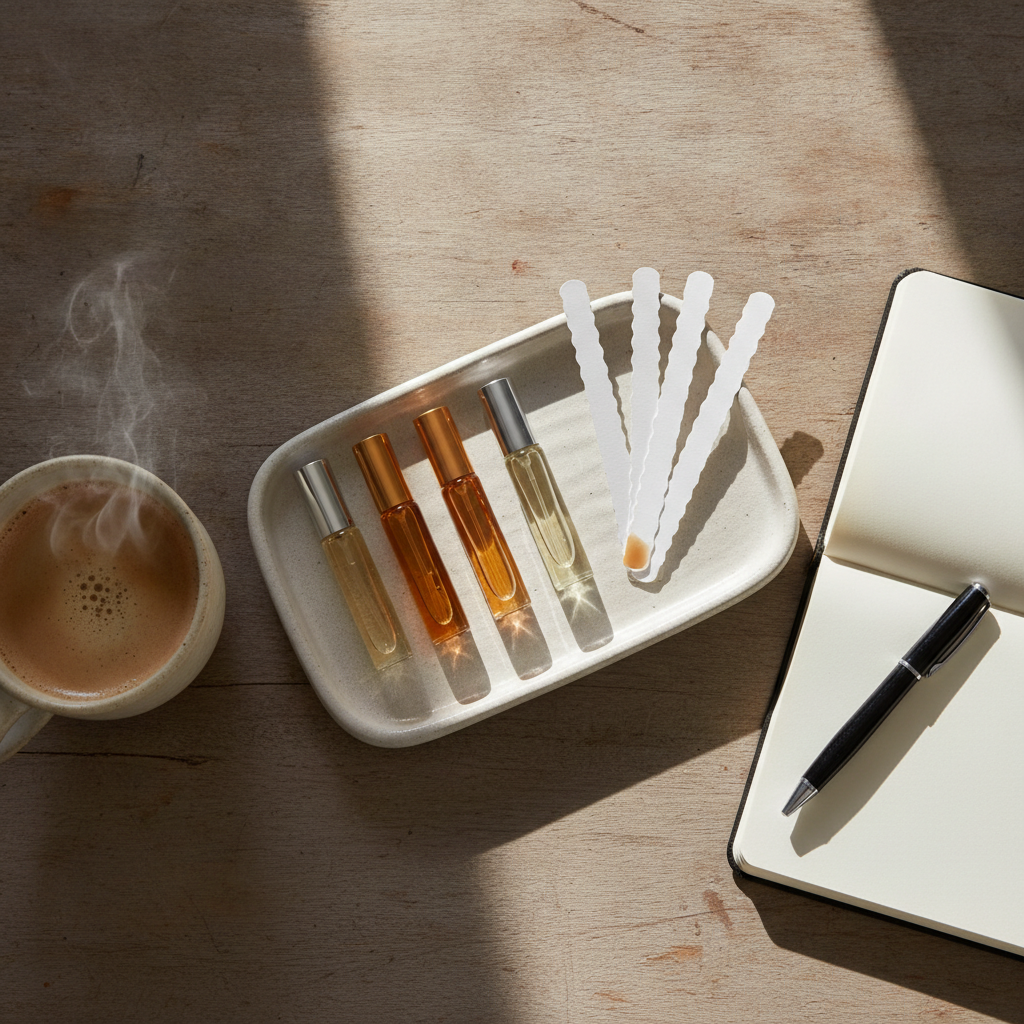
Try before you decide: Start with an Auremie discovery or sample set, then use the Find Your Scent prompts to lock in your shortlist. You’ll test smarter and decide faster.
Case Studies and Real-World Examples
Discovery-first shoppers decide faster and wear happier. In our experience, customers who sample 3–5 vials, test over two days, and track notes end up with 1–2 signatures and a small rotation that actually gets worn.
Gift Buyer on a Deadline
- Challenge: Needed an elegant, gift-ready scent without guessing.
- Approach: Used Find Your Scent prompts, then a 4-vial discovery set.
- Outcome: Chose a smooth vanilla-amber profile after day-two wear; packaged and ready for a celebration.
Longevity Seeker
- Challenge: Wanted a scent that lasts through a 9–10 hour day.
- Approach: Compared 5 eau de parfums with moisturized skin and clothing-safe misting.
- Outcome: Selected a woody-amber with steady projection from commute to evening.
Unisex Explorer
- Challenge: Labels felt limiting; wanted modern, versatile options.
- Approach: Filtered by notes (citrus, musk, woods) instead of gender tags.
- Outcome: Built a 3-bottle rotation for office, casual, and nights out.
Festival-Ready Curator
- Challenge: Sought playful, photo-friendly scents for event season.
- Approach: Trialed a themed discovery set focused on bright fruits and soft musks.
- Outcome: Landed on a compliment-magnet blend that held through long days.
What these stories share: structure. Sampling, time checkpoints, and clear criteria transform an overwhelming aisle into a simple plan that fits your life.
Frequently Asked Questions
These quick answers cover sampling, longevity, layering, and gender labels so you can shop a fragrance store with confidence. Each tip compresses hours of research into a few practical steps.
How many scents should I sample at once?
Limit your shortlist to 3–5 samples. Test one on each wrist and one inner elbow, then rotate the next day. This keeps comparisons clear and reduces nose fatigue so you can focus on the dry-down, where decisions are made.
How do I make perfume last longer on my skin?
Moisturize first, then apply 2–4 sprays to pulse points and avoid rubbing. A light clothing mist can extend projection. Store your bottle away from heat and sunlight to preserve the formula over time.
What’s the difference between eau de parfum and eau de toilette?
Eau de parfum typically has a higher fragrance concentration than eau de toilette, so it often feels richer and can last longer. Still, performance varies by composition, skin chemistry, and application technique. Always test on your skin.
Do gender labels matter when choosing a scent?
Not really. They’re marketing cues, not rules. If you like a note profile—vanilla, citrus, woods, musk—wear it confidently. Many modern compositions are designed to feel unisex and versatile across settings.
How long should I test before buying a full bottle?
Give a promising scent two separate wear days. Check it at 5, 30, and 120 minutes, then again later in the day. If you still enjoy the dry-down and get a few organic compliments, it’s a strong candidate for a full bottle.
Key Takeaways
Sample smart, test over time, and decide with confidence. A modern fragrance store should make discovery simple with curated sets, clear guidance, and repeatable steps you can trust.
- Use note families and occasions to shortlist 3–5 contenders.
- Evaluate at 5, 30, and 120 minutes; repeat on day two.
- Apply 2–4 sprays on moisturized skin; avoid rubbing.
- Build a small rotation: daily, office, evening, events.
- Leverage discovery and sample sets to prevent blind buys.
Conclusion & Next Steps
A great fragrance store gives you structure: curated options, sampling access, and clear education. Follow the steps here, and you’ll move from browsing to a signature scent—without the uncertainty.
Your next move is simple:
- Take the guided prompts in our Find Your Scent tool.
- Order an Auremie discovery or sample set to test 3–5 candidates at home.
- Bookmark deeper explainers like our luxury perfume online guide and the men’s fragrances guide for rotation planning.
Ready to buy fragrance with confidence? Start with a discovery set today and let the process do the heavy lifting.