

Perfume that is long lasting is a fragrance built to project for hours by using higher oil concentration, resilient base notes, and smart application. Most eau de parfum last 6–8 hours, while parfum and extrait can exceed 10. For busy days, Auremie Perfumes pairs longevity with discovery sets and fast Ontario shipping so you smell polished from first meeting to last.
By Auremie Perfumes · Last updated: 2026-05-22
At a Glance
Long-lasting perfume combines concentration (15–30%+ oils), fixative-rich base notes (woods, amber, musk), and correct application to deliver 6–10+ hours of scent. This guide explains how longevity works, which notes endure, and how Auremie’s discovery tools help you choose with confidence.
In this expert guide, you’ll learn how perfume longevity really works and how to choose, apply, and care for scents that carry you through a full schedule without re-spraying every hour.
- What “long-lasting” actually means in wear hours and sillage
- Why some notes (like orris, woods, and amber) outlast bright citruses
- How concentration types (EDT, EDP, parfum) change staying power
- Pro application methods for 8–10+ hour performance
- How Auremie’s Find Your Scent, discovery sets, and sample sets de-risk buying
What Is a Perfume That Is Long Lasting?
A perfume that is long lasting projects and remains detectable for most of the day—typically 6–10+ hours—thanks to higher perfume oil concentration and durable base notes. Longevity is influenced by concentration (EDP, parfum), note structure (woods, amber, musk), application technique, environment, and skin chemistry.
When shoppers ask for a perfume that is long lasting, they’re looking for reliable performance without constant top-ups. Practically, that means a concentration above 15% aromatic compounds, a base built on slow-evaporating materials, and application to pulse points and fabric. Consistent wear-time—6 to 8 hours for EDP, often 10+ for parfum—signals strong formulation and proper use.
In our experience guiding customers through Auremie’s discovery and sample sets, longevity varies by season and skin. Hot weather accelerates evaporation, while colder months often extend woody and amber bases by 1–2 hours. Smart layering can add another 2–3 hours to light, sparkling compositions without making them heavy.
For a deeper primer on concentrations and expectations, see this practical overview of eau de parfum longevity. It clarifies typical hour ranges and how to test before committing.
Why Longevity Matters for Busy Days
Longevity matters because you want one morning routine to carry you through meetings, commutes, workouts, and dinners. Reliable 8–10 hour wear saves re-sprays, protects your impression, and keeps your scent journey intact without mid-day drop-off.
A scent that fades by lunch fractures your day’s narrative. A long-wearing profile keeps your identity consistent from the elevator to evening plans. On a typical workday, most people encounter 20–40 close interactions; a stable sillage ensures your fragrance reads polished, not patchy. The result is less fuss and a more deliberate presence.
We see this with shoppers using Auremie’s Find Your Scent: commuters ask for 8-hour coverage with 2–4 sprays, while hospitality teams prefer 10-hour ambers at 3–5 sprays for evening shifts. Wearing the right structure means fewer interruptions and more confidence. If you’ve ever over-sprayed at noon just to be noticed by 2 p.m., you know the pain point a long-wear build solves.
For practical strategies that pair performance with taste, our long-lasting perfumes guide breaks down daily use-cases and seasonal adjustments so your scent keeps pace with real life.
How Perfume Longevity Works
Longevity is a function of perfume oil concentration, evaporation curves of notes, fixatives, and how/where you apply. EDP (≈15–20% oils) often gives 6–8 hours; parfum/extrait (≈20–30%+) can exceed 10. Base notes—woods, musk, resins—anchor the scent as top notes fade in 15–45 minutes.
Three levers determine how long a fragrance lasts: concentration, materials, and method. Concentration controls total volatile matter; materials dictate evaporation speed; method ensures the formula sits where it diffuses well. Skin pH usually falls between about 4.7 and 5.8, which can nudge how musks or citruses read. Fabrics, by contrast, often hold scent 24–48 hours due to less heat and oil interaction.
| Type | Approx. Oil % | Typical Wear | Best For |
|---|---|---|---|
| Eau de Toilette (EDT) | 5–15% | 3–5 hours | Lighter daytime, heat |
| Eau de Parfum (EDP) | 15–20% | 6–8 hours | All-day office, date nights |
| Parfum / Extrait | 20–30%+ | 8–12+ hours | Evenings, events, cold |
| Perfume Oils | Varies, often high | 8–12+ hours | Close-to-skin elegance |
Note structure matters, too. Fresh top notes (lemon, bergamot) sparkle for 15–45 minutes, hearts (florals, spices) bridge 2–4 hours, and bases (amber, woods, musk) can hum 6–12 hours. A resin like labdanum or a musky accord often increases dry-down persistence by another 1–2 hours versus a citrus-dominant profile. For an accessible walkthrough on components, this primer on premium perfume ingredients is helpful when you’re scanning notes online.
Types, Notes, and Approaches That Last
Woody-amber, musk, leather, and orris-forward profiles tend to outlast sheer florals or aquatic blends. Layering a resilient base (EDP/parfum) with a bright top-note refresher extends wear by 2–3 hours without heaviness.
If endurance is the goal, start with structures that lean on slow-evaporating materials. Woods (cedar, sandalwood), resins (benzoin, labdanum), musks, and ambers form bases that cling to skin and fabric. Iris (orris) contributes a buttery, powdery facet with remarkable tenacity, often still present 8–10 hours into the dry-down. By contrast, citrus aromatics shine early yet need support for evening longevity.
Practical approaches we recommend:
- Choose the right base: Woody-amber or musky bases add 2–4 hours versus fresh-only builds.
- Use a two-layer routine: Apply a long-wear base EDP, then refresh with a citrus/floral mist at hour 5.
- Mind the fabric factor: A light mist on outerwear can carry scent 24 hours or more.
- Consider seasonality: Ambers/leathers excel in cool weather; green aromatics thrive in heat.
For more pairing ideas, our internal explainer on niche perfume layering shows combinations that add life without amplifying intensity too far for shared spaces.
Best Practices to Make Any Scent Last
Apply 2–6 sprays to pulse points and one light mist on clothing, moisturize first, and avoid rubbing. Store bottles away from heat and light. This routine reliably adds 2–4 hours of wear across most skin types.
Technique is the overlooked longevity lever. A simple routine can unlock an extra 2–4 hours from the very bottle you already own. Here’s a process that works across seasons and skin types.
- Prep skin: Moisturize unscented first; hydrated skin slows evaporation by a noticeable margin.
- Map pulse points: Wrists, inner elbows, behind ears, chest. Use 2–6 sprays total depending on concentration.
- Don’t rub: Let droplets set; rubbing breaks the top accord and speeds off-gassing.
- Add a fabric mist: One pass on outerwear extends the trail 12–24 hours.
- Refresh smart: If needed at hour 6, target a single pulse point—don’t re-coat everything.
- Store correctly: Dark, cool place; temperature swings degrade top notes within months.
| Situation | Sprays | Tip |
|---|---|---|
| Office, open plan | 2–3 | Favor EDP with woody-musk base; keep trail intimate (2–3 feet). |
| Evening event | 3–5 | Parfum/extrait on chest + back of neck for 10–12 hours. |
| Hot commute | 2–3 | Green/citrus over an amber base; add one fabric mist. |
| Cold weather | 3–4 | Amber/wood leans last longer; moisturize well. |
Local considerations for your area
- Seasonal swings: Cooler months often add 1–2 hours to woody-amber bases. In heat, apply fewer sprays and lean on fabric to maintain trail.
- Holiday gifting: Discovery and sample sets ship quickly from Ontario, Canada—ideal for last-minute, ready-to-gift fragrance exploration.
- Shared spaces: For commutes and offices, keep sillage modest by placing most sprays under clothing and skipping wrists you use to gesture.
Tools and Resources from Auremie
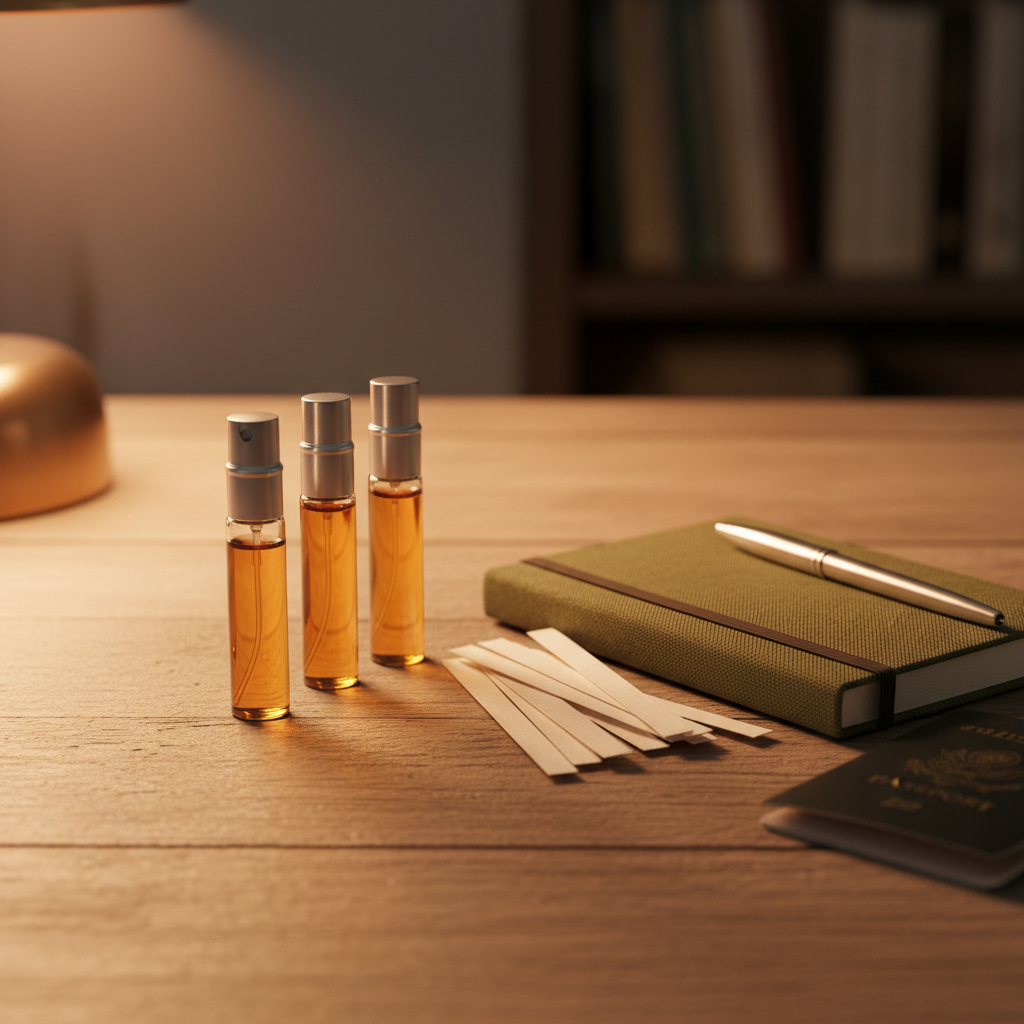
Use Auremie’s discovery sets, sample sets, and Find Your Scent tool to test longevity on your skin before committing. Testing across two days and two climates (indoors/outdoors) reveals true wear time.
Sampling removes guesswork. Skin chemistry, climate, and routine are personal, so trialing 3–6 vials reveals what truly lasts for you. Auremie’s direct-to-consumer model makes this easy with curated discovery sets, individual sample sets, and a guided Find Your Scent flow that filters by mood, style, and desired wear-time.
For a refresher on how to evaluate notes and structure while you test, skim this concise guide to choosing a fragrance online. It outlines practical checkpoints you can apply in minutes.
Field tips we share with clients:
- Two-day test: Wear the same sample two days in a row; note hours 1, 4, 8, and 12.
- Fabric check: Smell your shirt the next morning; fabrics often retain scent 24+ hours.
- Spray discipline: Log sprays used (2–6). You’ll find a sweet spot that stays consistent.
Want staying power without the guesswork? Explore Auremie’s discovery and sample sets, then use Find Your Scent to match notes, season, and desired wear time. Build your own routine with confidence before choosing a full bottle.
For inspiration, browse our luxury perfumes guide and this quick look at perfume longevity Q&As.
Case Studies and Real-World Pairings
Match note profiles to context: woody-amber for long commutes and cold evenings, green-citrus for warm offices over an anchor base, and orris or musk for refined close-range elegance. Thoughtful pairing yields 8–12+ hour performance with 3–5 sprays.
These brief scenarios illustrate how we guide shoppers toward reliable all-day wear using Auremie’s men’s, women’s, and unisex collections. Names below reference actual note styles found across our catalog (for example, woody-amber like Ash & Woods, airy sparkle like Aether, romantic florals like Rosalia).
Workday commuter (8–10 hours, 3–4 sprays)
Choose a woody-amber EDP with a musky base. Apply to chest (2), back of neck (1), and a light jacket mist (1). Expect a confident morning trail and a soft, warm aura after hour 6. In colder months, the same profile often adds 1–2 hours.
Open-plan office (6–8 hours, 2–3 sprays)
Opt for green-citrus over a sandalwood base. Use inner elbows (1 each) under sleeves and skip wrists. You’ll keep a 1–3 foot scent bubble without overwhelming neighbors. Add a single collar mist if your fabrics run scent-light.
Evening event or dinner (10–12+ hours, 3–5 sprays)
Go parfum/extrait with resin, leather, or orris accents. Chest (2), base of neck (1), and a shoulder mist (1–2) carry you from pre-dinner to late night. The slow-resolving base ensures the dry-down feels smoother, not louder.
Romantic close range (6–9 hours, 2–3 sprays)
Choose powdery orris or soft musk. Apply behind ears (1 each) and inner elbow (1). The halo stays intimate with excellent longevity for the style. Fabrics like silk and cotton retain traces into the next day.
For additional pairing blueprints by season and style, see our men’s fragrance playbook and this eau de parfum guide written for wearers who want a signature scent that lasts.
Frequently Asked Questions
Longevity depends on concentration, materials, placement, and environment. Most EDPs run 6–8 hours, while parfum/extrait can exceed 10. Moisturizing, fabric mists, and smart spray mapping add reliable hours across skin types.
What makes a perfume last longer on skin?
Higher oil concentration, slow-evaporating base notes (woods, amber, musk), moisturized skin, and pulse-point application. Avoid rubbing after spraying and consider a single fabric mist to extend the trail by 12–24 hours.
How many sprays should I use for all-day wear?
For EDP, 2–4 sprays usually deliver 6–8 hours. For parfum/extrait, 3–5 sprays can exceed 10 hours. Adjust for climate and proximity to others—less in heat or close quarters, more for outdoor evenings.
Does eau de parfum always last longer than eau de toilette?
Generally yes, because EDP carries more aromatic oils (about 15–20% versus 5–15% for EDT). That said, note structure matters. A well-built EDT with a strong base can outlast a sheer EDP on some skin.
How do I test longevity before buying a full bottle?
Use discovery or sample sets. Wear each scent on two different days, track hours 1, 4, 8, and 12, and include a light fabric mist. Auremie’s Find Your Scent tool narrows choices by mood and desired wear time.
Key Takeaways
For all-day performance, choose EDP/parfum with woody-amber or musk bases, apply 2–6 sprays to pulses and fabric, and test via discovery sets. Smart storage and season-aware routines lock in 8–12+ hours.
- Long-lasting means 6–10+ hours with stable sillage and smooth dry-down.
- Concentration, materials, and application are the three longevity levers.
- Orris, woods, amber, and musks excel when you need endurance.
- Moisturize first, avoid rubbing, and add a single fabric mist.
- Use Auremie discovery and sample sets to verify wear on your skin.
Conclusion
The best path to a perfume that is long lasting is simple: pick the right structure, apply with intention, and test on your skin. Auremie’s discovery tools make it easy to find an all-day signature.
Here’s the thing—longevity isn’t magic; it’s method. Choose a concentration that matches your day, anchor with resilient base notes, and map sprays with care. Then validate with discovery and sample sets. If you want more real-world playbooks and testing tips, browse our perfume longevity Q&As and our men’s longevity guide. When you’re ready, use Find Your Scent and build an all-day routine you can trust.