

Fragrance matching by mood is the practice of choosing a perfume that mirrors or shapes how you want to feel—calm, confident, energized, or romantic. It combines scent families with basic psychology to support your day. For Canadian shoppers in the local area, discovery and sample sets from Auremie Perfumes make testing simple before committing.
By Auremie Perfumes • Last updated: April 25, 2026
Overview
Mood-based fragrance selection aligns scent notes with emotions like focus, calm, or confidence. Start by naming your desired feeling, then choose matching scent families—citrus for clarity, woods for grounding, florals for uplift, ambers for warmth. Use sample or discovery sets to test on skin and build a small, mood-ready rotation.
- What you’ll learn: the science behind fragrance and mood, practical matching methods, and an easy step-by-step routine.
- Who this helps: online fragrance shoppers, gift buyers, and anyone building a versatile scent wardrobe.
- How we’ll help: we’ll point to discovery sets, sample sets, and a guided quiz to reduce blind buys.
- Quick links:
- Start with our Signature Scent Guide for foundations.
- Compare kits in Discovery Sets Explained.
- See why minis win in Sample Sets vs Full Bottles.
What is fragrance matching by mood?
Fragrance matching by mood is selecting a scent to reinforce a specific emotional state or intention. It maps core note families—citrus, aromatics, woods, florals, ambers—to target feelings like clarity, calm, confidence, and comfort. Wearing intent-aligned notes helps your scent communicate the same message your body language does.
Here’s the idea in plain terms: your nose and brain are tightly connected. Certain notes consistently evoke certain moods. When you choose notes that fit how you want to feel, your fragrance becomes a subtle, supportive cue throughout the day.
- Citrus (bergamot, lemon, grapefruit) can feel bright and clean.
- Aromatics (lavender, rosemary, mint) often read calming and clear.
- Woods (cedar, sandalwood, vetiver) suggest steadiness and confidence.
- Florals (rose, jasmine, neroli) feel uplifting or romantic.
- Ambers/Orientals (vanilla, tonka, amber) convey warmth and comfort.
In our experience helping online shoppers, naming the desired feeling first makes choices faster. Then you can spot which discovery or sample sets match that intent and test those on skin over a few days.
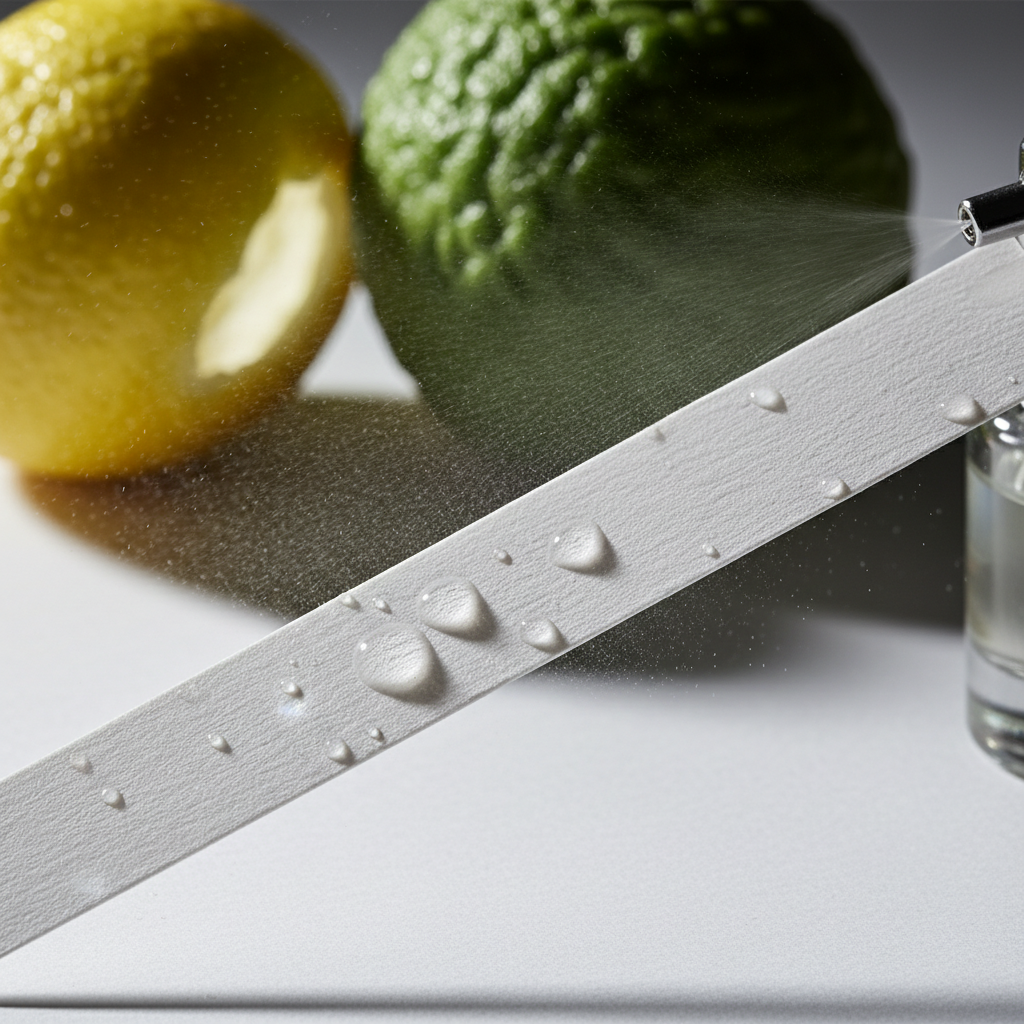
Why mood-based scent choice matters
Choosing scent by mood creates consistency between how you feel and how you’re perceived. It reduces decision fatigue, supports daily rituals, and helps you communicate nonverbally. A small mood-ready rotation also prevents nose fatigue and keeps your scent feeling fresh, seasonal, and intentional.
- Clarity and consistency: When your scent and intention match (say, citrus-aromatic for focus), you feel more aligned.
- Decision simplicity: A 3–5 bottle rotation mapped to moods means fewer morning guesswork moments.
- Better wear experience: Mood-appropriate choices are less likely to feel “too much” for the setting.
- Ritual and memory: Repeating a note family with a task (e.g., vetiver for deep work) can become a cue to start.
Shoppers tell us that a simple, mood-tied framework turns online browsing into a plan rather than a gamble. That’s why we point people to discovery and sample sets before they commit to full sizes.
How fragrance and mood work together
Scent signals travel from the nose to brain regions that regulate memory and emotion. That’s why certain notes reliably feel energizing, soothing, or cozy. On skin, top, heart, and base notes unfold over hours, so the mood you choose should consider how a scent evolves from first spray to drydown.
Key mechanisms
- Rapid brain routing: Olfactory input connects to areas tied to emotion and memory, creating fast mood associations.
- Associative learning: Repeating a scent-family during a task (study, gym) turns it into a performance cue.
- Layered evolution: Top notes spark first impression, heart notes carry the theme, base notes anchor longevity.
Practical implications
- Pick energizing tops (citrus, mint) when you need a jump-start.
- Use comforting bases (vanilla, tonka, musk) for evening wind-down.
- Reserve statement woods (oud, dark cedar) for confidence-led settings.
This is where a wear-test matters. Skin chemistry shifts projection and longevity. A note that reads “fresh” on one person might lean “sweet” on another. Testing with samples removes the guesswork.
Types, methods, and approaches
You can match by core emotion, by context (work, gym, date), or by season. Build a small wardrobe across citrus, aromatics, woods, florals, and ambers. Use layering (light mist + pulse-point dab) to fine-tune mood and projection. Keep notes in a scent diary to learn what actually works.
Core methods
- Mood-first mapping: Start with the feeling—focus, calm, comfort, confidence, romance.
- Context-first mapping: Choose for settings—office, gym, travel, outdoor, date night.
- Season-first mapping: Rotate fresher blends in heat; richer ambers and woods in cold.
Layering basics
- Complement: Add an aromatic spritz over a woody base for “calm confidence.”
- Soften: Tame a bold oud with a touch of vanilla or tonka.
- Brighten: Wake up a cozy amber with a citrus top.
Wardrobe composition
- 3-bottle core: one fresh/clean, one woody/grounded, one warm/comfort.
- 5-bottle expansion: add one floral-uplifting and one bold/statement.
- Samples on deck: rotate 4–6 minis to test new moods without commitment.
To go deeper on unisex styles that flex across moods, see our Unisex Fragrances Guide. If you’re building from scratch, our Signature Scent Guide covers pillars like concentration, sillage, and note pyramids.
Step-by-step: match today’s scent to your mood
Name the feeling you want, pick a fitting note family, shortlist 2–3 candidates, spray once on a blotter and once on skin, then wear-test for a full morning or evening. Log the result. Repeat for three days and choose the fragrance that best delivers the mood in real life.
- State your intent: one word—focused, calm, cozy, confident, romantic.
- Match a family: e.g., focused → citrus-aromatic; cozy → amber-vanilla.
- Shortlist from discovery/sample sets: pick 2–3 options that fit the brief.
-
Test properly:
- One spray on a blotter to compare openings.
- One light spray on skin to check evolution.
- Wear-test: live with it for a school/work block or a full evening.
- Take notes: mood impact, projection, compliments, and how it dried down.
- Decide: keep, layer, or replace. Repeat across other moods.
Want a guided nudge? Explore the interactive Find Your Scent experience for a fast, mood-led shortlist you can test at home.
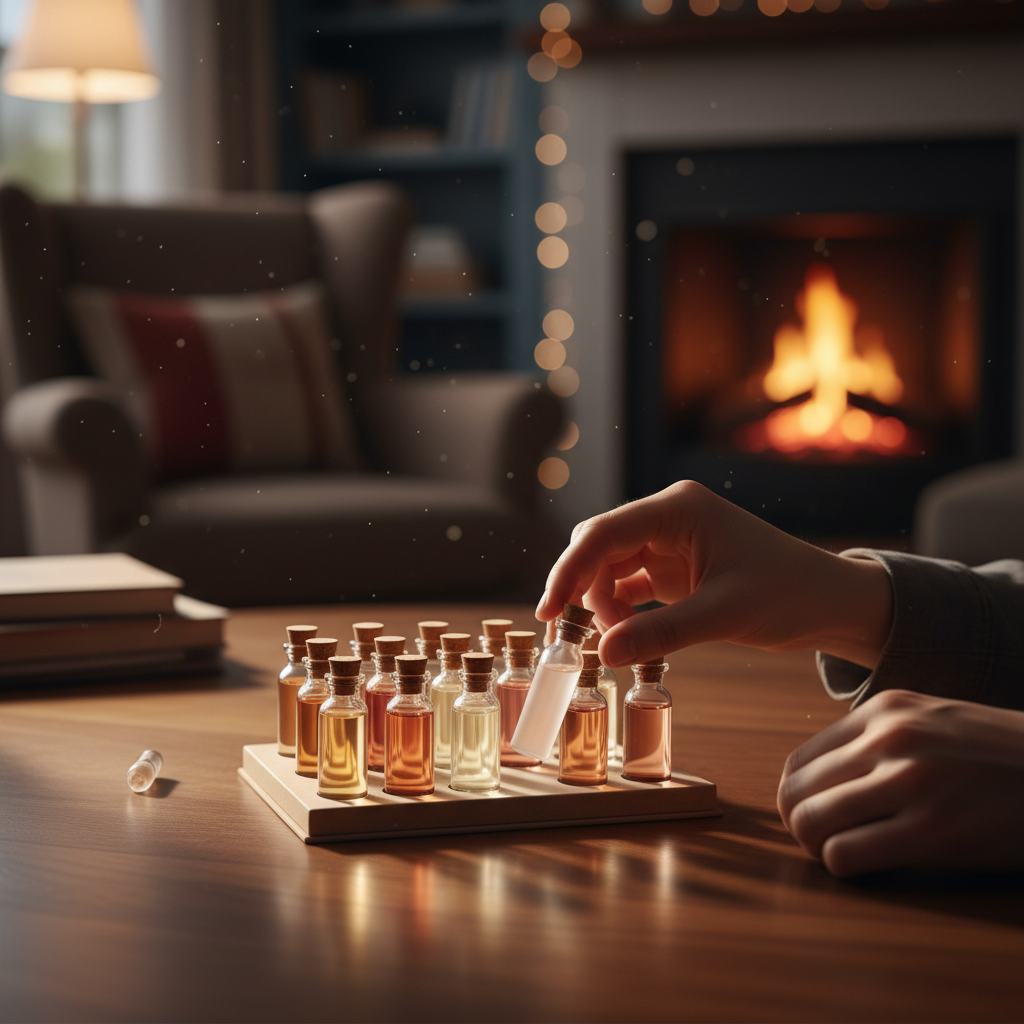
Mood-to-note playbook (quick table)
Use this table to connect a target feeling with reliable note families and practical picks. Start with the left column, scan across to notes and settings, then shortlist options from a discovery or sample set. Adjust by season and strength to fine-tune projection and comfort.
| Target mood | Reliable notes | Where it shines | Test via |
|---|---|---|---|
| Focused/clear | Bergamot, lemon, mint, rosemary | Work blocks, study sessions, travel mornings | Discovery sets |
| Calm/centered | Lavender, neroli, clary sage, soft musk | Busy days, transit, pre-meeting breathers | Sample sets |
| Confident/grounded | Vetiver, cedar, sandalwood, oud (light) | Presentations, first impressions, dressy casual | Signature Scent Guide |
| Romantic/uplifting | Rose, jasmine, ylang-ylang, amber | Date nights, celebrations, evenings out | Seduction & Mystery |
| Cozy/comfort | Vanilla, tonka, amber, cashmere woods | Movie nights, weekends in, cool weather | Travel-size samples |
Best practices and common mistakes
Keep a small, mood-ready wardrobe, test on skin in real settings, and rotate by season. Avoid overspraying, buying full bottles before testing, and ignoring context. Track reactions—yours and others’—to learn what truly supports your day.
Do this
- Build a 3–5 bottle core that maps to your top moods.
- Wear-test during the actual setting (work, gym, date).
- Rotate seasonally to keep scents comfortable and contextual.
- Log feedback (your focus, comfort, compliments) to refine choices.
Avoid this
- Blind-buying without sampling first.
- Overspraying strong bases in small spaces.
- Ignoring evolution: choosing by top notes only.
- One-scent-for-all: forcing a winter amber in mid-summer heat.
Local considerations for your area
- Seasonal swings matter: choose fresher citrus-aromatics in warmer months and cozier ambers/woods when temperatures drop across Canada.
- Holiday and event timing: keep a dedicated “celebration” floral-amber ready for festivals and long weekends when gatherings spike.
- Transit and shared spaces: apply lightly before commuting; carry a travel atomizer for a single-refresh spritz after arrival.
Tools and resources to make this easy
Use a guided quiz to narrow options fast, then order discovery or sample sets to test at home. Keep a simple scent diary—five columns tracking date, context, sprays, reactions, and mood impact. After three wear-tests per candidate, pick winners for each mood.
- Guided shortlist: Try the Find Your Scent guide to map notes to moods in minutes.
- Hands-on testing: Compare formats in Discovery Sets Explained.
- Mini-first strategy: See why minis save regret in Sample Sets vs Full Bottles.
- Men’s fragrance samples: Explore compact picks via Travel-Size Sample Sets.
- Seasonal planning: For event-forward choices, browse Festival Collection scents.
We’ve found that shoppers who log three brief notes per wear-test decide faster and feel more confident about their final selections.
Case studies and real-world examples
These short scenarios show how a mood-first approach turns browsing into a plan. Each case pairs a target feeling with notes, a testing method, and a final rotation choice. Use them as templates to build your own mood-ready lineup.
Case 1: The remote-work sprint
- Goal: deep focus for a three-hour build session.
- Shortlist: two citrus-aromatic blends; one woody-aromatic.
- Test: one spray on wrist, note focus and distraction after 90 minutes.
- Outcome: bergamot + rosemary won; kept as the “sprint” pick.
Case 2: The evening reset
- Goal: feel grounded after a long commute.
- Shortlist: sandalwood-musk; vanilla-amber; lavender-musk.
- Test: two-night trial after dinner.
- Outcome: sandalwood-musk felt calm yet clean; reserved for weeknights.
Case 3: First-date confidence
- Goal: confident, warm, and memorable without overpowering.
- Shortlist: soft oud with amber; rose-amber; creamy vanilla with woods.
- Test: evening wear-test; one spray chest, one back of neck.
- Outcome: soft oud + amber became the “date night” anchor; discovery set confirmed it.
Case 4: Weekend festival
- Goal: playful, photogenic scent that lasts outdoors.
- Shortlist: citrus-amber; fruity-floral; sparkling musk.
- Test: midday spray before heading out.
- Outcome: citrus-amber carried through sun and shade; added to the “event” slot.
Frequently Asked Questions
The fastest way to match a scent to your mood is to pick the feeling first, choose the fitting note family, and wear-test a sample on skin for several hours. Keep a short log and decide after three real-life trials.
How do I choose a fragrance for a big presentation?
Aim for confident and composed. Vetiver, cedar, or sandalwood suggest poise without shouting. One or two light sprays on chest or shirt is enough. Test the exact scent on a regular workday first, then reserve it for high-stakes moments.
What’s the best way to test multiple scents at once?
Use blotters for quick openings, then narrow to two on skin—one per wrist. Avoid mixing on the same spot. Give each option at least three hours to evolve. Rinse between days with fragrance-free soap and moisturize before testing again.
Can I wear a cozy amber in summer?
Yes—just dial the dose and placement. Try a lighter concentration or spray fabric from a distance. Layer a micro-spritz of citrus up top to brighten it. If heat is intense, switch to a skin-close vanilla musk until sunset.
How big should my fragrance wardrobe be?
Start with three: fresh/clean, woody/grounded, and warm/comfort. Expand to five by adding a floral-uplifting and a bold/statement choice. Keep 4–6 samples rotating to test new moods without committing early.
Conclusion
Fragrance matching by mood turns scent into an everyday tool for focus, calm, confidence, and connection. Name the feeling, pick a fitting family, test with discovery or sample sets, and log results. In a few weeks, you’ll have a small, reliable rotation ready for any moment.
Key takeaways
- Start with the feeling, then pick notes that reinforce it.
- Test on skin in real settings—blotters are only a preview.
- Keep a 3–5 bottle core and rotate seasonally.
- Use discovery and sample sets to avoid regret.
Ready to build your mood-ready lineup? Use the guided Find Your Scent experience, then order a discovery or sample set to test at home. When you’re choosing for events, scan our notes on Festival Collection scents for playful picks.