

Discovery sets explained in one line: they’re curated kits of sample-size perfumes that let you test multiple scents at home before committing. Most include 4–10 vials (about 1–3 ml each) so you can compare notes, longevity, and projection. Auremie Perfumes ships discovery options quickly from Ontario, making try-before-you-buy easy across the local area.
By Auremie Perfumes • Last updated: 2026-04-22
Overview and Table of Contents
A discovery set is a small, curated kit of perfume samples that helps you compare several fragrances side by side. In a week or less, you can measure wear time, projection, and compliments across daily routines—then upgrade the clear winner to a full bottle with confidence and zero guesswork.
This complete guide unpacks how discovery sets work, why they matter for online fragrance shopping, and how Auremie’s tools help you move from confusion to clarity.
- What a perfume discovery set includes and how to use it
- Why discovery kits reduce blind-buys and returns
- Step-by-step testing playbook (4–7 days)
- Types of sets, formats, and who benefits most
- Best practices, common mistakes, and pro tips
- Tools and resources to speed up selection
- Real examples, mini case studies, and FAQs
What Is a Perfume Discovery Set?
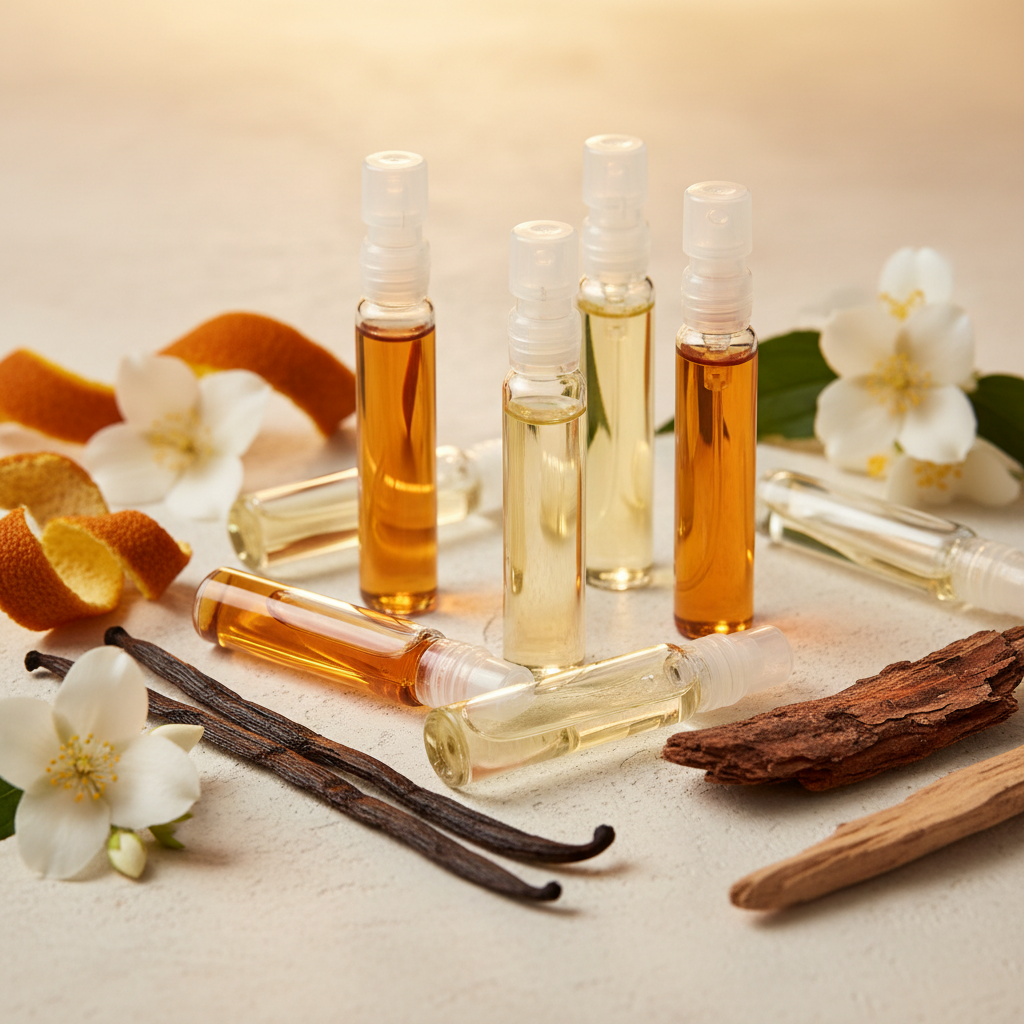
A perfume discovery set is a brand-curated pack of sample-size fragrances—often 1–3 ml each—selected to showcase different styles. You test 1–2 per day on clean skin, track longevity and projection, and shortlist 1–3 favorites. It’s the fastest, lowest-risk route to a signature scent.
Think of discovery sets as the lab phase for your nose. You’re exploring a focused slice of a brand’s range, learning how top, heart, and base notes unfold on your skin from the first 10 minutes to the 8-hour mark. Discovery sets explained simply: they turn uncertain browsing into structured testing that yields a confident decision.
Core components you’ll typically find
- Curated vials: 4–10 samples covering fresh, woody, amber, floral, and gourmand profiles.
- Concentration clarity: Many niche houses offer Eau de Parfum samples for reliable longevity.
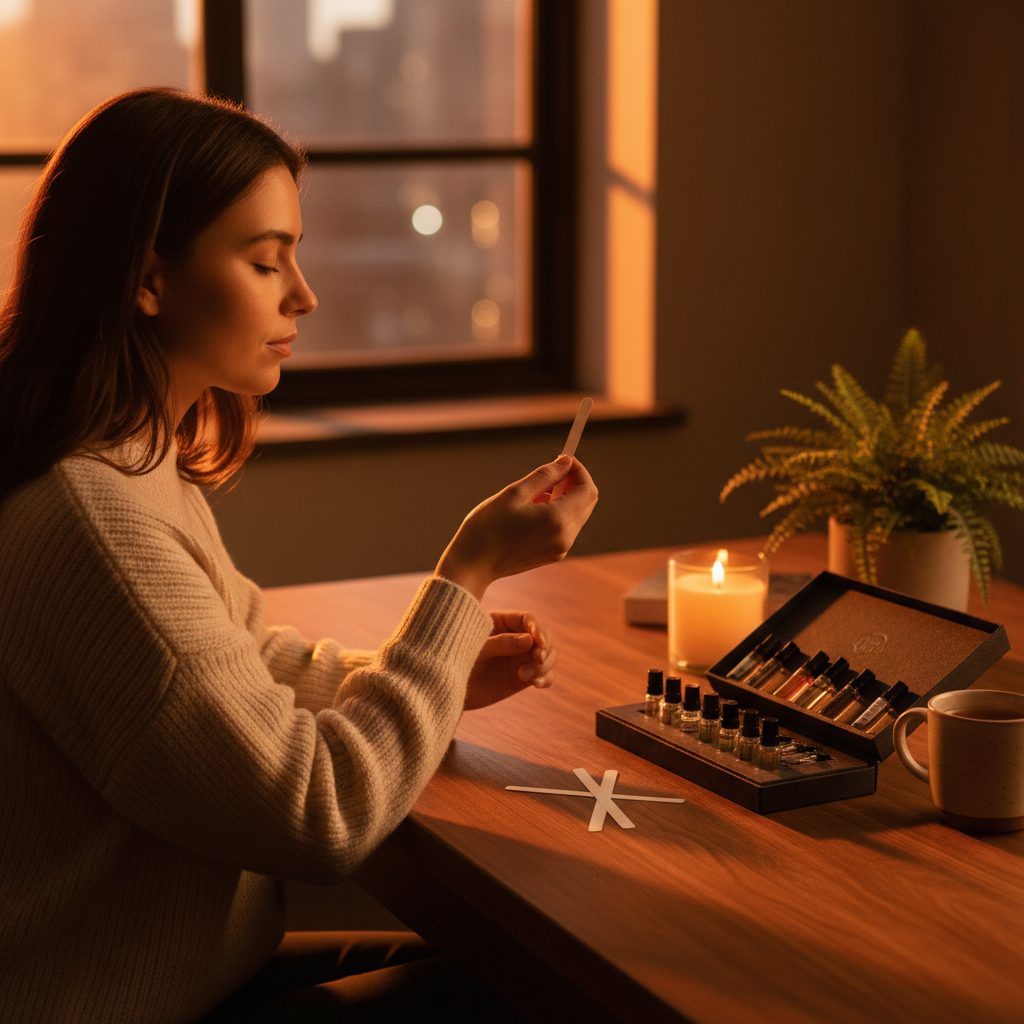
- Scent blotters: Paper strips make quick elimination passes easy before skin wear.
- Guidance: A note card or digital tool helps connect preferences to picks.
At Auremie Perfumes, discovery and sample sets align with our focus on premium ingredients, skilled perfumery, and long-lasting wear—across men’s, women’s, and unisex fragrances—so your testing yields options that perform all day.
Why Discovery Sets Matter
Discovery sets reduce blind-buys by letting you evaluate 4–10 scents across settings. In 4–7 days, you can observe projection, comfort, and compliments—data that steers you toward a daily driver and a special-occasion pick without guesswork or returns.
Buying fragrance online can feel uncertain because paper and skin behave differently. Opening notes can last 10–30 minutes; the heart blooms for 1–3 hours; the base anchors 4–8 hours or more. Testing in your real routine reveals whether a composition fits your office, commute, gym bag, date night, or weekend plans.
- Better fit: Test at your pace and in your spaces—work, errands, evenings.
- Personal data: Track wear time (hours), projection (arm’s-length or closer), and feedback.
- Smarter gifting: Elegant sets invite exploration so recipients choose their favorite.
- Wardrobe building: Cover daytime subtlety, off-duty ease, and evening presence.
We consistently see clear favorites emerge by day three when testers limit themselves to two trials per day and jot quick notes at 0, 30, 120, and 240 minutes. Patterns jump off the page.
How Discovery Sets Work (Step-by-Step)
Order a kit, test two samples per day on clean skin, and log longevity and projection. After 4–7 days, shortlist 1–3 keepers that feel effortless at the 4–8 hour mark. Then upgrade with intent: a signature for daily wear and a second pick for special moments.
Use this simple routine to turn a discovery set into decisive picks. It balances curiosity with control so your nose doesn’t fatigue—and your notes stay consistent.
- Unbox and group: Organize samples by vibe: fresh, warm, woody, floral, gourmand.
- Set a pace: Morning and evening trials with shower resets; avoid overlapping scents.
- Start on paper: Blotters help remove immediate “no’s.”
- Move to skin: Test one scent per wrist or inner elbow—no layering yet.
- Note the timeline: Top (0–30 min), heart (30–180 min), base (3–8 hr+).
- Track projection: Subtle (close skin), moderate (arm’s-length), or bold (room-fill).
- Log feedback: Compliments, comfort level, and context (office vs. outdoors).
- Shortlist winners: Keep 1–3 that still feel “you” after 4–8 hours.
Pro tip: Avoid scented lotions during testing; unscented moisturizers can improve diffusion without altering the profile. If you’re scent-sensitive, stretch the routine to one trial per day.
Types of Discovery Sets and Approaches
Discovery sets arrive in several formats: greatest-hits samplers, note-family explorations (citrus, woods, florals, amber), occasion-based mixes, and seasonal curations. Pick by use case first—work, weekends, travel, or events—then fine-tune by note preference.
Brands design sets to collapse decision time. At Auremie Perfumes, kits often span men’s, women’s, and unisex options or map to real-life moments—weekday professionalism, relaxed weekends, and evening allure—so you compare apples to apples.
Common formats
- Greatest hits: A brand’s most-loved or best-reviewed compositions.
- Note-family focus: Compare citrus vs. woods vs. amber vs. floral vs. musk.
- Occasion-based: Office-friendly, date night, festival-ready, or travel staples.
- Seasonal curation: Spring bright, summer airy, fall cozy, winter luxe.
Sample size and spray mechanics
- Volume: 1–3 ml vials are common; sprays deliver consistent dosing.
- Count: 4–10 total; more than 10 can blur differences and slow decisions.
- Concentration: Eau de Parfum is typical for long-lasting wear.
Who benefits most
- New collectors: Build a scent vocabulary and find 2–3 preferred families.
- Gift buyers: Let recipients explore and choose, reducing returns.
- Signature hunters: Compare finalists for daily wear vs. statement nights.
Context decides quickly. If your main goal is office wear, lean toward fresh woods and airy florals. If you want weekend warmth, try amber, vanilla, and soft musks. If you travel often, test for 6–8 hour reliability with moderate projection.
Best Practices (Testing, Shortlisting, Mistakes to Avoid)
Test two samples per day on clean skin, observe at 0/30/120/240 minutes, and write one-line notes. Avoid rubbing, layering, and heavy scented products. In under a week, you’ll isolate scents that last 6–8 hours and project at the right level for your life.
Consistency creates clarity. Small, repeatable steps let patterns emerge without nose fatigue. Keep your routine simple and your notes brief.
Testing checklist
- Shower first; skip scented lotions and deodorants during trials.
- Apply 1–2 sprays to wrists or inner elbows only.
- Don’t rub; let the atomized mist settle on skin.
- Observe at 0, 30, 120, and 240 minutes for evolution and comfort.
- Rotate arms day to day to avoid bias from residual scent.
- Log a “comfort score” (1–5) and whether you received compliments.
Shortlisting criteria
- Longevity: Aim for comfortable wear through your typical 6–8 hour window.
- Projection: Close-skin for office; moderate-to-bold for social nights.
- Season: Brighter blends thrive in heat; richer bases excel in cold.
- Personality: Fresh/clean, warm/cozy, or bold/magnetic—pick your lane.
Common mistakes
- Testing too many at once (nose fatigue hides good options).
- Layering too early (muddy results, hard comparisons).
- Skipping skin tests (paper ≠ skin chemistry).
- Over-spraying (projection misreads, faster consumption).
One more tip: consider how often you’ll be indoors vs. outdoors. Breezy conditions can pull projection down 20–40% compared to climate-controlled spaces, so what booms at home may whisper outside.
Tools and Resources to Speed Your Choice
Use a curated discovery kit, a guided scent finder, and targeted sample re-tests to compress weeks of indecision into a confident pick in under a week. Pair broad exploration with focused confirmation to remove doubt.
Auremie Perfumes was designed for confident online selection. Start broad, then narrow:
- Begin with a brand discovery set collection spanning men’s, women’s, and unisex options.
- Use the guided Find Your Scent tool to align note families with your mood and style.
- Re-test your top two using individual samples to confirm projection and dry-down comfort.
- Choose a signature for daily wear and a complementary evening or weekend pick.
Local considerations for your area
- Weather swings change diffusion—choose airy profiles for humid summers and cozier blends for colder seasons common across Canadian metros.
- Plan ahead for holidays; give yourself a 1–2 week testing runway before gifting.
- In apartment settings, ventilate during comparisons to avoid scent buildup and fatigue.
Discovery Set vs. Sample Set vs. Full Bottle
Use discovery sets to explore a brand’s range, sample sets to re-test finalists, and full bottles once you’ve verified fit. This sequence respects both curiosity and commitment, reducing returns and building a wardrobe you’ll actually wear.
| Option | Best For | Typical Size | Decision Role |
|---|---|---|---|
| Discovery Set | Comparing styles across a brand | 4–10 vials, 1–3 ml | Broad exploration, shortlist creation |
| Sample Set | Re-testing top 2–3 picks | Individual 1–3 ml vials | Focused confirmation before buying |
| Full Bottle | Daily wear or special occasions | Standard retail sizes | Commitment after testing |
In practice, many shoppers go discovery → sample → bottle over 7–14 days, logging wear time and projection along the way. That pacing keeps the experience fun and the results reliable.
Case Studies and Real-World Examples
Most testers identify a signature and a backup within 3–7 days when they limit trials to two per day and keep brief notes. Tracking hours-worn and projection level creates an objective pattern that’s hard to miss.
Weekday professional
- Goal: Quiet confidence for meetings and commutes.
- Routine: Morning tests of fresh woods and light florals; note 6–8 hour wear.
- Result: A subtle office staple and a slightly richer Friday-choice.
Weekend explorer
- Goal: Versatile, compliment-friendly scents for brunch to late-night.
- Routine: Alternate warm amber and soft musks; measure projection in crowded spaces.
- Result: A cozy comfort scent plus a brighter social pick.
Gifting with confidence
- Goal: Elegant present without guessing taste.
- Routine: Include a discovery kit and a one-week testing note in the card.
- Result: Recipient upgrades their favorite without returns or exchanges.
These patterns repeat whether you’re building a minimalist two-scent wardrobe or curating a fuller rotation for work, weekends, and events.
The Basics: Notes, Skin Chemistry, and Standards
Perfume develops in stages—top (0–30 min), heart (30–180 min), and base (3–8 hr+). Skin chemistry, climate, and concentration shape this journey. Industry standards guide safe use, while dermatology guidance helps sensitive skin testers approach sampling wisely.
Understanding a few fundamentals makes testing more objective:
- Scent pyramid: Citrus and herbs often sparkle up top; florals and spices bloom in the heart; woods, musks, and ambers anchor the base.
- Skin factors: Hydration and pH influence diffusion and longevity by noticeable margins.
- Concentration: Eau de Parfum generally outlasts lighter concentrations given similar ingredients.
Key Takeaways
Discovery sets are the smart, low-risk way to test widely and decide quickly. In 4–7 days, a simple routine yields a signature scent and a secondary pick—both proven on your skin and aligned to your life’s real settings.
- Test two per day; keep notes at 0/30/120/240 minutes.
- Shortlist 1–3 that still feel great at the 4–8 hour mark.
- Use a scent finder to align notes to mood and setting.
- Confirm finalists with targeted sample re-tests.
- Commit to a daily driver plus a special-occasion option.
Frequently Asked Questions
Most people complete a discovery set in a week or less. Keep trials simple, take brief notes, and confirm finalists with a second wear. Then upgrade your winner to a full bottle and keep a backup for evenings or weekends.
How many sprays should I use from a sample vial?
One spray per wrist (or inner elbow) is enough to judge opening, heart, and dry-down without overwhelming your senses. Two total sprays keep comparisons clean and fair.
How long does a 2 ml sample usually last?
With one to two sprays per wear, a 2 ml vial yields roughly 6–10 full tests—enough to compare performance across workdays, weekends, and an evening out.
Is it better to test on paper or skin?
Start on blotter paper to narrow the field, then confirm on clean skin. Skin chemistry affects diffusion and longevity, so final decisions should be based on skin wear.
What’s the difference between discovery sets and sample sets?
Discovery sets are curated to showcase a range or theme. Sample sets are usually hand-picked individual vials for re-testing your top contenders before committing.
How do seasons affect what I should pick?
Heat amplifies diffusion—lighter, airy notes shine in summer. Cold compresses projection—richer woods, ambers, and musks often perform best in fall and winter.
Conclusion and Next Steps
Discovery sets make fragrance shopping smarter: test broadly, track simply, and upgrade decisively. In under a week, you can land on a signature scent and a secondary pick that both feel unmistakably “you.”
Ready to explore with structure instead of guesswork? Start with a curated discovery kit, use a guided scent finder to align note preferences, then re-test winners with individual samples. That three-step path turns curiosity into confidence.
- Begin with a mixed discovery set covering key styles.
- Use a digital tool to match notes to mood and occasion.
- Re-test top two with targeted samples.
- Commit to a daily driver plus an event-ready option.
Soft CTA: Explore brand-curated discovery kits and guided matching tools designed for confident online selection from a proudly Canadian fragrance house.