

Fragrance style comparison
Compare Unisex Luxury Perfume Styles Before You Buy
“Unisex” tells you who may enjoy a fragrance, not what it smells like. A useful comparison starts with style family, then tests the opening, dry-down, perceived intensity and fit with your real settings on separate wear days.
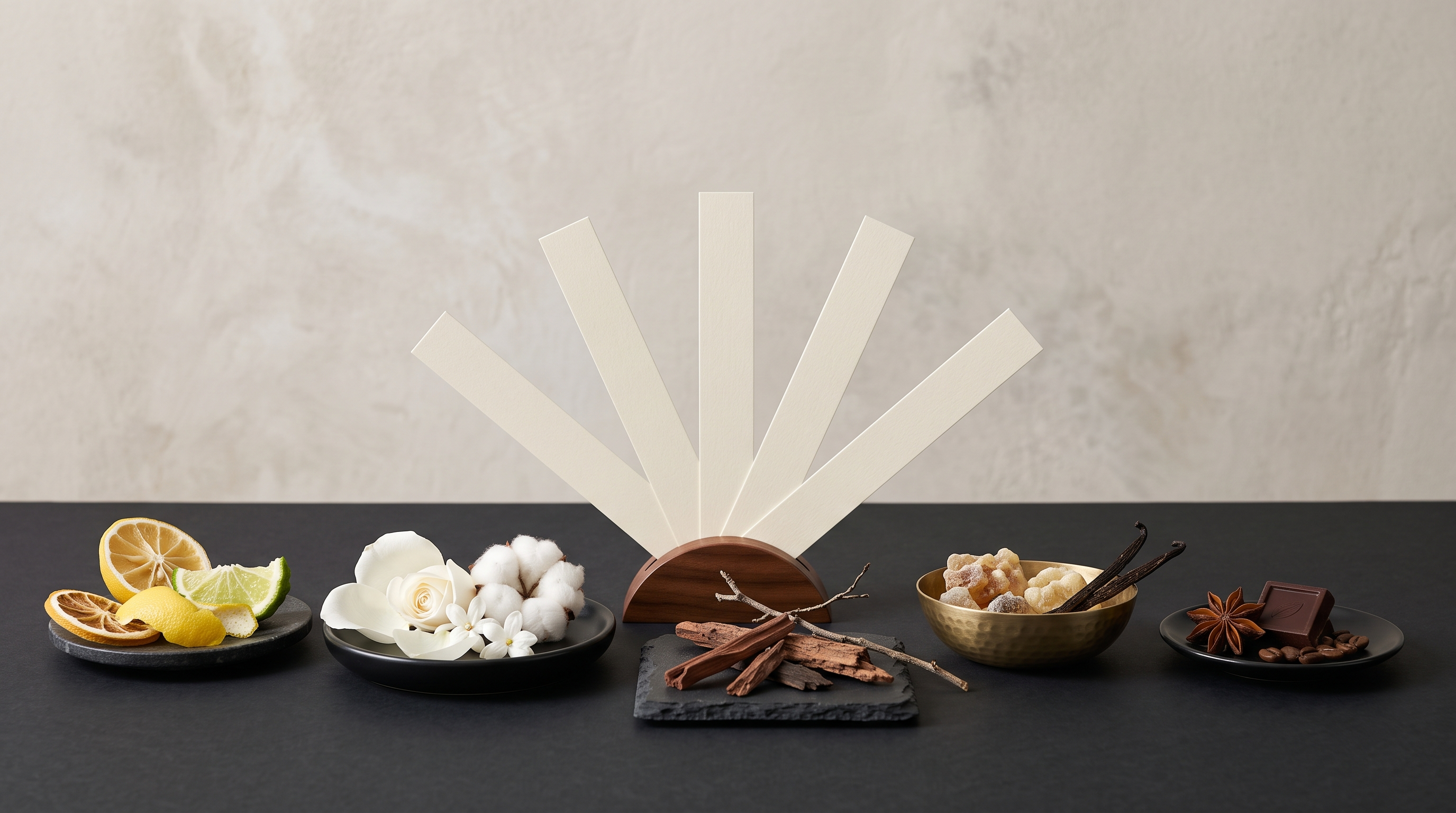
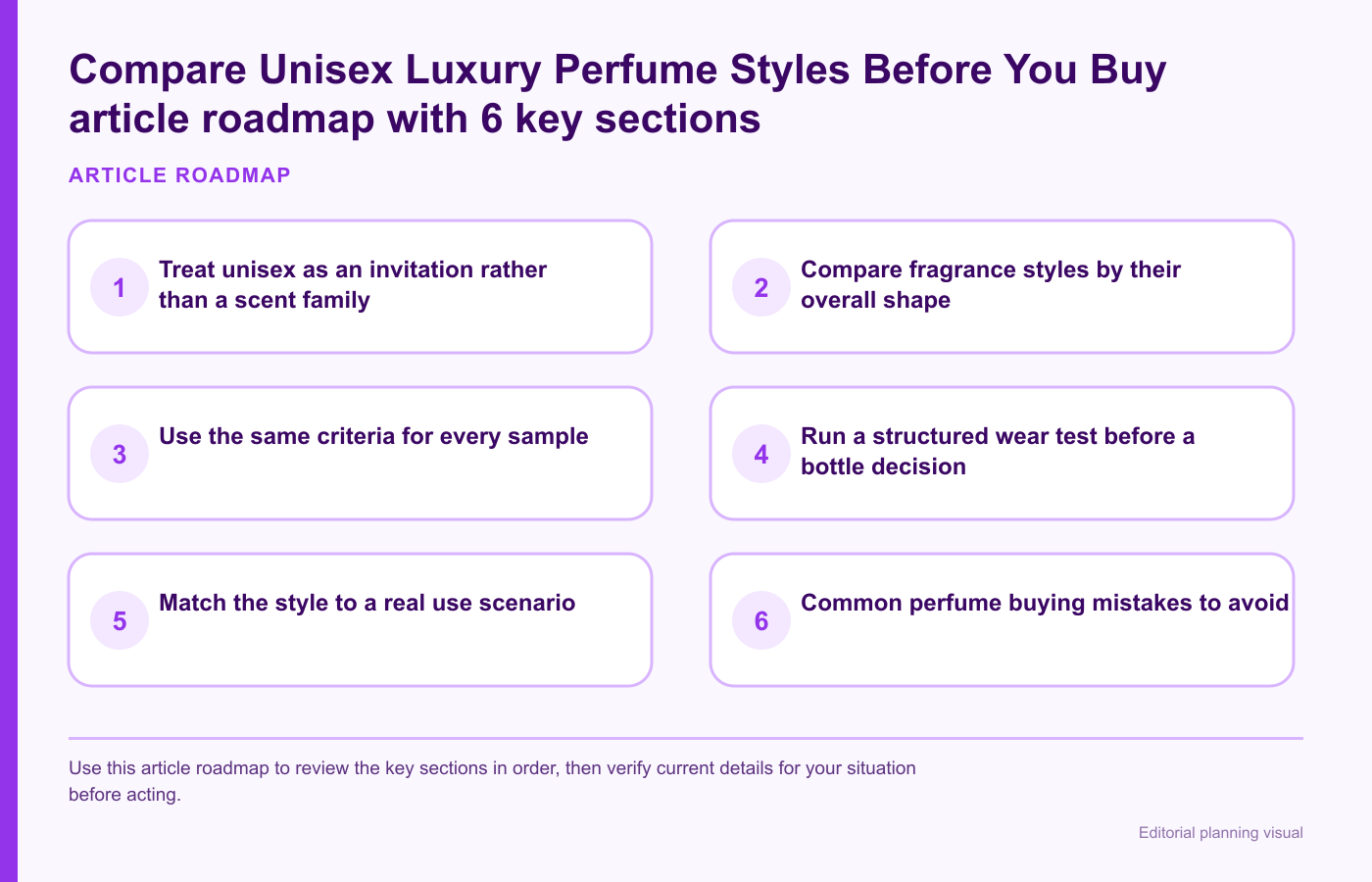
Treat unisex as an invitation rather than a scent family
Perfume has no universal gender boundary. Retail labels can help shoppers navigate a store, but they do not determine who may wear a citrus, rose, leather, vanilla or wood accord. If “unisex luxury perfumes” is your starting search, replace it with a more useful brief: the moods you enjoy, settings where you will wear the scent, notes you already like or avoid, and how noticeable you want it to feel around you.
“Luxury” also needs criteria. For one shopper it means an unusual composition; for another it means packaging, a carefully edited collection, a satisfying dry-down or a fragrance they reach for repeatedly. A price or marketing adjective cannot establish personal value. Decide what would make the purchase worthwhile before comparing bottles.
Auremie currently groups shopping paths on its collections page, including Unisex, Discovery Sets and Sample Sets. Use those paths to create a shortlist, but verify current product description, format, ingredients, price, stock and policies on the live product page before ordering.
Compare fragrance styles by their overall shape
Fresh and aromatic. Citrus, green, watery, herbal or airy cues often create a bright opening. Shoppers who want a crisp, easy-to-understand first impression may begin here. The trade-off is that a sparkling opening can change substantially as it dries, so do not decide from the first few minutes.
Floral and soft musk. These styles may feel sheer, powdery, clean, creamy or petal-like depending on the construction. They can work for people who prefer texture over sharp contrast. The trade-off is interpretation: “clean,” “powdery” and “musky” mean different things to different noses, so use samples rather than assuming the label predicts comfort.
Woody and amber. Dry woods, resinous warmth, spice, smoke-like effects or smooth amber can create more depth. These styles may suit a shopper looking for presence or a slower-feeling dry-down. The trade-off is setting: what feels enveloping outdoors can feel dense in a small shared room.
Gourmand. Vanilla, caramel, cacao, coffee, fruit or pastry-like associations can feel warm and playful. People who enjoy sweetness may find them immediately engaging. The trade-off is fatigue or context; a delicious first impression is not proof you will want the same effect during a full workday.
| Style | Opening to observe | Dry-down question | Useful test setting |
|---|---|---|---|
| Fresh / aromatic | Is the brightness sharp, green, watery or herbal? | What remains after the sparkle fades? | Ordinary daytime routine |
| Floral / soft musk | Does it feel airy, creamy, powdery or vivid? | Does the texture stay comfortable? | Close shared environment |
| Woody / amber | Is the first impression dry, spicy, warm or smoky? | Does the depth feel balanced over time? | Cool weather or evening trial |
| Gourmand | Which sweet or edible association appears? | Would you enjoy it beyond the first hour? | Relaxed day without competing scent |
Use the same criteria for every sample
Begin with the opening, but do not score it as the whole perfume. Record the first impression in plain language, not only official notes. Next, assess the middle and later stages at consistent intervals. Ask whether the transitions feel coherent to you and whether any element becomes distracting.
Evaluate perceived intensity without making a universal projection claim. Use the same number of applications, follow each product's directions and avoid testing in a way that overwhelms you or other people. Ask someone nearby only when appropriate; their perception is another data point, not an objective score.
Review the label before use. Health Canada explains cosmetic ingredient and fragrance labelling, including INCI terminology and the use of “fragrance” or “parfum.” It advises people with known sensitivities to review ingredients and directions. “Hypoallergenic” does not mean a cosmetic cannot cause a reaction in every person. Stop use and follow appropriate medical guidance if a reaction occurs.
Finally, score repeat-wear desire. A fragrance can be fascinating without fitting your wardrobe. Ask whether you would choose it on a normal Tuesday, whether it competes with scented grooming products, and whether it suits the people and spaces around you.
Run a structured wear test before a bottle decision
- Create a brief. Write three desired qualities, two settings and any known ingredient concerns.
- Choose contrasting samples. Pick a small number across different style families instead of five near-duplicates.
- Use paper for first sorting. Follow store or product instructions and keep strips labelled so impressions are not mixed.
- Wear one finalist at a time. Test on separate days according to label directions.
- Record intervals. Note opening, later development, comfort, setting fit and whether you still want to smell it.
- Repeat the finalists. A second wear under ordinary conditions is more useful than an impulsive first spray.
- Check live purchase details. Confirm size, ingredients, price, availability, shipping and return policy before checkout.
Health Canada's overview of cosmetic ingredient safety identifies perfume as a cosmetic and advises consumers to read labels and directions. Sampling is a preference tool, not a medical test, and no discovery set can promise that a product is suitable for a person with allergies or sensitivities.
Match the style to a real use scenario
For an office or close shared setting, test the fragrance during a comparable day and notice whether the intensity remains comfortable. For evenings or outdoor occasions, compare how the profile feels with different temperature, clothing and activity. For a signature scent, prioritize repeat-wear desire over novelty. For a small rotation, choose styles that create genuinely different experiences rather than collecting nearly identical openings.
Gifting requires more caution. A unisex label broadens the invitation, but it does not reveal the recipient's preferences or ingredient concerns. A discovery format may be more useful than a large blind buy when the recipient enjoys exploring. Check the current exchange and return terms first; fragrance policies can differ once packaging or a product is opened.
Auremie offers an owned Find Your Scent route and current discovery-set collection. Use them as shortlisting tools, then apply the same wear-test criteria across the final samples. A recommendation narrows options; your repeated experience makes the decision.
Common perfume buying mistakes to avoid
- Buying the gender label. Compare the actual style and your response, not who the shelf says should wear it.
- Judging only the opening. The dry-down may become the part you live with longest.
- Testing too many at once. Overlapping impressions make comparison less reliable.
- Assuming a note equals an ingredient. A note description is an artistic impression, not a complete formula.
- Treating “natural” as automatically safer. Health Canada advises that natural and synthetic ingredients can both be suitable; known sensitivities still require label review.
- Accepting performance promises as universal. Perception, amount, environment and use vary.
- Skipping current policies. Verify format, stock, shipping and returns on the live page.
Frequently asked questions
Are unisex perfumes different from men's or women's perfumes?
They are marketed for broad wear, but there is no single unisex smell. The style may be fresh, floral, musky, woody, amber or gourmand. Judge the composition and your experience rather than the category name.
How many fragrances should I test in one session?
Keep the comparison small enough that you can distinguish impressions, then wear finalists on separate days. There is no universal number; stop when scents begin to blur or you feel discomfort.
Does a discovery set guarantee I will find a favourite?
No. It reduces the commitment of comparing several options, but preference remains subjective. Check exactly which samples and sizes are included and whether the styles match your brief.
Choose a sampling next step with Auremie
Write your style brief, choose two contrasting families and review Auremie's current unisex collection. If the descriptions are still too broad, start with samples rather than a bottle. Confirm the current ingredient list, directions, sizes, price, inventory, shipping and return terms on the live product page.
Use Auremie's contact page for current product questions that the label or collection page does not resolve. The goal is not to find the perfume with the strongest promise; it is to find the style you choose again after a fair, comfortable repeat test.
General fragrance-shopping information only. Preferences and reactions vary. Follow product labels and directions and seek appropriate health advice for allergy, sensitivity or adverse-reaction concerns.